
By News Desk | Crime and Safety Beat
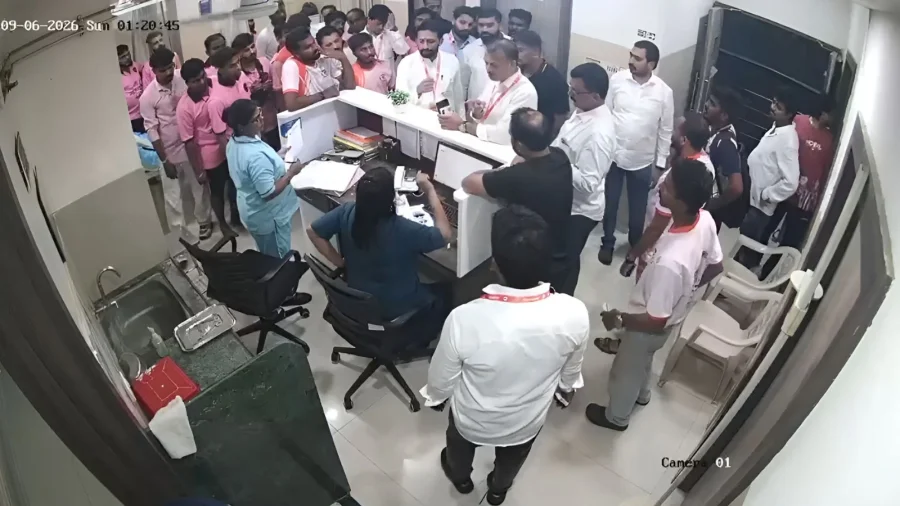
A festival celebrated for dramatic human pyramids has apparently ended in chaos inside a hospital ward. Men described as Shiv Sena workers allegedly attacked hospital staff in Palghar district after a Dahi Handi accident victim was brought in for treatment — an outburst that has renewed uncomfortable questions about who protects doctors in India's public hospitals when emotions run high.
What reports say: hospital staff targeted after Dahi Handi casualty
The core of the story is straightforward on its face. A participant in Dahi Handi celebrations — the Maharashtra tradition held around Janmashtami — was injured and taken to a hospital in Palghar. Following that, men linked to the Shiv Sena reportedly turned on hospital staff over how the victim's treatment was being handled.
The original report does not yet clarify the precise sequence inside the hospital, the medical condition of the patient, or whether any staff member sustained serious injuries. Those details must come from the hospital administration or the police.
Why a hospital, of all places, became a flashpoint
Dahi Handi season is medically predictable: falls from multi-tier human pyramids send young participants to emergency rooms every year with fractures, head injuries and spinal trauma. What makes this incident different is where the confrontation happened.
When a crowd arrives with a seriously injured patient, anxiety quickly turns into suspicion — and understaffed casualty wards are rarely equipped to manage a hostile crowd. Doctors trained to save a life can suddenly find themselves unable to defend their own safety.
The Dahi Handi backdrop: celebration, risk and pressure
Dahi Handi marks the festival of Janmashtami, when teams known as *pathaks* compete to form human pyramids and break a clay pot of curd suspended several feet in the air. Palghar, part of the Mumbai metropolitan region, is among the districts where such events draw large local crowds.
Despite repeated warnings from authorities, pyramid collapses and falls remain a recurring seasonal hazard. In that high-pressure setting, the line between worried supporters and an aggressive mob often becomes dangerously thin.
Who is affected: doctors, staff and patients behind this incident
The immediate victims of the reported attack are the doctors, nurses and ward staff at the Palghar hospital who were simply doing their jobs. But the ripple effect is broader.
Across Maharashtra, medical professionals will read this as one more sign that institutional protection for healthcare workers remains inadequate. Patients, meanwhile, may face longer waits next time — because staff, understandably, will be more cautious in dealing with agitated relatives.
What is confirmed vs what still needs verification
Reported claims: that men linked to the Shiv Sena attacked hospital staff over the treatment of a Dahi Handi accident victim.
Not yet independently known: the names and political affiliations of the accused, whether the victim's treatment was genuinely delayed or deficient, and the severity of injuries suffered by staff.
Official status: Police and hospital statements are awaited. Until those arrive, the full picture remains incomplete.
Questions a fair police investigation must answer
Any probe will need to establish three things: whether the attackers genuinely belonged to a political group or acted on their own, whether hospital staff showed any negligence before the assault, and whether the response from security personnel was adequate in the moments before violence broke out.
There is also a broader risk to guard against — the danger of an online verdict being declared before the facts are established. A mob at a hospital is unacceptable, but so is assuming the entire incident unfolded exactly as first described.
Violence against doctors: a pattern India has not fully broken
Assaults on treating doctors have plagued Indian hospitals for years, often triggered by the sudden death of a patient or perceived medical negligence. Maharashtra was among the first states to introduce specific legislation criminalising violence against healthcare workers — the Maharashtra Medicare Service Persons and Medicare Service Institutions (Prevention of Violence and Damage or Loss to Property) Act, 2010.
Yet, as this incident illustrates if confirmed, the existence of a law and its enforcement on the ground are two very different things. The deterrent works only when perpetrators are identified and prosecuted quickly.
What should people in Palghar do right now
If you have a family member admitted to a hospital in the area, remain calm and deal directly with treating doctors rather than joining any crowd pressure. If you witnessed the incident, let the police record your statement instead of amplifying unverified videos.
Anyone with a Dahi Handi-related injury should seek immediate care — festival-adjacent violence should not discourage critically injured patients from reaching a hospital.
Where this could head next
The most likely immediate development is a formal complaint filed by the hospital administration, followed by an FIR against the accused. If the hospital reports injuries to staff, the police may invoke provisions related to causing hurt and criminal intimidation, along with the relevant sections of the healthcare violence law.
What remains unclear is whether this will become a firm police case or be diluted — a test of how seriously Maharashtra's institutions treat attacks on medical staff.
Our Take
This is a story about a broken social contract between society and its healers.



