Summary
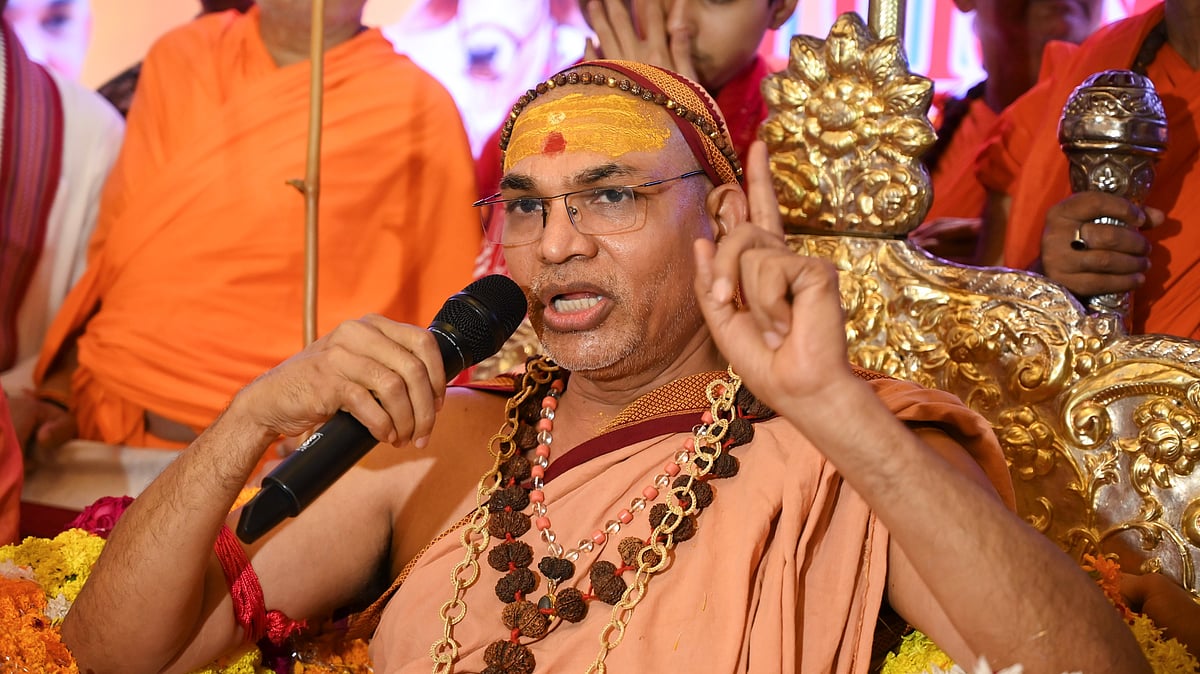
The Allahabad High Court has provided temporary legal relief to Swami Avimukteshwaranand Saraswati, a prominent religious leader known as the Shankaracharya. The court decided to stay his arrest in a case involving serious allegations under the law meant to protect children. This decision has sparked a heated political debate in Uttar Pradesh, with opposition parties claiming the state government is using legal cases to target its critics. The court has asked for more information before making a final decision next month.
Main Impact
The court's intervention prevents the police from taking the Shankaracharya into custody for the time being. This move is seen as a significant moment because it pauses a high-profile legal action that many believed was moving toward an immediate arrest. For the religious leader and his followers, this is a major victory that allows them to prepare their legal defense without the fear of jail. Politically, it has given the opposition a tool to argue that the state government is acting out of spite rather than just following the law.
Key Details
What Happened
A case was filed against Swami Avimukteshwaranand under the Protection of Children from Sexual Offences (POCSO) Act. This is a very serious law in India designed to protect minors from abuse. The seer asked the court for anticipatory bail, which is a legal way to seek protection from arrest before it happens. Justice Jitendra Kumar Sinha heard the arguments and decided that while the court studies the case further, the police cannot arrest the Swami. However, the court also made it clear that the religious leader must fully cooperate with the police during their investigation.
Important Numbers and Facts
The court has scheduled the next major update for the third week of March 2026. At that time, a final decision on the bail plea is expected. The court has also ordered the state government and the person who filed the complaint, Ashutosh Pandey, to submit their written responses to the court. Until that final order is read out, the stay on the arrest remains in place. This gives all sides about three weeks to present their evidence and arguments.
Background and Context
The Shankaracharya is one of the highest positions in the Hindu religion. Because of this, any legal action against someone holding this title becomes a national news story. In recent months, there has been visible tension between some religious leaders and the political administration in Uttar Pradesh. The POCSO Act, which is the basis of this case, is a strict law where arrests often happen quickly. The fact that the court stepped in to stop an arrest shows that the judges want to be very careful with how this specific case is handled. The seer himself has repeatedly stated that the charges against him are not true and were created to damage his reputation.
Public or Industry Reaction
Opposition leaders were quick to speak out after the court's decision. Ajay Rai, the head of the Congress party in Uttar Pradesh, said the court's order was a "fitting reply" to those trying to attack the Shankaracharya. He argued that the government was acting with "hatred" and trying to silence a respected saint. He also mentioned that the people of Varanasi, a city with deep religious roots, would not tolerate any insult to their spiritual leaders.
The Samajwadi Party also joined the criticism. MP Rajiv Rai suggested that the courts are aware of how the government sometimes uses its power to pressure people. He hinted that the timing and nature of the charges seemed suspicious. Meanwhile, in Varanasi, the seer’s followers celebrated the news at his ashram, viewing the court's stay as a sign that the truth will eventually come out.
What This Means Going Forward
The next few weeks will be critical for both the legal team of the Shankaracharya and the state police. The police must continue their investigation and gather evidence to support the charges. At the same time, the seer's lawyers will work to prove that the allegations are false or politically motivated. If the court grants full anticipatory bail in March, it will be a major setback for the prosecution. If the bail is denied, the risk of arrest will return. This case will likely keep the relationship between the state government and religious institutions under a microscope for the foreseeable future.
Final Take
This legal battle is about more than just one court case; it is a clash between religious authority and state power. While the law must apply to everyone equally, the involvement of high-ranking spiritual figures and serious allegations like those in the POCSO Act makes the situation very delicate. The court's decision to pause the arrest ensures that the legal process moves forward carefully, away from the immediate heat of political arguments.
Frequently Asked Questions
What is a stay on arrest?
A stay on arrest is a court order that stops the police from taking a person into custody for a specific period. It is often granted while the court is still deciding on a larger legal matter, like a bail application.
Why is the POCSO Act mentioned in this case?
The POCSO Act is the law used to file the complaint against the religious leader. It stands for the Protection of Children from Sexual Offences. Because these charges are very serious, they usually lead to immediate police action unless a court intervenes.
When will the final decision be made?
The Allahabad High Court is expected to give its final verdict on the anticipatory bail plea in the third week of March 2026. Until then, the Shankaracharya is protected from being arrested as long as he helps with the investigation.