SanDisk Extreme Fit Exposes iPhone 17 Storage Price Gap
Here's the storage math Apple hopes you won't notice: the cost of stepping up to the next iPhone 17 storage tier can rival the price of a budget phone — while a...
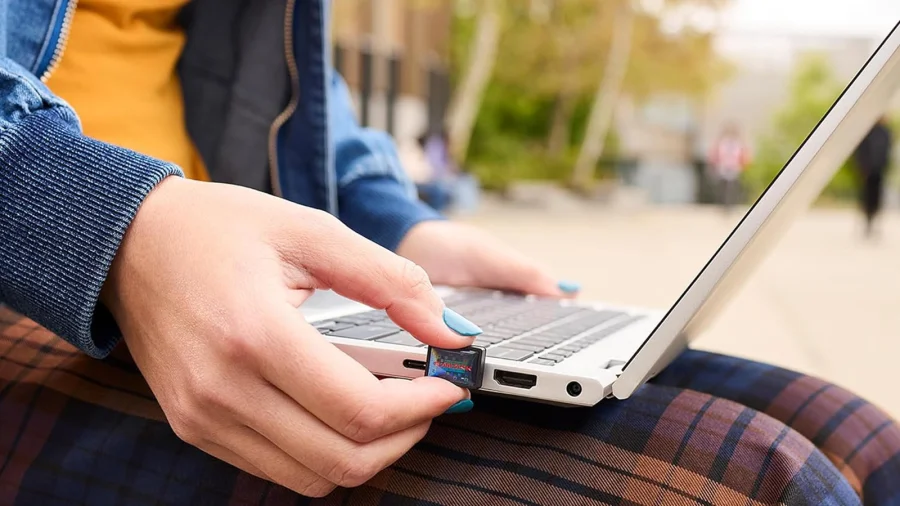
SanDisk's Extreme Fit — one of the world's smallest USB drives — comes in capacities that outstrip the base iPhone 17's 128GB storage. At a time when storage commands a premium price, this pebble-sized stick offers a far cheaper, pocketable alternative for backups, photos and video. The real takeaway: gigabytes are cheap in bulk but expensive at the point of sale — and this drive proves it.
**Main Update
** SanDisk's Extreme Fit USB flash drive, marketed as an ultra-compact design, is available in storage capacities above the base iPhone 17's 128GB.
**Impact
** Instead of paying Apple's upgrade premium for a higher-capacity iPhone, users can offload photos, videos and files to a stick smaller than most keychains.
**Product Edge
** The drive's near-flush, coin-sized profile lets it stay plugged into a laptop without blocking neighbouring ports.
**Official Response
** SanDisk lists the Extreme Fit as a USB 3.2 drive with read speeds up to 400MB/s, positioning it as a no-compromise balance of size and capacity.
**Current Status
** The drive is sold in multiple capacity tiers, including versions well beyond the iPhone 17's entry-level storage.
**What Next
** Buyers should check their device's USB standard and whether they need speed, durability or on-device access before choosing between a drive and a phone upgrade.
Here's the storage math Apple hopes you won't notice: the cost of stepping up to the next iPhone 17 storage tier can rival the price of a budget phone — while a USB stick smaller than a coin holds more than the base model's entire 128GB. SanDisk's Extreme Fit makes that comparison uncomfortably clear.
## The tiny drive that makes iPhone storage upgrades look pricey
The original story put it plainly: "At a time when storage space commands a premium price, SanDisk's Extreme Fit drive is worth a look." The look is striking. The drive, which SanDisk positions as one of the world's smallest portable storage devices, is sold in capacities that go past what the base iPhone 17 ships with — at a fraction of what a phone upgrade charges.
For anyone who has stared at the "Storage Almost Full" notification, the pitch is immediate: the world's smallest USB drive, a sliver of metal and plastic barely protruding from a USB port, quietly outperforms a flagship phone that costs hundreds of times more.
## How a stick smaller than a keychain outstores a flagship phone
The comparison starts with numbers. Apple's base iPhone 17 configuration ships with 128GB, per the company's official specifications. SanDisk's Extreme Fit, meanwhile, is available in capacities that climb to 1TB in the current lineup, with the company rating it for read speeds up to 400MB/s over USB 3.2 Gen 1.
That means one tiny drive can hold roughly eight times the base iPhone 17's storage. The physical contrast is even more dramatic: the Extreme Fit is designed to sit almost flush in a port, making it easy to leave plugged into a laptop or car and forget — until you need it.
## Why storage suddenly feels expensive again
Phone storage upgrades have always carried a markup, but the gap has widened as apps, 48-megapixel photos, 4K video and on-device AI features eat space faster than ever. Cloud storage adds recurring subscription costs, which many users resent paying indefinitely.
This is the backdrop the original story flagged: storage now commands a premium price precisely because demand keeps climbing. Into that gap steps the world's smallest USB drive, offering a one-time purchase that beats the monthly cloud bill and the one-time upgrade fee alike.
## Who's actually buying a tiny drive with huge capacity
The practical appeal spans several groups. Travelers who shoot hours of video on their phones; mobile creators who need off-device backups between edits; students juggling laptop files, lectures and projects; parents archiving years of family photos without trusting a single cloud account; even gig workers who carry files between machines.
These users don't want more phone hardware — they want more room to keep what they already have. A drive the size of a fingernail solves that without forcing them into Apple's upgrade ladder.
## What SanDisk promises with the Extreme Fit
SanDisk markets the Extreme Fit around two ideas: disappear into the port, and don't force a trade-off between size and capacity. The company's product materials emphasise the drive's compact footprint, USB 3.2 performance and capacities that rival internal storage.
The phrase "world's smallest" is bold marketing, but the engineering behind it is real: fitting 1TB of flash memory into a housing smaller than a coin is a genuine manufacturing achievement. Whether it's *literally* the smallest on Earth is a different question — and one SanDisk's competitors would happily debate.
## The catch: it's not a replacement for internal iPhone storage
Context matters. The iPhone 17 cannot run apps from an external USB drive, and moving files requires Apple's Files app or a photo-import workflow. The Extreme Fit shines for media hoarding, backups and file transfers — not for fixing "can't install another app" problems.
There are other risks. A drive this small is easy to lose. Transfer speeds depend on the USB standard of the device you plug it into. And the "world's smallest" crown is a moving target, with rivals releasing similarly sized sticks at similar capacities. The drive is a brilliant tool, but it has limits — and buyers should know them.
## What's confirmed vs. what's still unclear
**Confirmed:** The SanDisk Extreme Fit exists, is exceptionally small, and is sold in capacities above the base iPhone 17's 128GB. Apple's base iPhone 17 configuration ships with 128GB. Storage upgrades on the phone carry a significant extra cost.
**Unclear:** Whether the Extreme Fit is definitively the world's smallest in every dimension and market, since "smallest" depends on how volume is measured. Exact retail prices fluctuate by region and retailer. And long-term durability under daily carry — being tossed in bags and pockets — is something reviewers assess case by case, not a fixed spec.
## What this tiny drive says about the storage market
The Extreme Fit's appeal exposes a wider pattern: flash memory has become dramatically cheaper to manufacture, yet phone makers still charge premium prices for storage tier upgrades. Cloud services, meanwhile, convert that same cheap storage into recurring monthly revenue.
The result is that consumers are caught between two expensive paths — pay Apple more at purchase, or pay a cloud provider forever. A 1TB stick for a one-time price is a third path, and its popularity signals that users are tired of the other two.
## Should you buy the Extreme Fit instead of a bigger iPhone?
It depends on the problem you're solving. If your issue is filling the phone with photos, videos and downloads, a high-capacity Extreme Fit is a genuinely cheap fix. If your issue is running out of space for apps and needing constant on-device access, no external drive can substitute for internal storage — pay for the upgrade.
Before buying, check three things: whether your device uses USB-C or needs an adapter, whether you need the drive's top transfer speeds for large video files, and whether you'll actually carry a tiny stick without losing it. Consider a model with a keyring hole or a case if you tend to misplace small objects.
## Future outlook: where tiny drives go next
The trajectory is clear: more capacity in smaller footprints. As flash memory densities improve, expect 2TB versions of the Extreme Fit's form factor, faster USB 4 interfaces, and tighter software integration between phones and external storage. Apple's own iPhone 17 lineup supports external storage through USB-C, which means the ecosystem is already moving in this direction.
If that trend continues, the premium for phone storage upgrades will look increasingly indefensible — and the world's smallest USB drive will be part of the argument.
## Our Take
The SanDisk Extreme Fit doesn't replace an iPhone, and it isn't meant to. What it does is expose how expensive the phone storage upgrade path has become. In an era where gigabytes are cheap to make but costly to buy at the moment of a phone purchase, a coin-sized drive is a rational, quiet rebellion.
For most people, the answer isn't "drive or phone" — it's both: buy the base iPhone, keep the receipts and footage on a tiny stick that costs a fraction of Apple's upgrade fee. The fact that a device small enough to lose in a pocket can hold more than a flagship phone says less about the drive than about the prices we've been conditioned to accept.
## Frequently Asked Questions
### Is the SanDisk Extreme Fit really the world's smallest USB drive?
SanDisk markets the Extreme Fit as one of the world's smallest high-capacity USB drives, but "smallest" claims depend on how dimensions and capacity are measured. What's confirmed is that it's exceptionally compact — designed to sit nearly flush in a USB port — while offering capacities that rival internal phone storage.
### How much storage does the base iPhone 17 have?
The base iPhone 17 ships with 128GB of storage, according to Apple's official specifications. The SanDisk Extreme Fit is available in capacities up to 1TB, meaning a single tiny drive can hold roughly eight times more data than the base model.
### Can I use the SanDisk Extreme Fit with an iPhone 17?
Yes, with the right setup. The iPhone 17 uses USB-C, and Apple's Files app supports external storage, so you can import photos, videos and documents from the drive. However, you cannot install or run iPhone apps from an external USB drive, so it works for