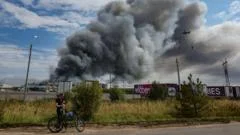
One night of war has produced two competing tragedies. Russia says at least seven people were killed in what it describes as the largest Ukrainian attack of 2026 — while Moscow's own deadly strikes against Ukraine overnight sparked fires across the capital, Kyiv. Both blows appear to have landed within hours of each other, and neither account can yet be independently confirmed.
Russia's account: seven dead in a record assault
Russian authorities have reported at least seven deaths from what they call the largest Ukrainian attack of 2026. The description and the toll both come entirely from Moscow's side. No independent confirmation of the casualties or the scale of the assault was available at the time of writing.
Moscow's own overnight strikes set fires across Kyiv
The original report confirms Moscow also launched deadly strikes against Ukraine overnight, with fires breaking out across the capital. This was not a one-sided exchange — it was mutual escalation within a single night, with civilians on both sides absorbing the consequences.
Why this night matters beyond the death toll
Deaths are the immediate human tragedy. The larger signal is intensity. An attack described as the "largest of 2026" suggests a significant expansion in scale or reach — even if that description is still a claim. Strikes that set fires across Kyiv show Moscow's response targeting the capital. For ordinary people in both countries, a night like this is a reminder that the war can escalate faster than verification can follow.
What is confirmed, what is still claim
Confirmed from the supplied report: Russia claims at least seven killed; Moscow describes the assault as the largest Ukrainian attack of 2026; Russia launched deadly strikes on Ukraine overnight; fires spread across Kyiv.
Not confirmed: the actual death toll, the true scale of either attack, the specific targets, and the sequence of events. Treat the numbers as claims under review.
The information war behind the casualty figures
Both sides have used casualty counts and attack descriptions as tools of the information war throughout this conflict. A "largest attack" label can shape domestic morale and international perception as much as it documents real events. Readers should hold these figures lightly until journalists, officials or humanitarian organisations can verify them independently.
What could come after a night like this
Escalation usually invites a response. If Moscow's claim of a record Ukrainian attack holds, further strikes on Ukrainian cities — including Kyiv — are plausible. If the death toll shifts, expect corrections. Every next step is speculative at this point, precisely because ground truth is still missing.
Our Take
This is a story told twice in one night — once from Moscow about losses inside Russia, once from Kyiv about fires in its capital. The most important sentence in any update on this conflict is: "This has not been independently verified." Seven deaths is a human tragedy before it is a statistic, and the world needs ground truth, not just competing claims.
Frequently Asked Questions
How many people were killed in the Ukrainian attack on Russia?
Russia says at least seven people were killed in what it calls the largest Ukrainian attack of 2026. This is a claim by Russian authorities and has not been independently verified.
Did Russia strike Ukraine in response?
According to the original report, Moscow launched deadly strikes against Ukraine overnight, sparking fires across Kyiv. Whether this was a direct response to the Ukrainian attack is not confirmed.
Why is this being called the largest Ukrainian attack of 2026?
The description comes from Russia's own account. There is no independent data yet to compare the scale of this attack with earlier attacks in 2026.
Can the casualty figures be trusted?
Not yet. Casualty claims in the Russia-Ukraine war routinely vary between sides. Independent confirmation from officials, journalists or humanitarian groups is needed before the toll can be treated as fact.