By [Author Name] | Technology & Consumer Robotics Correspondent
It took one sunny morning in June to learn something that no product launch ever teaches you: a robot dog doesn't change your life, it changes everyone else's behaviour around you. The writer behind the account walked to work with a quadruped beside him and, by his own description, has never been looked at so much in public.
A Morning Commute That Turned Into a Public Demonstration
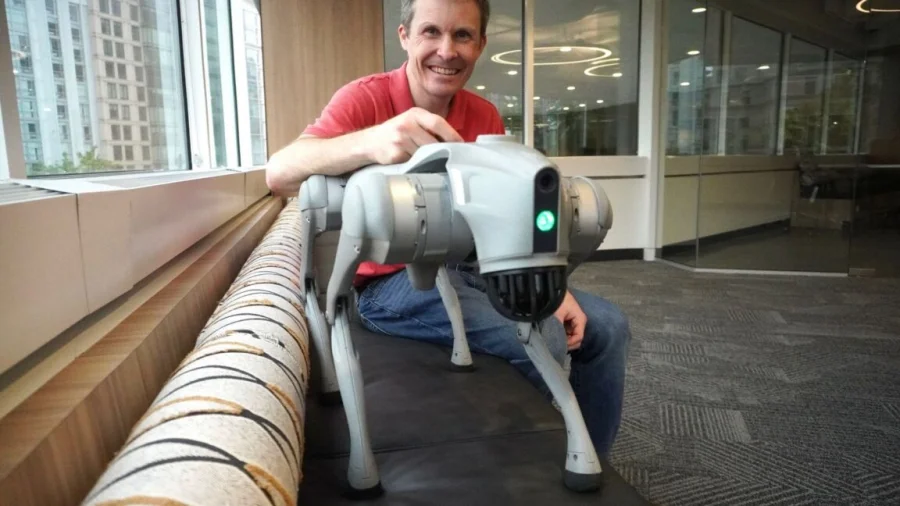
According to the account, the walk was ordinary in every way except one. A mechanical quadruped — a four-legged robot purchased for around $4,000 and described as coming from China — moved alongside him on the way to work.
Strangers stopped. Phones came out. A handful of people crossed the street to ask questions. The writer notes it was the most attention he has ever received from strangers, which is the whole point of the story: the machine gets the audience, not the owner.
The Three Questions Every Stranger Asked
The questions, as described, followed a strikingly consistent script. Is it yours? Did you build it? Is it being used for surveillance?
That trio says a lot about where public imagination sits right now. People accept that a private individual might own a walking robot. They are far less certain about who is watching whom. The surveillance question arrived unprompted, before anyone asked about price, battery life or what the machine can actually do.
The Dogs Had a Different Reaction Entirely
Real dogs, the account states, kept a safe distance. Some growled. Some barked. None of them cared about the engineering.
That detail matters more than it first appears. Animals respond to motion, gait and smell — not to branding or price tags. A quadruped that walks with an unfamiliar rhythm reads as "other" to a dog long before a human decides whether it's impressive or unsettling.
What $4,000 Signals to the People Around You
Four thousand dollars is a meaningful sum, but it is no longer an impossible one. That gap — between "expensive toy" and "actually affordable" — is exactly where public curiosity turns into public judgement.
As reported in the account, nobody asked the owner whether the purchase was sensible. They asked what it was for. That is the honest nature of the conversation around consumer robotics today: capability is assumed, purpose is not.
What This Account Does — and Does Not — Tell Us
Verified from the account: a robot dog was purchased for roughly $4,000, described as made in China; it was walked in public in June; it attracted photographs, questions and a surveillance query; real dogs reacted defensively.
Unclear or unverified: the manufacturer and model, the exact city, the date, the robot's technical specifications, and whether the $4,000 figure covered the device alone or included accessories. The writer's identity is also not disclosed in the material available.
No company statement, police comment or regulatory filing exists for this episode. It is a personal account, and it should be read as one.
The Privacy Question That Follows Every Quadruped
The surveillance question is not paranoia — it is a reasonable first instinct when a camera-capable machine walks a public street. Consumer drones triggered the same reflex a decade ago, and many cities responded with rules rather than bans.
What the account shows is that suspicion arrives before information. The owner answered "no" and the conversation moved on. But that single exchange is now a routine part of owning a walking robot in public.
Risks and the Balanced View
The case for these machines is real: they interest people, they start conversations, and they are being tested for inspection, delivery, education and research work. Cheap quadrupeds have also become a genuine entry point for students and hobbyists learning robotics.
The case against is equally real. Battery life, noise, repair costs and software support can quietly outlast the novelty. Public spaces are not neutral — dogs may react badly, children may be startled, and some venues restrict camera-equipped devices. Owners also carry a reputational risk they rarely anticipate: being mistaken for someone conducting surveillance.
Why This Small Walk Fits a Bigger Shift
A decade ago, a quadruped robot in public meant a research lab or a corporate demo with security nearby. Today the same silhouette can belong to a private individual on his way to the office.
That shift — from institutional to personal ownership — is the real story. The technology didn't suddenly change. Access did.
If You're Considering One, Start Here
Know the total cost, not just the sticker price. Budget for spares, servicing and any subscription software, because those numbers decide whether the robot stays useful after month two.
Check your local rules on camera-equipped devices in public spaces. Train the machine in quiet areas before a busy street. And expect the same three questions every single time — having a short, calm answer ready is genuinely part of ownership now.
What Could Happen Next
If these accounts keep multiplying, expect two consequences. First, more cities will clarify rules on where camera-carrying robots can and cannot walk. Second, public familiarity will rise — and with it, the day when a robot dog on the pavement stops being a spectacle.
Neither has happened yet. Both are reasonable to anticipate.
Our Take
The most revealing thing about this walk isn't the hardware. It's that not one stranger asked what the robot could do — they asked who it belonged to and what it was watching.
That tells us where the public has already landed: capability is accepted, intent is on trial. Any company or individual putting a walking machine on a public street from here on is not just showing a product. They are answering a question about trust.
Frequently Asked Questions
How much did the robot dog from China cost?
The account states the writer spent around $4,000 on the quadruped. That figure is self-reported and has not been independently verified, and it is unclear whether it included accessories or servicing.
Why do dogs bark at robot dogs?
Dogs react to unfamiliar movement, gait and scent rather than to what a machine is. In the account, real dogs kept their distance and some growled or barked — a normal response to something that moves like an animal but does not smell or behave like one.
Are robot dogs used for surveillance?
The writer answered no in the account. Many consumer quadrupeds can carry cameras, which is why the question comes up so quickly — but owning a camera-equipped robot is not the same as operating a surveillance system, and no evidence of surveillance exists in this case.
Is a $4,000 robot dog worth buying?
It depends entirely on purpose. If you want a conversation-starting machine and a platform for learning robotics, the case is decent. If you want practical daily utility, weigh battery life, noise, repair costs and public-space rules before buying — the novelty fades faster than the maintenance bill.