
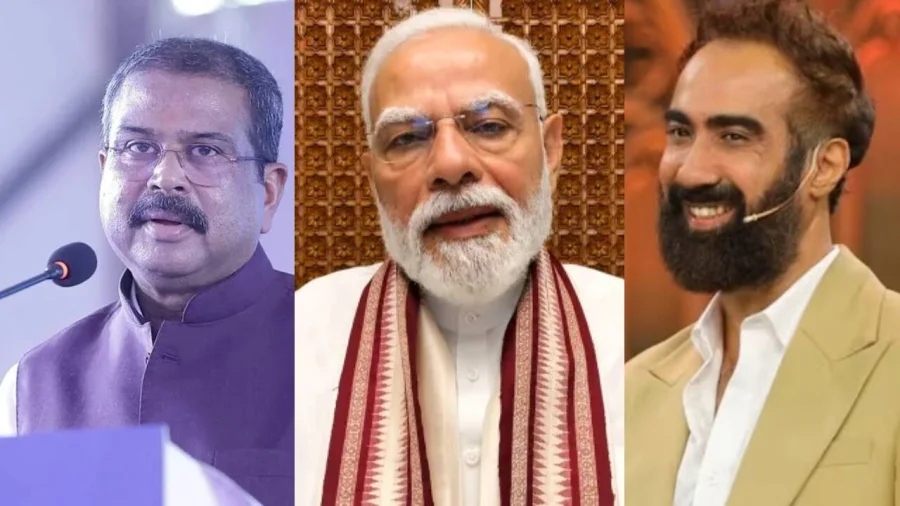
Bollywood actor Ranvir Shorey has waded into the political controversy surrounding Union Minister Dharmendra Pradhan’s resignation, claiming that Prime Minister Narendra Modi’s government has effectively “won over enemies” by accepting the exit. The remark has divided opinion in the film industry, with actress Tara Deshpande offering a sharply different take.
What Ranvir Shorey said about the resignation
Shorey criticized the government’s handling of the situation and the timing of Pradhan’s departure. His comment — that the government “won over enemies” through the resignation — suggests he views the move as a strategic concession rather than a principled decision. The actor did not elaborate on specific enemies he referred to, but his remark aligns with broader criticism from opposition figures who see the resignation as a surrender to pressure from student groups and political rivals.
Tara Deshpande’s contrasting take
Actress and activist Tara Deshpande offered a counter-narrative, highlighting Pradhan’s contributions across various government portfolios during his tenure. She argued that his work — especially in education and skill development — should not be overshadowed by the circumstances of his exit. Her view reflects a section of public opinion that respects Pradhan’s track record even while acknowledging the controversy that led to his resignation.
Film industry and student protests
Several other film industry figures publicly supported the student protests that erupted after Pradhan’s resignation. The movement, which began on campus, quickly gained traction on social media, drawing emotional reactions from celebrities and ordinary citizens alike. The resignations of ministers have historically been rare in India’s political landscape, making this incident a flashpoint for debate about accountability and political opposition.
Social media frenzy and public reaction
Social media platforms saw intense discussion in the hours following the resignation announcement. Hashtags both supporting and opposing the government trended. Shorey’s comment became a focal point for those who believe the Modi government was forced into a corner, while Deshpande’s defense of Pradhan gave voice to supporters who see the minister as a victim of political vendetta.
What remains unclear
It is not yet confirmed whether the resignation was voluntary or the result of internal party pressure. Neither the Prime Minister’s Office nor the BJP has commented directly on Shorey’s statement. The exact nature of the “enemies” Shorey referred to also remains speculation — some interpret it as opposition parties, others as student activists, and a few as internal factional rivals.
Balanced view: two sides of the debate
On one side, critics like Shorey argue that accepting the resignation sets a dangerous precedent where political opponents can force out ministers through agitation. On the other, supporters like Deshpande insist that accountability is essential and that Pradhan’s track record remains intact. The lack of an official narrative has allowed these opposing interpretations to flourish.
Wider trend: celebrity activism in Indian politics
This incident is part of a growing trend of Bollywood actors openly commenting on political affairs. From Kangana Ranaut’s pro-government stance to Deepika Padukone’s support for student protests in 2020, film stars are increasingly shaping public discourse. Shorey and Deshpande’s divergent views highlight how the industry itself is politically fragmented.
Practical guidance for readers
For those following the story, it is important to distinguish between verified facts — the resignation occurred, and these actors commented — and unverified interpretations. Readers should rely on official statements from the government or Pradhan himself for a definitive account of why he resigned.
Future outlook
The debate is unlikely to fade quickly. Student groups have vowed to continue their movement until a full inquiry is announced. The government, meanwhile, is expected to appoint a new minister to fill Pradhan’s portfolio. Whether Shorey’s “won over enemies” remark proves prescient or hyperbolic will depend on how the political situation evolves in the coming weeks.
Our Take
Ranvir Shorey’s comment is striking because it frames the resignation not as a failure but as a deliberate strategy. Whether that strategy works for the government depends on whether the resignation actually neutralizes the opposition or ends up energizing it. Tara Deshpande’s reminder of Pradhan’s past work is a useful antidote to the heat of the moment, but it does not resolve the fundamental question: was the resignation a victory for accountability or a concession to pressure? The public will judge that in time.
Frequently Asked Questions
What did Ranvir Shorey say about Dharmendra Pradhan’s resignation?
Shorey said that by accepting the resignation, the Modi government has “won over enemies,” implying the move was a strategic victory over political opponents.
What was Tara Deshpande’s reaction?
Deshpande highlighted Pradhan’s contributions across various government portfolios, focusing on his past work rather than the controversy of his exit.
Why did film industry figures join the student protests?
Many actors and artists support the student movement as a response to what they see as an unaccountable resignation process. Others see it as a wider issue of political transparency.
Has the government responded to these celebrity comments?
No official response from the Prime Minister’s Office or the BJP to Shorey or Deshpande’s statements has been reported so far.



