
By Staff Writer | Political Desk
Nothing prepares a parent for the loss of a child. Rahul Gandhi carried that grief into politics on Saturday, telling Prime Minister Narendra Modi that India's students deserve an apology — not forgiveness — for an exam system he called "corrupt."
The Leader of Opposition in the Lok Sabha made the statement in a post on X after meeting families of students who died by suicide during his day-long visit to Tamil Nadu. It was a moment where personal tragedy met systemic accusation.
Apology, not forgiveness: Gandhi's core demand
Gandhi's central argument is simple: students do not need the Prime Minister's "forgiveness." They need accountability for what he described as "repeated examination failures."
His choice of words was deliberate. Forgiveness implies the fault lies with the student. Accountability places the burden on the system — and on those who run it.
Why the Tamil Nadu visit gave the statement its weight
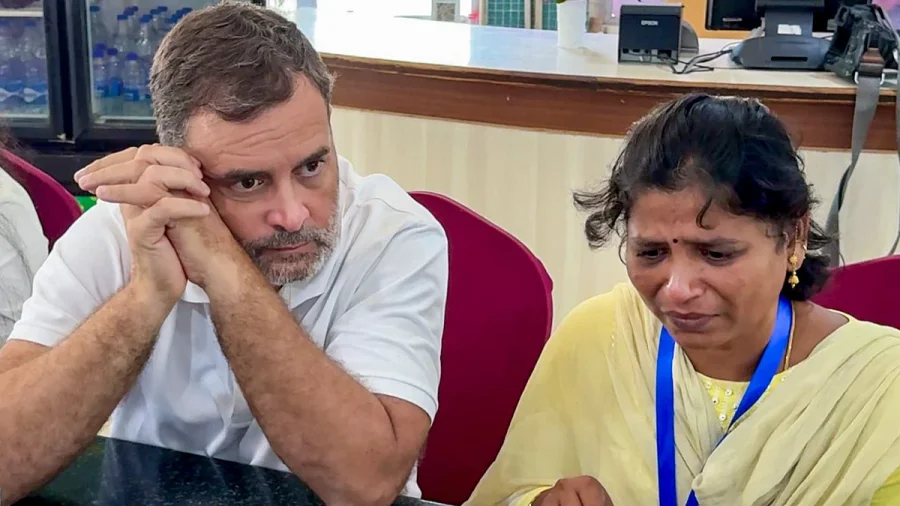
Gandhi did not make these remarks from a distance. He spent a day in Tamil Nadu meeting families who had lost children to suicide — households where examination pressure and system failures are not abstract ideas.
That human context transforms a political statement into something harder to dismiss. When a leader speaks after sitting with grieving parents, the words carry a different weight.
The pattern behind repeated examination failures
Gandhi alleged that each such tragedy "highlighted deeper flaws in the country's education system." He did not name specific examinations in the available report, but his framing was clear: these are not isolated incidents.
He presented the deaths as symptoms of a broader malfunction — a system that young people cannot trust with their futures.
The human cost: no parent should bury a child
"Nothing is more painful than seeing a parent grieve their child," Gandhi said. He expressed sympathy for the bereaved families and insisted no parent should have to endure such pain.
The emotional core of his message is undeniable. Behind every statistic about exam failures is a family whose life has been permanently altered.
Who is affected and why it resonates
Students preparing for competitive examinations, their parents, and teachers are at the centre of this issue. For millions of young Indians, exam results determine careers, social standing and family expectations.
When the system stumbles — through paper leaks, cancellations or repeated delays — the cost falls on students who have spent years preparing. That is why the demand for accountability resonates far beyond Tamil Nadu.
Leader of Opposition's role: turning grief into a demand
As Leader of Opposition, Gandhi's words carry institutional significance. His framing shifts the national debate from individual misfortune to governmental responsibility.
By demanding a prime ministerial apology, he is also asserting that exam failures are not administrative trivia. They are, in his view, a political issue at the highest level.
What is confirmed and what remains unclear
Confirmed: Gandhi's post on X, his day-long Tamil Nadu visit, his meetings with bereaved families, and his call for an apology over the exam system.
Unclear: Which specific examination failures he was referring to, the number of student deaths involved, and whether the government has responded. None of these details were available in the initial report.
Reading the political signal
The statement blends empathy with opposition politics. Gandhi has connected a deeply personal tragedy — a parent losing a child — to a structural critique of how India conducts examinations.
It is a politically effective combination. Few can argue with the pain of a grieving parent, and fewer still can defend a system that repeatedly fails students without consequence.
What students and families should take from this
For students, the practical realities remain unchanged. Preparation must continue, but so must self-care — stress around examinations is real, and seeking help is not a sign of weakness.
Families should be aware of official grievance channels for exam irregularities and should not hesitate to demand answers when something goes wrong. Accountability, after all, is a citizen's right.
What happens next
The immediate question is whether the Prime Minister or the government will respond to Gandhi's demand for an apology. At the time of writing, no such response was reported.
Beyond that, the conversation about examination reform and student welfare is far from over. Gandhi has ensured that the issue cannot be quietly filed away.
Our Take
Gandhi's statement works because it gives a human face to a systemic problem. Whatever one thinks of the politics, the underlying question deserves an answer: why do students keep paying the price for examination failures?
An apology would be a start. But as Gandhi correctly noted, accountability — not forgiveness — is what students actually need.
Frequently Asked Questions
What did Rahul Gandhi say about the exam system?
Rahul Gandhi said PM Narendra Modi should apologise to students for a "corrupt" exam system. He argued that students need accountability for repeated examination failures, not forgiveness.
When and where did Rahul Gandhi make these remarks?
He made the remarks on Saturday in a post on X, after meeting families of students who died by suicide during a day-long visit to Tamil Nadu.
Why did Rahul Gandhi link student suicides to the exam system?
He said each such tragedy highlighted deeper flaws in the country's education system. He expressed sympathy for bereaved families and said no parent should have to endure the pain of losing a child.
What did Rahul Gandhi mean by "accountability, not forgiveness"?
His point was that students deserve a reliable, fair examination system. Apologising for failures means accepting responsibility and fixing the system — rather than asking affected students to forgive and move on.

