
Summary
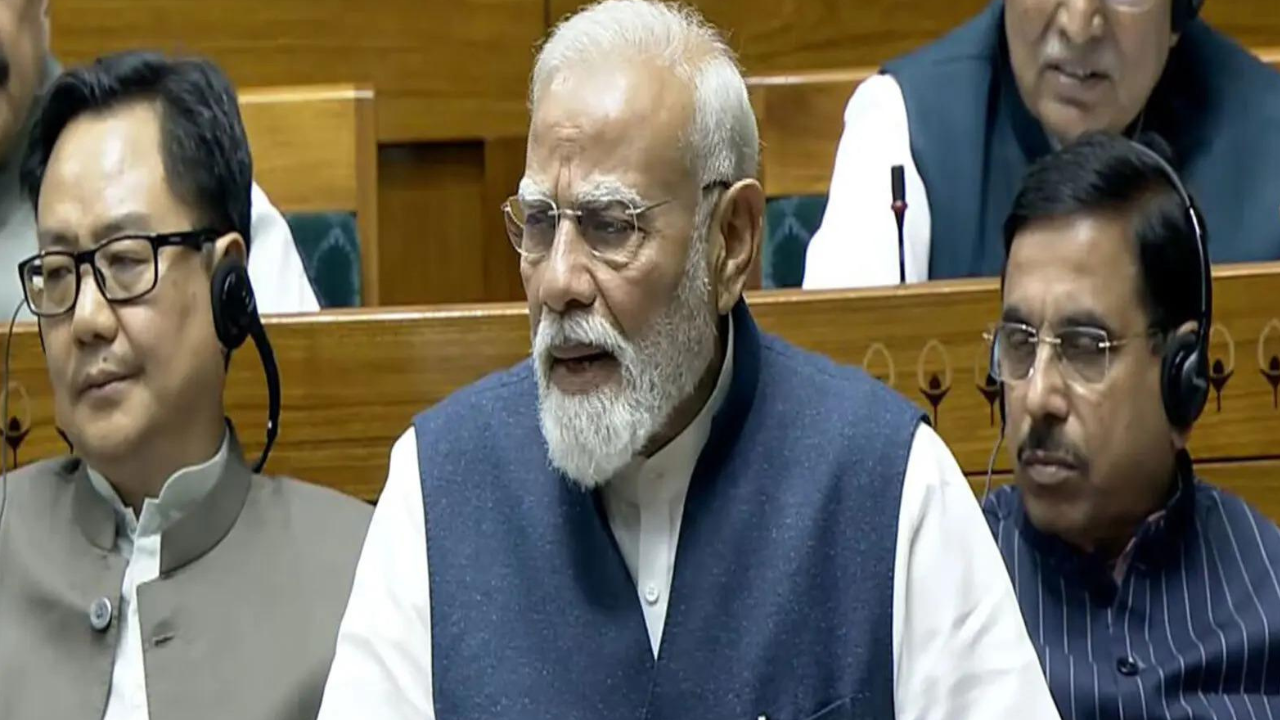
Prime Minister Narendra Modi recently addressed the Lok Sabha, where he spoke about the importance of new legislative changes. During his speech, he commented on a protest held by the DMK party, whose members wore black clothes to show their disagreement. Modi used a traditional metaphor, calling their black attire a "kala tika" for the new bills, suggesting the protest would actually protect the government's work from bad luck. He also took the time to promise that no state would lose its fair share of power or representation under the new laws.
Main Impact
The tension between the central government and regional parties like the DMK highlights a major debate in Indian politics. The main issue is how seats in Parliament are divided among different states. Southern states, including Tamil Nadu, are worried that they will lose their influence if the number of seats is changed based on current population sizes. By addressing these concerns directly, the Prime Minister tried to reassure the public while also making it clear that the government plans to move forward with its agenda. This situation shows the ongoing struggle to balance national goals with the specific needs of individual states.
Key Details
What Happened
The event took place during a session in the Lok Sabha where two major bills were being discussed. The first was the Women’s Reservation Bill, which aims to give more seats to women in the legislature. The second was the Delimitation Bill, which involves redrawing the boundaries of voting areas. Members of the DMK party arrived at the session wearing black clothes as a sign of protest. They believe the new rules will unfairly reduce the number of representatives Tamil Nadu has in the central government. Prime Minister Modi noticed the black clothing and used it to make a joke, saying that in Indian culture, a black mark is often used to keep away the "evil eye" or bad luck.
Important Numbers and Facts
The bills were introduced and moved forward after a formal vote in the house. A key point of the debate is the future of seat distribution. Leaders like Udhayanidhi Stalin have argued that Tamil Nadu has done a good job of controlling its population growth. Because of this success, they fear the state will be "punished" by receiving fewer seats compared to northern states where the population has grown much faster. The government, however, insists that the process will be fair and that every part of the country will be treated with justice. The Women's Reservation Bill is also a historic move, as it has been a topic of discussion for many years without being passed until now.
Background and Context
To understand why this matters, it is important to know what "delimitation" means. Every few decades, the government looks at the latest census data to see how many people live in different parts of the country. They then redraw the lines for voting areas to make sure each member of Parliament represents a similar number of people. This process was paused for a long time to encourage states to control their population growth. Now that the government is looking to start the process again, southern states are worried. They feel that their political power will shrink because their populations are smaller than those in the north. This has created a divide between the central government and state leaders who want to protect their local influence.
Public or Industry Reaction
The reaction to the Prime Minister's comments has been mixed. Supporters of the government found his "kala tika" joke to be a clever way to handle the opposition. They believe the new bills are necessary for the country to grow and for women to have a bigger voice in politics. On the other hand, members of the DMK and other opposition parties felt the comment was dismissive of their serious concerns. They argue that wearing black was a solemn way to protest a policy that could change the future of their state. Political experts noted that this exchange shows how difficult it is to reach an agreement on how to share power in a country as large and diverse as India.
What This Means Going Forward
As the government moves ahead with these bills, the next steps will involve detailed planning on how to redraw voting lines. This will likely lead to more debates in Parliament and possibly legal challenges from states that feel they are being treated unfairly. The government will need to prove that its methods are transparent and that no region is being ignored. For the Women’s Reservation Bill, the focus will shift to how the new seats will be assigned and when the changes will take effect. The relationship between the central government and the southern states will remain a key topic to watch as the next general elections approach.
Final Take
The debate in the Lok Sabha is about more than just clothes or jokes; it is about the future of how India is governed. While the Prime Minister used humor to deflect criticism, the underlying fears of the southern states are real and will need to be addressed with clear policies. Balancing the needs of a growing population with the rights of states that have followed national goals is a complex task. The success of these new bills will depend on whether the government can turn its promises of justice into actions that satisfy all parts of the country.
Frequently Asked Questions
What does "kala tika" mean in this context?
A "kala tika" is a traditional black mark put on someone’s face to protect them from bad luck. Prime Minister Modi used this term to say that the DMK’s black clothes would act as a protective charm for the government’s new laws.
Why is the DMK protesting the Delimitation Bill?
The DMK is worried that redrawing voting boundaries based on population will result in Tamil Nadu having fewer seats in Parliament. They feel this is unfair because they have successfully managed their population growth.
What is the Women’s Reservation Bill?
This is a law that sets aside a certain percentage of seats in the legislature specifically for women. It is designed to ensure that women have more representation and a stronger voice in making the country's laws.



