
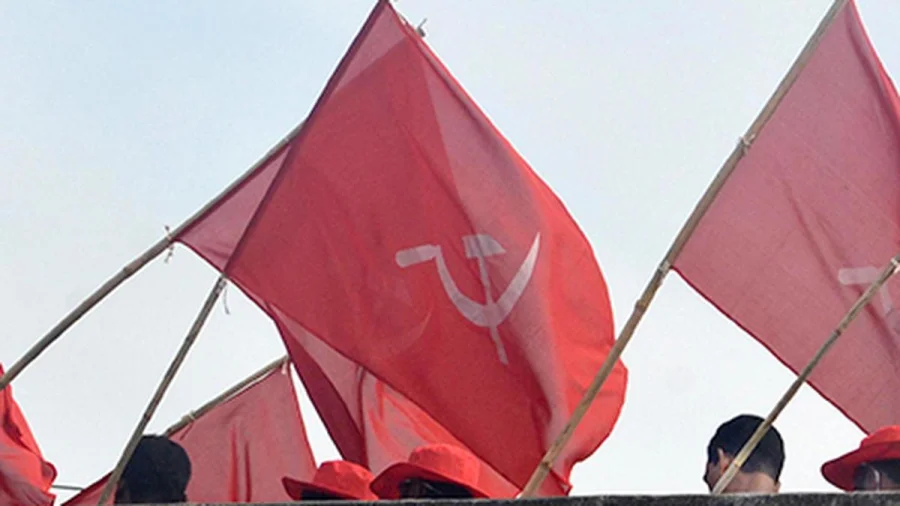
The CPI(M) has decided to stop arguing the case and start arguing the motive. In a statement, the party's Polit Bureau denounced the Enforcement Directorate's move against Kerala Chief Minister Pinarayi Vijayan as a political vendetta by the Modi government — and framed the investigation into his daughter, T. Veena, as a means rather than an end.
That single shift in framing is the story. The party is not disputing the existence of a probe. It is disputing why the probe exists at all.
The CPI(M)'s Charge, Stated Plainly
According to the party's statement, it was "evident from the outset" that the investigation into T. Veena was "only a pretext" to target Pinarayi Vijayan himself. The Polit Bureau's language is deliberately blunt — it uses the vocabulary of political persecution, not legal defence.
By naming the Modi government directly, the CPI(M) is not just criticising an agency. It is making a claim about who is directing it.
Why a Probe Into a Daughter Became a Fight Over a Chief Minister
Cases involving family members of senior politicians rarely stay contained. They travel quickly — from a file, to a headline, to a slogan. The CPI(M)'s argument follows that logic: that the daughter was the entry point, and the Chief Minister was always the destination.
Whether that reading is accurate is a separate question. But politically, it is an effective one, because it turns a procedural matter into a question about intent.
How the Polit Bureau's Position Took Shape
The Polit Bureau is the CPI(M)'s highest decision-making body — its intervention signals that this is now an official party line, not a local reaction from Kerala.
That matters. A state unit complaining of harassment is one thing. The party's central leadership formally calling it vendetta is a national-level accusation, aimed at both the Centre and the party's own cadre outside Kerala.
What This Means for People in Kerala
For voters in Kerala, the practical question is less about legal procedure and more about trust. When a central agency acts against a sitting Chief Minister of an opposition-ruled state, the public is asked to choose between two readings: accountability, or targeting.
Neither label can be verified by the public on its own. That uncertainty is exactly what makes the political argument so durable — and so hard to settle.
Where the Enforcement Directorate and the Centre Stand
No independently verified response from the Enforcement Directorate or the central government to the CPI(M)'s specific allegation was available in the material reviewed for this report.
That absence is itself notable. Agencies typically do not litigate motive in public. If a response comes, it is more likely to restate the legal basis of the action rather than engage with the word "vendetta."
Reading the Politics Behind the Legal Language
Enforcement cases are built on documents, transactions and statements. Political charges are built on timing. Both sides in this dispute are leaning on the second, because the first takes years to resolve.
The CPI(M) is betting that the timing looks political. The Centre's implicit counter is that timing is not evidence. Both positions can be held honestly — which is why this will not be resolved in a press statement.
Confirmed Facts vs What Remains Unclear
On record: The CPI(M) Polit Bureau has denounced the ED's move against Pinarayi Vijayan as a political vendetta, and has described the investigation into T. Veena as a pretext.
Not confirmed here: The precise text and timing of the Polit Bureau statement, the current stage of any proceedings, and any official response from the ED or the Centre could not be independently verified from primary sources available for this report.
Readers should treat the party's characterisation as a political claim — strongly made, but a claim nonetheless.
Why the CPI(M) Rarely Retreats From a Fight Like This
The CPI(M)'s political identity in Kerala rests on a long-standing narrative: that it stands against central pressure. For its core support, an allegation of vendetta is not a legal argument to be proven — it is a story that already fits.
That is the party's real strength here, and also its limit. The base does not need convincing. The undecided voter does.
The Risks in This Argument — for Both Sides
For the CPI(M), the risk is overreach. If the case later produces findings, an early "vendetta" framing becomes a liability, and the party will be asked why it questioned the process before the outcome.
For the Centre, the risk is pattern perception. Every agency action against an opposition leader adds to a public impression, whether or not the individual case is sound. Repetition, not any single case, is what shapes belief.
Neither risk is hypothetical. Both are already in play.
The Wider Pattern: Federal Agencies and Political Trust
This is not an isolated dispute. Allegations that central agencies are used against political opponents have become a recurring feature of Indian political argument across states and parties.
What changes from case to case is the evidence. What stays constant is the structure: a central agency, a state leader, and a public that has to decide whom to believe.
What Readers in Kerala and Elsewhere Should Watch For
Ignore the adjectives and track three things: whether the case moves through documented legal steps, whether the agency explains its legal basis, and whether the political rhetoric is matched by filings and findings.
If the case advances on paper, the vendetta argument weakens. If it stalls without explanation, it strengthens.
Where This Could Go Next
The most likely next phase is escalation in words, not in court. Expect the CPI(M) to take the charge to public meetings and Parliament, and the Centre to respond through official channels rather than debate the motive.
Any new development in the underlying investigation will be read through this framing — by both sides, and by voters already inclined to one conclusion.
Our Take
The CPI(M) has not simply criticised an investigation. It has pre-emptively defined what the investigation means — and that is a strategic choice, made before the facts are settled.
That does not make the charge false. It does mean readers should hold it the way they would hold any political claim: seriously, but not finally. The real test is not what the Polit Bureau says now. It is what the record shows later.
Frequently Asked Questions
What did the CPI(M) Polit Bureau say about the ED action?
It denounced the Enforcement Directorate's move against Kerala Chief Minister Pinarayi Vijayan as a political vendetta by the Modi government, and described the investigation into his daughter as a pretext.
Who is T. Veena in this story?
T. Veena is Pinarayi Vijayan's daughter. The CPI(M) says the investigation involving her was the route used to reach the Chief Minister, rather than a case with an independent purpose.
Has the Enforcement Directorate responded to the vendetta charge?
No verified official response from the ED or the central government to this specific allegation was available in the material reviewed for this report.
Is this a legal development or a political one?
At this stage it is primarily political. The CPI(M)'s statement contests motive, not procedure — and motive is argued in public, not proved in court.



