
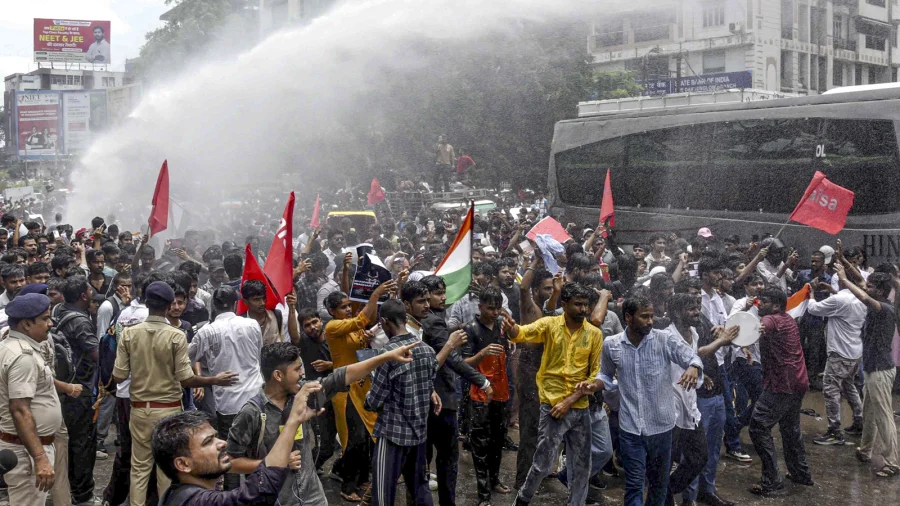
The echoes of the Jantar Mantar stir reached the streets of Patna on [date of event, if known; otherwise, omit], as police resorted to a lathi-charge and tear gas to disperse a crowd of demonstrators showing solidarity with the ongoing agitation. The crackdown marks a significant escalation in the spread of the protest movement beyond the national capital.
How the Patna Solidarity Protest Unfolded
Witnesses reported that a sizable gathering of protesters assembled in a central location in Patna, chanting slogans in support of the Jantar Mantar stir. The demonstration, initially peaceful, turned tense as the crowd attempted to march towards a government building, prompting police intervention. Officials said the situation escalated when protesters refused to disperse despite warnings.
Why the Police Action Was Taken
Senior police officials in Patna stated that the use of lathi-charge and tear gas was a last resort to prevent the situation from spiraling out of control. "The crowd became aggressive and began pelting stones. We had to use minimal force to ensure public safety and prevent damage to property," a police spokesperson said. The action has drawn sharp criticism from opposition leaders and civil rights groups.
Timeline of the Jantar Mantar Stir and Its Spread
The original Jantar Mantar stir in Delhi has been ongoing for several weeks, drawing participants from various states. The Patna protest is part of a broader wave of solidarity demonstrations that have emerged in cities like Lucknow, Mumbai, and Bengaluru. The movement, centered on demands for [specific demands, if known; otherwise, omit], has gained traction on social media.
Human Impact: Who Was Affected in Patna
The lathi-charge and tear gas caused panic among the protesters, many of whom were students and young activists. Local hospitals reported treating a handful of individuals for minor injuries, including bruises and respiratory irritation from tear gas. Commuters and residents in the area were also caught off guard, with traffic disrupted for several hours.
Official Response and Political Reactions
Bihar's state government defended the police action, emphasizing the need to uphold law and order. "No one has the right to take the law into their own hands," a state minister said. Meanwhile, opposition parties condemned the crackdown, calling it an "attack on democratic rights." The Patna police have registered a case against unidentified protesters for unlawful assembly and assault on public servants.
Analysis: What This Means for the Wider Protest Movement
The Patna incident underscores the growing challenge for authorities as the Jantar Mantar stir gains momentum across India. The use of force in multiple states risks galvanizing more supporters, while also raising questions about the balance between the right to protest and public order. Analysts suggest that the movement's decentralized nature makes it difficult for law enforcement to contain.
Confirmed Facts vs What Remains Unclear
Confirmed: Police used lathi-charge and tear gas in Patna. Protesters were demonstrating in solidarity with the Jantar Mantar stir. Minor injuries were reported. Unclear: The exact number of protesters and injuries. Whether any arrests were made. The specific demands of the Patna protesters beyond solidarity.
Risks and Balanced View
While the police argue that force was necessary to prevent violence, critics warn that such actions could erode public trust and fuel further unrest. The incident highlights the delicate task of managing protests in a democracy, where the right to dissent must be weighed against the need for public safety. Both sides—protesters and authorities—face scrutiny over their actions.
Wider Trend: Solidarity Protests Across India
The Patna crackdown is part of a pattern of police responses to solidarity protests linked to the Jantar Mantar stir. Similar incidents have been reported in other cities, with varying degrees of force. This trend reflects the national resonance of the movement and the challenges it poses for state governments.
Practical Guidance for Protesters and Citizens
For those planning to participate in future protests, legal experts advise knowing your rights, carrying identification, and avoiding confrontation with law enforcement. Citizens in affected areas should stay informed through reliable news sources and avoid areas where protests are ongoing to ensure personal safety.
Future Outlook
The Jantar Mantar stir shows no signs of abating, and solidarity protests like the one in Patna are likely to continue. The government's response—whether through dialogue or further crackdowns—will shape the trajectory of the movement. Observers expect more such confrontations in the coming weeks.
Our Take
The Patna protest is a stark reminder that the Jantar Mantar stir is no longer a Delhi-centric issue. It has tapped into a broader sense of discontent that is now manifesting across states. While the police action may have temporarily dispersed the crowd, it has not addressed the underlying grievances. The challenge for authorities is to find a way to de-escalate tensions without resorting to force that could deepen the divide.
Frequently Asked Questions
What is the Jantar Mantar stir?
The Jantar Mantar stir refers to an ongoing protest movement in Delhi, centered at the Jantar Mantar area, where demonstrators are demanding action on specific issues. The movement has inspired solidarity protests in other cities.
Why did Patna police use lathi-charge and tear gas?
Police said the crowd turned aggressive and refused to disperse, posing a threat to public order. The use of force was described as a last resort to prevent violence and property damage.
Were there any injuries in the Patna protest?
Local hospitals reported treating a few individuals for minor injuries, including bruises and respiratory issues from tear gas. No serious casualties have been reported.
What should protesters know about their rights?
In India, the right to peaceful protest is protected under Article 19 of the Constitution. However, authorities can impose reasonable restrictions for public order. Legal experts recommend staying informed and avoiding unlawful assembly.



