
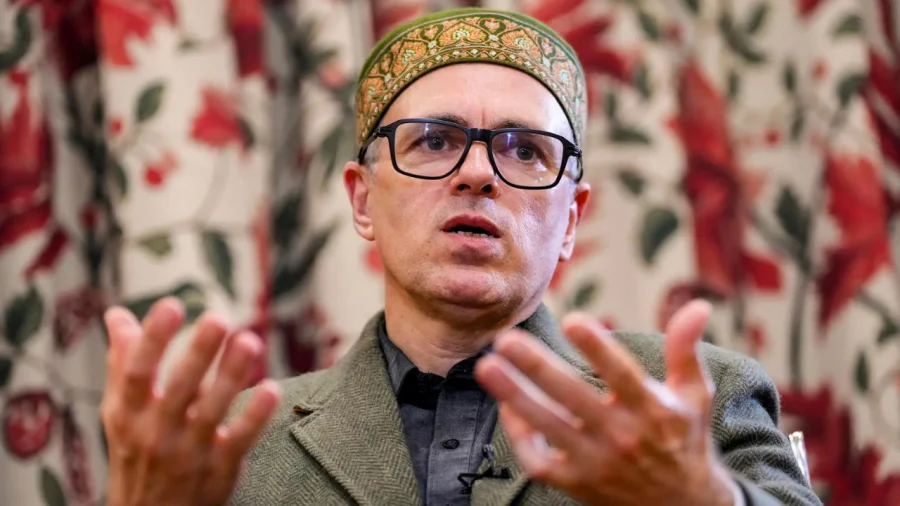
In a single set of remarks, Jammu and Kashmir Chief Minister Omar Abdullah offered the Centre both an endorsement and a warning. He praised India's diplomatic handling at the recent BRICS summit, pointing to the grouping's unified condemnation of the Pahalgam terror attack. Then he turned to the Uniform Civil Code — and questioned whether states should be allowed to move on a law this consequential before Parliament does.
Why a J&K Chief Minister Praising Delhi's Diplomacy Is Worth Noticing
Mr Abdullah is not a natural ally of the government at the Centre. His party has fought the Centre over statehood, over the dilution of Jammu and Kashmir's special status, and over the pace of restoration of full democratic institutions in the Union Territory.
That makes his endorsement of India's foreign policy position notable. It signals that on the Pahalgam attack and its international fallout, the political divide in Delhi and Srinagar narrows considerably.
What He Said About Pahalgam and the BRICS Consensus
According to the Chief Minister, the BRICS summit produced a collective condemnation of the Pahalgam terrorist attack — a diplomatic outcome he described as a credit to India's outreach. For a Union Territory that was the site of the attack, the internationalisation of that condemnation carries particular symbolic weight.
The Pahalgam attack triggered a sharp national security response and a sustained diplomatic campaign by India, which has maintained that Pakistan-linked militants were responsible. That position has been reiterated across multiple international forums.
The UCC Flashpoint: Parliament, Not Individual States
Mr Abdullah's second message was aimed inward. He argued that the Uniform Civil Code — which would replace religion-based personal laws with a common set of rules on marriage, divorce, inheritance and adoption — is too significant to be advanced through isolated state-level actions.
His position: legislation of this magnitude belongs in Parliament, where it can be debated across party lines, rather than being pushed state by state in a way he believes circumvents normal legislative norms.
How the UCC Debate Moved From the Courtroom to the States' Doorstep
The UCC has been a long-running constitutional promise under Article 44, a Directive Principle that asks the State to endeavour to secure a uniform civil code across India. It sat largely dormant for decades under successive governments.
In recent years, the conversation shifted. Uttarakhand became the first state to bring a Uniform Civil Code into force, and other states have publicly signalled plans to follow. That state-first approach is precisely what Mr Abdullah is now questioning.
Who Feels This Most — and Why It Isn't Abstract
For ordinary citizens, the UCC is not a constitutional theory. It determines how marriages are registered, how inheritance is divided, how divorce is settled and which personal law governs a family's most private decisions.
For minority communities, the concern is about cultural and religious autonomy. For women's rights groups, the question is whether a common code delivers genuine equality or merely uniformity on paper. Both anxieties are real, and both sit at the centre of Mr Abdullah's argument.
Where the Centre's Position Stands
The Union government has repeatedly framed the UCC as a step toward constitutional uniformity, while noting that any move would follow due process. State governments that have advanced their own versions have defended them as locally tailored.
No fresh official response to Mr Abdullah's specific criticism was available in the material reviewed for this report. Readers should treat the exchange as an ongoing political argument rather than a settled legal position.
Confirmed Facts vs What Remains Unclear
Confirmed in this report: Mr Abdullah publicly praised India's diplomatic outcome at the recent BRICS summit, including the grouping's condemnation of the Pahalgam attack. He also publicly questioned the Centre's UCC strategy and said Parliament should decide the matter.
Unclear or unverified here: the exact date, venue and full transcript of the remarks; whether the Centre has formally responded; and the precise legislative timeline for any national UCC bill. Any claim about what happens next is speculation and should be read as such.
The Political Calculation Behind a Two-Part Message
Endorsing the Centre on terror diplomacy and opposing it on personal law is not a contradiction — it is a strategy. It lets a regional party claim the national security ground without conceding the domestic governance ground.
It also keeps the statehood question alive. By engaging seriously with the Centre's foreign policy record, Mr Abdullah strengthens his own credibility when he presses Delhi on restoration of full statehood for Jammu and Kashmir.
The Risks in Reading This as a Simple Endorsement
There is a risk of over-reading the praise. Backing a diplomatic outcome is not the same as backing the government's wider Kashmir policy, and Mr Abdullah has not suggested otherwise.
Equally, his UCC objection is not a rejection of the idea itself. He has framed it as a question of which forum should decide — Parliament versus states — which leaves room for him to support a national law if the process changes.
A Wider Federal Pattern, Not a One-Off
The tension is bigger than one leader or one law. India is seeing more states legislate in areas that were once treated as national or concurrent concerns — from personal law to welfare eligibility to education policy.
When regional governments move first, the question of who speaks for the country becomes a live constitutional debate, not just a political one. Mr Abdullah's objection sits squarely inside that larger argument.
What This Means for Voters, Students and Observers
For citizens, the practical advice is simple: follow the legislative text, not the rhetoric. A state UCC and a central UCC would not be identical, and their scope will differ by jurisdiction.
For students of law and policy, this is a useful live case study on Article 44, federalism and the limits of state competence. For voters, the relevant question is less ideological and more procedural — which forum can deliver a law that survives legal scrutiny.
What Could Happen Next
Two tracks are likely to run in parallel: continued state-level movement on personal law, and pressure to bring the matter to Parliament for a national debate. Mr Abdullah's intervention strengthens the second track's political argument.
Expect the J&K statehood demand to remain linked to this conversation. When a Chief Minister engages with national diplomacy, he is also signalling that his government expects to be treated as a full partner in the federal system.
Our Take
The story here is not that a Chief Minister agreed with the Centre, or that he disagreed with it. It is that he carefully separated the two — and in doing so, reminded Delhi that consensus on national security does not buy silence on domestic law-making.
That distinction matters in a country where foreign policy and federalism are increasingly argued in the same breath. Mr Abdullah's remarks will be read as much in Srinagar as in Delhi, and that is precisely the point.
Frequently Asked Questions
What did Omar Abdullah say about the BRICS summit?
He praised India's diplomatic achievement at the recent BRICS summit, specifically highlighting the grouping's unified condemnation of the Pahalgam terror attack as a meaningful international endorsement of India's position.
Why does he object to the Uniform Civil Code?
His objection is procedural rather than purely ideological. He has argued that a law of this magnitude should be decided by Parliament instead of being advanced through isolated state-level actions that, in his view, bypass normal legislative norms.
What is the Uniform Civil Code in simple terms?
It is a proposed common set of laws governing marriage, divorce, inheritance and adoption for all citizens, replacing the religion-based personal laws currently in force. Article 44 of the Constitution directs the State to endeavour to secure it.
Has the Centre responded to his remarks?
No specific official response to his criticism was available in the material reviewed for this report. The exchange should be treated as an evolving political debate rather than a concluded one.
Transparency note: This report is based on the Chief Minister's reported public remarks. The full transcript, venue and date were not independently verified, and no invented quotes, figures or official statements have been included.



