Summary
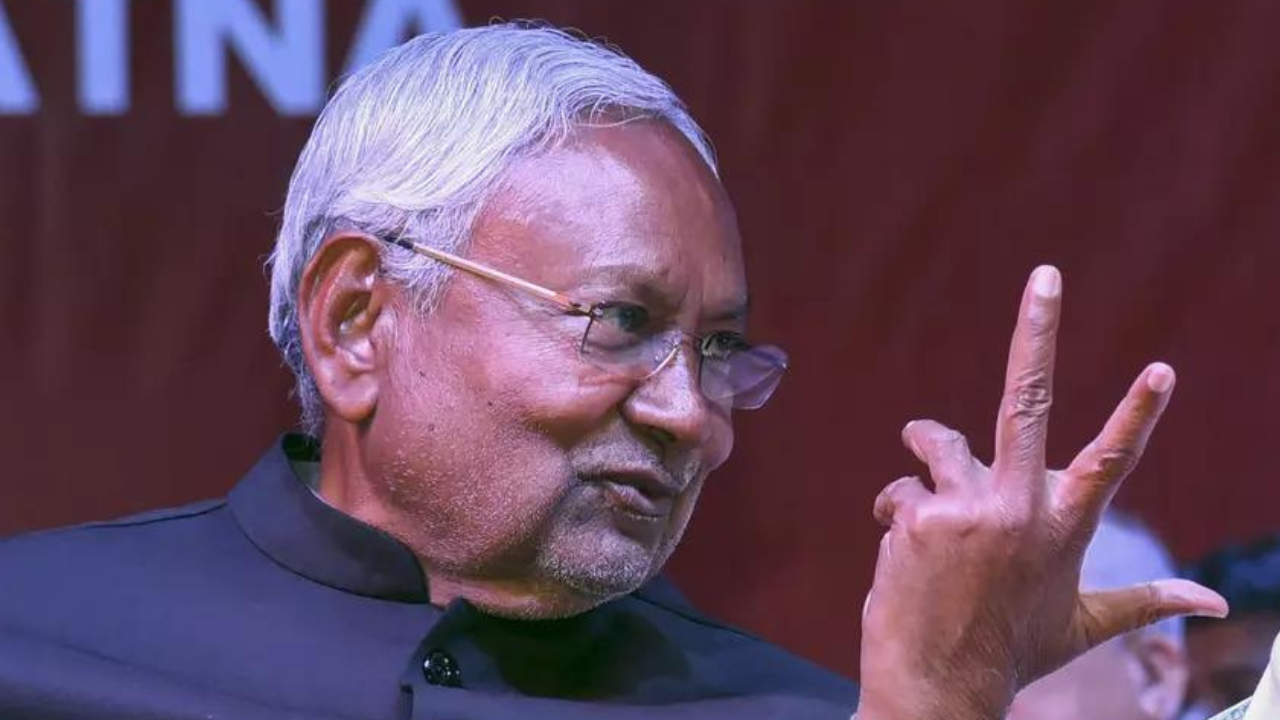
Nitish Kumar, the long-standing Chief Minister of Bihar, is preparing to move to New Delhi after choosing to take a seat in the Rajya Sabha. This decision means he will step down from his role as the leader of the state government, marking a major shift in the region's political scene. His departure signals the end of an era for a generation of leaders who followed the teachings of activist Jayaprakash Narayan. The Janata Dal (United) party now faces a difficult period as it tries to find a new leader to fill the gap left by its most prominent figure.
Main Impact
The most significant impact of this move is the sudden leadership vacuum in Bihar. Nitish Kumar has been the central figure in the state's government for nearly two decades. His exit leaves the Janata Dal (United), or JD(U), in a very tough position because there is no clear person ready to take his place. This change could weaken the party's influence and allow other political groups to gain more power in the state. It also changes the dynamic of the current government alliance, potentially giving more control to the Bharatiya Janata Party (BJP).
Key Details
What Happened
Nitish Kumar has decided to transition from state-level politics to a national role in the Rajya Sabha, which is the upper house of India's Parliament. By taking this step, he is effectively resigning as the Chief Minister of Bihar. This move comes after months of speculation about his future and his role within the National Democratic Alliance (NDA). His move to Delhi suggests a shift in focus toward national politics rather than managing the daily affairs of Bihar.
Important Numbers and Facts
Nitish Kumar has served as the Chief Minister of Bihar for over 15 years across several different terms. He first took the office in 2005 and has been the face of the state's development for much of that time. The JD(U) currently relies heavily on his personal popularity to win votes. Without him leading the state, the party must now manage its internal groups and prepare for the next assembly elections, which will be a major test of its strength without its founder at the helm.
Background and Context
To understand why this move is so important, it helps to look at the history of Bihar. Nitish Kumar belongs to a group of politicians who rose to power following the "JP Movement" in the 1970s. These leaders focused on social justice and the rights of ordinary people. Over the years, Nitish became known for his focus on "growth with justice," building better roads, and improving the education system in Bihar. However, he also became famous for frequently changing his political allies to stay in power. Despite these changes, he remained the only leader who could keep various political factions together. His departure marks the end of this specific style of leadership in the state.
Public or Industry Reaction
The reaction to this news has been a mix of surprise and concern. Political experts are closely watching how the JD(U) will handle the transition. Many members of the public are wondering if the state will remain stable without the leader they have known for so long. Opposition parties, such as the Rashtriya Janata Dal (RJD), see this as a chance to win back voters who were loyal to Nitish. Meanwhile, the BJP is preparing to take a more dominant role in the state government. There is a general feeling that Bihar is entering a time of great change, and many are waiting to see who will be named as the next Chief Minister.
What This Means Going Forward
The future of the JD(U) is now the biggest question in Bihar politics. The party must quickly find a way to stay united without Nitish Kumar's direct leadership. If they fail to find a strong successor, the party could split into smaller groups or lose its identity entirely. For the state of Bihar, this move might lead to a period of political uncertainty. The relationship between the JD(U) and the BJP will also be redefined. We may see the BJP pushing for more control over key government decisions, which could change how the state is run in the coming years.
Final Take
Nitish Kumar's move to the Rajya Sabha is a turning point for Bihar. It ends a long chapter of leadership that defined the state for a generation. As the JD(U) faces its biggest challenge yet, the people of Bihar are left watching a new era begin. The success or failure of this transition will decide the political future of one of India's most important states for years to come.
Frequently Asked Questions
Why is Nitish Kumar moving to the Rajya Sabha?
Nitish Kumar is moving to the Rajya Sabha to take on a national role in Indian politics. This move allows him to step down from the demanding role of Chief Minister while still remaining active in the government at the federal level.
Who will replace Nitish Kumar as Chief Minister?
Currently, there is no official successor named. The JD(U) and its allies will need to hold meetings to decide on a new leader who can maintain the support of the majority of the state assembly.
Will the JD(U) survive without Nitish Kumar?
This is the main challenge the party faces. While the JD(U) has many experienced members, Nitish Kumar was the primary reason many people voted for the party. Its survival depends on how well the new leadership can connect with voters.