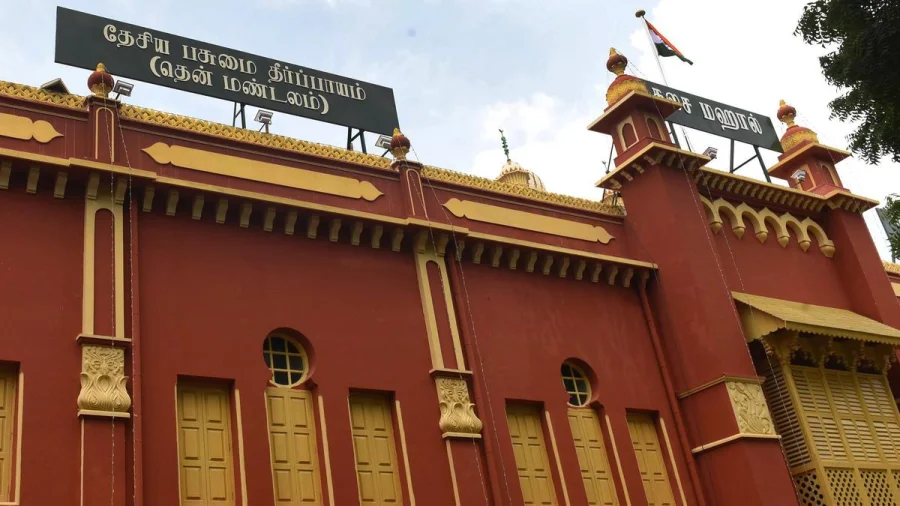
Neyveli, the industrial town in Tamil Nadu's Cuddalore district known for lignite mining and thermal power operations, has been at the centre of pollution conce...
Admin
The Tasalli
728 x 90Header Slot
TL;DR — Quick Summary
The NGT has directed the Tamil Nadu Pollution Control Board to set a timeline for IIT-Madras to conduct a comprehensive study on pollution issues in Neyveli. The direction followed a report from TNPCB's internal technical committee, whose members disagreed on preparing a consolidated report. A fixed deadline now determines when a credible scientific assessment will be available.
Key Facts
Main Update
NGT directed TNPCB to set a timeline for IIT-Madras' comprehensive study on pollution issues in Neyveli.
Key Reason
TNPCB's internal technical committee submitted individual reports but members differed on preparing a comprehensive report.
Official Response
The NGT bench noted the differences of opinion among committee members during proceedings.
Current Status
TNPCB is expected to communicate the timeline for the IIT-Madras study; specific deadlines were not disclosed.
What Next
The study is expected to proceed on a defined schedule once the tribunal receives the timeline.
Neyveli, the industrial town in Tamil Nadu's Cuddalore district known for lignite mining and thermal power operations, has been at the centre of pollution concerns. The National Green Tribunal (NGT) has now moved to place those concerns on a fixed track — directing the Tamil Nadu Pollution Control Board (TNPCB) to set a timeline for a comprehensive study by the Indian Institute of Technology Madras (IIT-Madras).
Tribunal's directive: a timeline for a long-pending study
The direction came during proceedings linked to pollution issues in Neyveli. According to the available details, the NGT bench noted that an internal technical committee constituted by TNPCB had submitted individual reports. However, differences of opinion among its members stood in the way of assembling a comprehensive report.
With that observed, the tribunal asked the board to move forward by locking a schedule for the IIT-Madras study — a clear signal that the exercise must not remain open-ended.
Why fixing a deadline matters more than it appears
A scientific study without a timeline can drift indefinitely. In environmental matters, such delays can push meaningful action years into the future. The NGT's insistence on a schedule is intended to create accountability — for the board, for the institute conducting the study, and ultimately for the regulatory process itself.
The timeline decides when residents, regulators and the public can expect a definitive assessment rather than an open-ended investigation.
How the technical committee reached this point
The TNPCB had constituted an internal technical committee as part of addressing the pollution complaints in the Neyveli region. Its members prepared individual reports on the issues examined. But the absence of agreement on a combined, unified document appears to have slowed the process.
It is at this juncture that the tribunal stepped in, effectively redirecting the exercise toward a single institutional study with a deadline attached.
What the committee's differences indicate
When experts examining the same problem reach different conclusions, the regulatory machinery often stalls. The NGT's response — routing the task through IIT-Madras — suggests the tribunal is seeking one credible, independent scientific reference point instead of a bundle of conflicting opinions.
That approach does not dismiss the committee's work but recognises that divergent findings need to be reconciled through a more authoritative study.
Who stands affected in Neyveli
The most direct impact will be felt by people living and working in and around Neyveli, an area where industrial activity and daily life have coexisted for decades. The IIT-Madras study, once completed, could become the foundational document for future pollution control decisions in the region.
For the community, the timeline therefore represents more than procedure — it signals how soon the scientific picture of their environment will be made clear.
Confirmed facts versus what remains unclear
What is confirmed: the NGT directed TNPCB to set a timeline for IIT-M's comprehensive study on Neyveli pollution; the board's internal technical committee submitted individual reports; and committee members differed on preparing a comprehensive report.
What is not yet known: the specific date of the hearing, the exact nature of the members' differences, and the timeline TNPCB will eventually propose. None of these details were disclosed in the available information.
The risk: a deadline without follow-through
A timeline alone does not guarantee completion. If the differences seen inside the technical committee resurface in the larger IIT-Madras exercise, the process could still stall. Coordination between the board, the institute and other stakeholders, along with a clearly defined scope, will decide whether the directive results in a usable report.
Sceptics may also ask what happens if the board fails to meet the schedule it sets — a question the tribunal will likely keep a watch on.
A wider pattern of time-bound environmental scrutiny
The NGT's intervention fits a broader trend in which Indian environmental tribunals are pressing regulators toward time-bound scientific assessments rather than protracted consultations. In industrial townships like Neyveli, where economic activity and environmental pressure run side by side, such deadlines often mark the difference between study and action.
The directive reinforces that pattern: institutions are being told that expert input must be delivered within a structure of accountability.
What should happen next
TNPCB must now present a timeline to the tribunal, after which the IIT-Madras study can move on a defined schedule. The next likely milestone is the board's submission to the NGT outlining the timeframe, following which the scope and methodology of the study are expected to take concrete shape.
Given the tribunal's clear stance, any further delay in setting the schedule is unlikely to go unnoticed.
Our Take
This order is a procedural step with a substantive purpose. Pollution disputes in India often stall not from a shortage of scientific input but from the absence of deadlines that force conclusions. By anchoring the process around a timeline, the NGT has signalled that the IIT-Madras study must be conclusive — and that someone must answer for its outcome. The test now lies in execution.
Frequently Asked Questions
What did the NGT direct TNPCB to do?
The National Green Tribunal directed the Tamil Nadu Pollution Control Board to set a timeline for IIT-Madras to conduct a comprehensive study on pollution issues in Neyveli.
Why did the NGT issue this direction?
The tribunal noted that the TNPCB's internal technical committee had submitted individual reports, with differences of opinion among members on preparing a comprehensive report.
Who will conduct the Neyveli pollution study?
The comprehensive study will be conducted by the Indian Institute of Technology Madras (IIT-Madras), as directed by the NGT.
What are the pollution concerns in Neyveli?
Neyveli is an industrial town in Tamil Nadu associated with lignite mining and thermal power generation. The specific scope of pollution issues to be covered in the IIT-Madras study has not been detailed in the available information.