
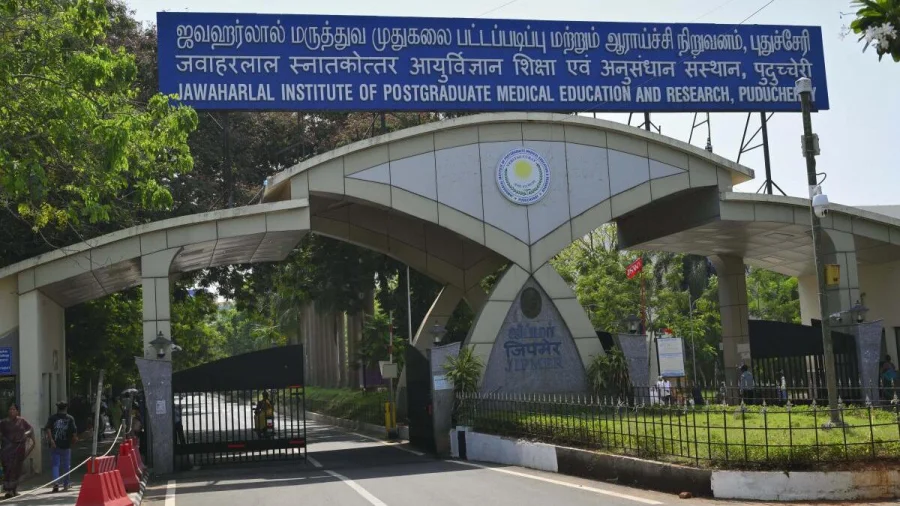
By Health Desk | Public Health Beat
JIPMER has formally inaugurated a newborn screening programme — a move that puts early detection of hidden health conditions in infants at the centre of its child care efforts. For parents in Puducherry and neighbouring districts, the announcement carries a quiet but significant promise: catch a serious disorder before it becomes a lifelong disability.
What the programme means at first glance
Newborn screening is a preventive health measure in which babies are tested shortly after birth for metabolic, endocrine, and genetic disorders that show no immediate symptoms. The Jawaharlal Institute of Postgraduate Medical Education and Research (JIPMER), a government-run Institution of National Importance in Puducherry, has now taken the first formal step toward institutionalising this on its campus.
Why this matters for new parents
Some disorders, if undetected, can cause severe developmental delay, organ damage, or even death within the first months of life. When caught within days of birth, many of these same conditions are manageable — often with simple medication, dietary changes, or early therapy. That narrow window of time is exactly what newborn screening is designed to protect.
Background: the road to this launch
Newborn screening has been recommended in India for years, yet coverage remains uneven across



