By Arjun Mehta | Automotive & Mobility Correspondent
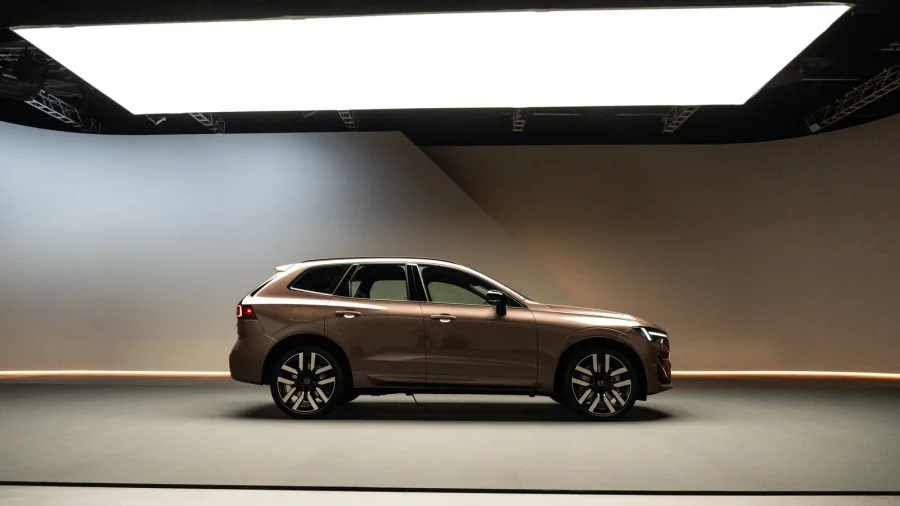
For years, a plug-in hybrid asked buyers to accept a quiet compromise: electric power for the school run, petrol for everything else. Volvo's next XC60 and XC90 are being positioned to shrink that compromise sharply — roughly doubling how far they can travel on battery power alone.
That single change matters more than most spec-sheet upgrades. It decides whether a plug-in hybrid feels like a genuine electric car for six days a week, or a petrol SUV with a green badge.
Why "Double the Range" Is a Bigger Deal Than It Sounds
Today's Volvo XC60 and XC90 plug-in hybrids are EPA-rated at roughly 30 to 40 miles of electric-only driving, depending on model year and trim. That is enough for a short commute, but not for a full day of errands.
Roughly doubling that figure — simple arithmetic, not an official Volvo number — would push the next generation toward the 60-to-80-mile bracket. For most urban and suburban drivers, that covers an entire day's driving without burning a drop of petrol.
The practical effect is a car that behaves like an EV on weekdays and a long-distance SUV on weekends. That is exactly the pitch Volvo is making to buyers who are EV-curious but not yet EV-ready.
A Company That Has Quietly Rewritten Its Electric Ambitions
Volvo was once among the loudest voices promising an all-electric future. In September 2024, the Swedish carmaker stepped back from its target of selling only EVs by 2030.
Under its revised plan, Volvo aims for 90 to 100 per cent of its global sales to be electrified — a category that includes both fully electric cars and plug-in hybrids — by the end of the decade, with a small remainder of mild hybrids.
The reasons were practical rather than philosophical: slower-than-expected EV adoption in several markets, uneven charging infrastructure, and tariffs reshaping where electric cars can be sold profitably.
What "Smarter Safety" Could Actually Mean
Volvo has built its reputation on safety, and the brand has already pushed sensing hardware further upmarket. The flagship EX90 electric SUV introduced LiDAR and an array of cameras and radars under what Volvo calls its next-generation safety approach.
It is reasonable to expect the refreshed XC60 and XC90 to inherit a version of that thinking — sharper pedestrian and cyclist detection, better lane-keeping, and assistance systems that intervene earlier. Volvo has not detailed the exact hardware for these models, so specifics should be treated as expectation, not confirmation.
The Engineering Bet Behind a Longer-Range Hybrid
Volvo's advantage here is structural. Its cars are built on platforms designed from the outset to accommodate both combustion engines and battery packs, which makes it easier to fit a larger battery without redesigning the whole vehicle.
Add parent company Geely's manufacturing scale and Volvo's in-house software work, and the company can spread the cost of bigger batteries across a large global volume. That is a meaningful edge over brands that bolt electrification onto older architectures.
It also gives Volvo a second commercial engine. PHEVs carry higher margins than conventional hybrids and keep customers inside the brand while they wait for charging confidence to grow.
What Volvo Has Confirmed — and What It Hasn't
Clear: Volvo intends to keep selling plug-in hybrids through the transition, and its next XC60 and XC90 are central to that plan. The direction of travel — more electric range, more safety tech — is not in doubt.
Unclear: The exact range figures, battery capacity, charging speeds, pricing, launch dates and which markets get which versions. Any specific number circulating before Volvo publishes official data should be treated as a claim, not a fact.
How the XC60 and XC90 Will Stack Up Against Rivals
The premium plug-in hybrid segment is crowded. BMW's X5 plug-in hybrid, Mercedes-Benz's GLE and the Lexus NX and RX hybrids all compete for the same buyer who wants electric running without electric range anxiety.
Chinese manufacturers, including Volvo's own parent group's sibling brands, are pushing hard on long-range plug-in hybrids too. That competition is a large part of why range — not horsepower — has become the headline number in this segment.
The Case Against Longer-Range Plug-Ins
Bigger batteries are heavy, and weight hurts handling, tyre wear and efficiency once the battery is depleted. They also raise the purchase price, which matters for buyers who never plug in at all.
Critics argue that long-range plug-in hybrids delay the real fix — faster charging networks and cheaper full EVs — while still burning petrol on long trips. Environmental groups have also questioned real-world emissions from plug-ins that are rarely charged.
Volvo's counter-argument is simple: a car that can drive most days on electricity is still a large net reduction in tailpipe emissions compared with a conventional SUV.
The Wider Plug-In Hybrid Comeback
Volvo is not alone in rediscovering the plug-in hybrid. Several global carmakers that had promised to skip hybrids entirely have reintroduced them as demand for pure EVs cooled in key markets.
The pattern is consistent: electrification is not reversing, but it is arriving in stages rather than in one leap. Longer-range plug-ins have become the industry's bridge — and the XC60, Volvo's best-selling model worldwide, sits right at the centre of that bridge.
What Buyers Should Do While They Wait
If you are shopping today and mostly drive short distances with home charging, a current XC60 or XC90 plug-in hybrid already covers most daily trips on electricity. Waiting for the next generation buys range you may not need.
If you regularly drive 50 to 70 miles a day and want to avoid petrol entirely, the case for waiting is stronger. Either way, get official range figures in writing before signing, and check whether your home wiring can support faster charging.
What Happens Next
Expect Volvo to release firmer specifications — battery size, electric range, charging rates and pricing — closer to launch. Between now and then, treat leaked numbers with caution.
Watch two signals in particular: whether the new plug-ins adopt charging speeds closer to full EVs, and whether Volvo prices them near, rather than above, today's models. Both will decide whether this is a genuine leap or a marketing one.
Our Take
The headline is about range. The real story is about timing. Volvo is betting that a large slice of premium buyers will not switch to electric until range anxiety disappears — and that the fastest way to remove that fear is to build a hybrid that rarely needs petrol.
It is a pragmatic, unfashionable strategy that is increasingly looking like the industry's consensus. The test will not be the brochure figure, but whether owners actually plug in. If they do, doubling the range quietly does more for emissions than a great deal of louder promises.
Frequently Asked Questions
Will the 2028 Volvo XC60 and XC90 really double their electric range?
That is the claim in early first-look reports. Volvo has not yet published official range figures. The direction — a substantial increase in electric-only driving — is consistent with the company's stated plug-in hybrid strategy, but the final numbers are unconfirmed.
What does "smarter safety" mean on these Volvo SUVs?
It points to upgraded driver-assistance and collision-avoidance technology, likely drawing on the sensor systems Volvo introduced on the EX90, which uses LiDAR alongside cameras and radar. Volvo has not detailed the exact specification for the XC60 and XC90.
Are the 2028 XC60 and XC90 fully electric?
No. They are plug-in hybrids, meaning they combine a battery-powered electric motor with a petrol engine. The XC60 and XC90 are expected to continue alongside Volvo's fully electric models, such as the EX30 and EX90.
Should I wait for the 2028 models or buy a current Volvo plug-in hybrid?
It depends on your daily mileage and charging setup. If your typical day is under 30 to 40 miles and you can charge at home, today's models already suit most trips. If you routinely drive longer distances and want to avoid petrol entirely, waiting for the longer-range version may be worth it.