By [Author Name] | Technology & Science Desk
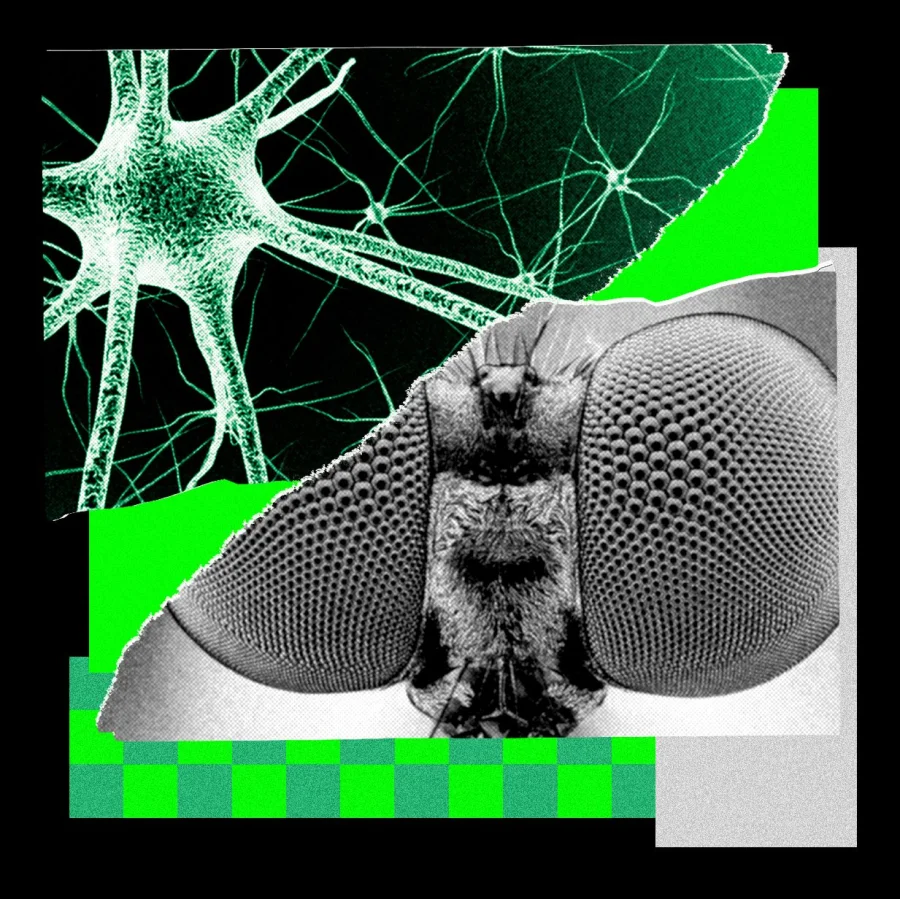
A fruit fly's brain holds roughly 140,000 neurons, by the most widely cited count. It has never pitched a story, never missed a deadline, and has no discernible opinion about WIRED's editorial calendar. Someone plugged a map of it into a website anyway — and the website started offering up headlines.
The project is called PitchFly. According to the original account, a WIRED writer used an open-source map of a fruit fly's brain to "vibe code" the site, and the headline suggestions it produced were, in the writer's words, "delightfully bananas."
What PitchFly Is — and Why a Fly Brain Ended Up in the Pipeline
PitchFly is a small, self-built website that generates story pitches and headline ideas. Its unusual design choice is its source material: instead of a language model alone or a random-word generator, it draws on publicly available data describing how neurons in a fruit fly's brain are wired together.
That distinction matters. Most creative idea tools on the internet are built on text — scraped headlines, language models, template banks. PitchFly's starting point is biological structure, then converted into something a browser can run.
Vibe Coding, Explained Without the Jargon
"Vibe coding" is the informal term for building software by describing what you want to an AI coding assistant and letting it write most of the code, while you steer, test, and fix. It lowers the barrier dramatically: a person with an idea and a data file can ship a working web toy in an evening.
That is the practical reason an experiment like PitchFly exists at all. Open brain data has been available for a while; what's new is that an individual with no neuroscience lab and no engineering team can turn it into something interactive over a weekend.
Why an Insect Brain Is an Oddly Sensible Idea Machine
Flies are not stupid. They navigate, dodge swatters, find rotting fruit and land upside down on ceilings — all on hardware smaller than a sesame seed and running on almost no energy.
For a creative tool, that's the point. A human brain's wiring is too large and too well-trodden to use as a novelty engine. A fly's is compact, alien, and structured around solving problems in ways we don't intuitively expect. Odd connections produce odd suggestions — which, for brainstorming, is closer to a feature than a bug.
What a Connectome Can and Cannot Do
A connectome — the map used here — is a wiring diagram. It lists neurons and the connections between them. It is not a working brain, it does not feel anything, and it does not have opinions about what makes a good headline.
Any "thinking" in PitchFly happens in the code wrapped around that map, not in the fly. Understanding this distinction is what separates a genuinely interesting experiment from a misleading one. Based on how the project was described, the fly brain appears to act as a structured source of signals, while the software decides what those signals mean in words.
The Pitches: Delightfully Bananas, but Not Yet Documented
The only public description of PitchFly's output so far is that one phrase — "delightfully bananas." No full list of suggestions, accuracy score, or comparison against a standard headline generator has been released.
That's not a criticism of the project; it's a limit on what anyone can responsibly claim about it. Without the outputs, we can't say whether the fly wiring is doing real work or adding flavour to a fairly ordinary idea generator. The honest answer is: unknown.
What's Confirmed — and What Readers Should Treat as Unclear
Confirmed: the project exists, it is called PitchFly, it was built by a WIRED writer, it uses open-source fruit fly brain data, it was built through AI-assisted "vibe coding," and the writer found the results amusing.
Unclear: how much of the fly's wiring genuinely influences each suggestion, whether the site is publicly usable, whether the code will be released, and whether any neuroscientist has reviewed the method. Anything beyond the writer's own description should be treated as speculation, including claims that a fly brain is "writing" anything.
The Serious Research Sitting Under the Gag
The joke rests on real science. Insect brains have shaped serious engineering for years — especially in small robotics and navigation, where researchers borrow the way flies process motion and smell to build machines that need very little power.
The wider field of connectomics keeps expanding, with researchers publishing increasingly detailed wiring maps of animal brains. Every new open dataset makes experiments like PitchFly more likely — and less remarkable over time.
The Risks: Hype, Anthropomorphism and the Slop Problem
The main risk is over-claiming. Headlines that read "a fly's brain wrote this" are catchier than "a developer converted a wiring diagram into a probability generator," but only one of those is accurate.
There is also a downstream concern. If biologically themed idea machines get cheap and plentiful, the likeliest commercial use isn't art — it's volume. Content farms already generate headlines at industrial scale, and a novelty wrapper doesn't change what happens when the tool is pointed at ad revenue.
Finally, novelty is not merit. A strange idea source can be genuinely useful for breaking creative block, or it can be a gimmick that produces the same handful of absurd suggestions every time. Until outputs are published, both remain possible.
If You Want to Build Your Own Weird Idea Machine
The barrier is lower than most people assume. Open connectome datasets are downloadable, and AI coding assistants can handle the plumbing. A few practical notes for anyone tempted:
Keep the scope tiny — one input, one visible output. Check the licence and credit the original dataset properly. Treat the results as brainstorming prompts, not finished copy. And be precise when you describe it afterwards: "inspired by" is honest, "powered by a brain" is not.
Future Outlook: Where Fly-Brain Storytelling Goes Next
The likeliest path is more of the same, better. As open brain maps get richer and coding tools get easier, expect a steady trickle of novelty projects that fuse biology with browser software. Most will vanish; a few may influence how creative tools think about randomness.
What seems unlikely, at least on current evidence, is that connectomes replace language models for content generation. The two do different jobs — one supplies structure, the other supplies meaning.
Our Take
PitchFly is a small, funny project that accidentally illustrates something important: biological data has quietly become a raw material for anyone with a laptop. That is genuinely exciting, and it is also exactly how overblown claims start.
The right response is neither dismissal nor awe. It's curiosity with a footnote — enjoy the weird headlines, but keep the science honest. A fly brain built for finding fruit is not a newsroom. It's a very strange mirror, and someone just held it up to one.
Frequently Asked Questions
What is PitchFly?
PitchFly is a website built by a WIRED writer that generates story and headline ideas. It was assembled using "vibe coding" on top of an open-source map of a fruit fly's brain, and the writer described its suggestions as "delightfully bananas."
What is a fruit fly connectome?
A connectome is a complete map of the neurons in a brain and the connections between them. The fruit fly connectome is one of the most thoroughly mapped in science, and it has been released publicly, which allows independent developers to experiment with it.
What does "vibe coding" mean?
Vibe coding means building software mainly by describing what you want to an AI coding assistant and letting it generate the code, while you guide and test the result. It allows people without formal programming training to build working tools quickly.
Did a real fly brain actually write the headlines?
No. A connectome is a static wiring diagram, not a living or thinking brain. Any headline generation happened in the software built around that data, so "inspired by a fly brain" is accurate, while "written by a fly brain" is not.