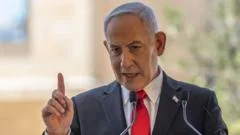
Israeli Prime Minister Benjamin Netanyahu has launched a blistering attack on New York City Mayor Eric Mamdani, accusing him of "fomenting hate" after the mayor threatened to arrest Netanyahu under an International Criminal Court warrant — a threat he later admitted he had no authority to carry out.
The accusation that sparked a diplomatic spat
Netanyahu’s office released a statement on Tuesday calling Mamdani’s initial threat "irresponsible and inflammatory." The prime minister said the mayor was using the ICC warrant to "stoke anti-Israel sentiment" and described the move as a "dangerous precedent for local officials to meddle in international diplomacy."
Why the mayor walked back his threat
Last week, Mamdani surprised many by publicly declaring he would order the NYPD to arrest Netanyahu if the Israeli leader set foot in the city. But days later, after legal reviews and behind-the-scenes pressure, the mayor retreated. "I understand now that the ICC warrant does not give local law enforcement the authority to arrest foreign leaders within the United States," Mamdani said in a brief statement.
What the ICC warrant actually means
The International Criminal Court issued the warrant in May 2024, accusing Netanyahu of alleged war crimes related to Israel’s military operations in Gaza. Israel has rejected the charges as baseless and politically motivated. The US is not a signatory to the ICC, meaning American cities have no binding obligation to enforce its warrants — a point Mamdani’s own lawyers reportedly flagged.
Who is affected: New York’s Jewish and Israeli communities
The back-and-forth has stirred anxiety among New York’s large Jewish and Israeli diaspora. Community leaders have called for calm, urging both sides to de‑escalate. "This isn’t about one mayor or one prime minister — it’s about the safety and unity of our city," said Rabbi David Rosenberg of the Jewish Community Relations Council.
Official responses and expert analysis
State Department officials declined to comment on the mayor’s original threat but noted that foreign policy remains the purview of the federal government. International law experts say the incident underscores a growing trend of local officials using global legal instruments for symbolic political messaging — with limited practical effect.
What happens next
Netanyahu has no scheduled visit to New York, but the war of words is unlikely to end here. Some analysts expect the Israeli government to formally complain to the Biden administration. Meanwhile, Mamdani faces backlash from both pro‑Israel groups and progressives who argue his walk‑back undermines accountability.
Confirmed facts vs what remains unclear
Confirmed: Mamdani threatened ICC‑based arrest; he later admitted lack of authority; Netanyahu accused him of fomenting hate. Unclear: Whether Mamdani faced direct pressure from the White House or federal agencies. Speculation on this point is not yet verified.
Wider trend: Local leaders stepping into global disputes
Mamdani’s move fits a pattern of US mayors taking positions on international conflicts — from Gaza to Ukraine to Taiwan. While symbolic, such actions risk blurring lines between local governance and foreign policy, often leading to legal and diplomatic complications.
Practical guidance for New Yorkers
Residents should expect heightened political rhetoric but no immediate change in law enforcement. The NYPD has not issued any directive regarding visiting foreign leaders. Individuals concerned about community tensions are advised to follow updates from local interfaith councils.
Future outlook
The ICC warrant remains active but unenforced in the US. Should Netanyahu ever travel to a signatory country, the legal risk would be real. For now, the dispute remains a political drama — but one that reflects deep divisions over the Gaza conflict and the role of international justice.
Our take
This episode highlights how quickly a symbolic threat can escalate into a diplomatic headache. Mamdani’s retreat suggests he underestimated the legal and political blowback. Netanyahu’s sharp response shows he will not tolerate any challenge to his legitimacy. Beneath the rhetoric lies a serious question: can local officials use global warrants to shape foreign policy? The answer, for now, is no — but the debate is far from over.
Frequently Asked Questions
Can a US mayor actually arrest a foreign leader on an ICC warrant?
No. The US is not an ICC member, so local law enforcement lacks jurisdiction. Only federal authorities — and only under specific treaties — could act on an ICC warrant, which they rarely do.
Why did Mamdani threaten arrest if he knew it wasn’t possible?
The mayor likely intended the threat as a political statement against Israel’s actions in Gaza. After legal review, he acknowledged he overstepped and walked back.
What is the ICC warrant against Netanyahu for?
The ICC issued the warrant over allegations of war crimes related to Israeli military operations in Gaza. Israel disputes the charges and the court’s jurisdiction.
Will Netanyahu ever face arrest in New York?
Under current US law, no. The federal government would need to extradite him, which is extremely unlikely given US policy. The mayor’s threat is now effectively moot.