
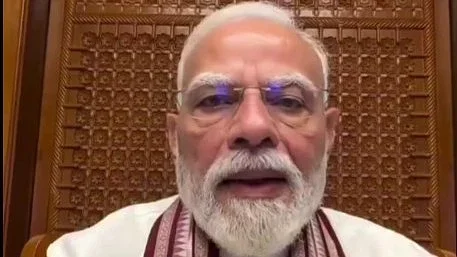
The much-touted fast-track court for NEET-UG paper leak cases — personally announced by Prime Minister Narendra Modi — stumbled on its very first day. Monday’s hearing was adjourned after the Central Bureau of Investigation (CBI) failed to field a lawyer. The bench of Special Judge Anu Grover Baliga at Delhi’s Rouse Avenue Court found itself without the prosecution’s representative, leaving the accused and their counsel waiting.
Why the first hearing collapsed
The court was scheduled to consider the bail pleas of Bikas Biwal and Dinesh Biwal, two of the 13 individuals arrested by the CBI in connection with the alleged NEET-UG paper leak. While the accused’s lawyer, A.P. Singh, was present, the CBI’s counsel was conspicuously absent. “The court noted the absence and directed the government to appoint a public prosecutor without any further delay,” sources said.
Who are the accused and what is the case?
Bikas Biwal and Dinesh Biwal are among the key accused in what investigators call a sophisticated paper leak racket. The CBI claims that the leaked NEET-UG question paper was circulated among select candidates before the exam date. The fast-track court was specifically set up to ensure a speedy trial in this high-stakes case that has affected thousands of medical aspirants across the country.
The government’s promise vs reality
After nationwide protests by students and medical aspirants over the NEET-UG irregularities, PM Modi had announced the creation of fast-track courts to prosecute those involved. The policy was meant to send a strong signal — zero tolerance, swift justice. However, the administrative failure on day one has drawn criticism from legal experts. “If the prosecution itself is not ready, the entire purpose of a fast-track court is defeated,” said a senior advocate who spoke on condition of anonymity.
Human impact: What this delay means for students
For thousands of NEET aspirants who were caught in the crossfire — some had their scores cancelled, others faced uncertainty over admissions — the slow start is disheartening. “We want the guilty punished quickly so that honest students don’t suffer,” said a medical aspirant from Kota. The delay also risks prolonging the legal process, leaving the accused in limbo while the public waits for closure.
Court’s strong message to the government
Special Judge Baliga did not mince words. She directed that a public prosecutor be appointed “without any further delay” and made it clear that the government-appointed counsel must be present on the next date. The court’s intervention underscores the gap between political announcements and on-ground implementation.
What happens next?
The matter stands deferred. The next hearing date is yet to be announced once the public prosecutor is confirmed. The CBI is expected to brief its new counsel so that bail arguments can proceed. Legal observers note that the delay is procedural but avoidable — and that the government must ensure such lapses don’t recur if public confidence in the fast-track system is to be maintained.
Confirmed facts vs what remains unclear
Confirmed: First hearing was adjourned due to absence of CBI counsel. The court ordered immediate appointment of a public prosecutor. The accused are Bikas Biwal and Dinesh Biwal. Unclear: Why the CBI counsel did not appear — whether it was a communication gap or deliberate. Also unclear is the timeline for the next hearing.
Risks and balanced view
The adjournment, while disappointing, is a procedural hiccup rather than a fundamental failure. The fast-track court mechanism itself is sound. However, critics argue that the government’s emphasis on speed should be matched by preparation. If such delays become routine, the entire initiative will lose credibility. On the other hand, supporters point out that the court acted swiftly to address the issue, showing judicial vigilance.
Wider trend: India’s exam paper leak crisis
The NEET case is part of a troubling pattern. From the UGC NET cancellation to state-level recruitment scams, exam paper leaks have become a recurring crisis. Fast-track courts are one response, but experts say systemic reforms — such as digitised secure paper handling and stronger whistleblower protections — are equally essential. The NEET fast-track court’s early stumble highlights that without robust administrative coordination, even well-intentioned judicial initiatives can sputter.
Practical guidance for affected students
Students and parents impacted by the NEET irregularities should continue to follow the case through official court listings. The CBI’s investigation is ongoing; any updates on bail or trial dates will be published on the Delhi District Court website. For those with legitimate complaints, the National Testing Agency (NTA) helpline remains open. Avoid relying on unverified social media claims about the case.
Future outlook
If the government appoints a public prosecutor quickly, the fast-track court could still regain momentum. The next few weeks will determine whether the delay was an isolated incident or the start of a pattern. The judiciary has sent a clear signal: it expects the executive to be prepared. All eyes are now on the CBI and the law ministry to deliver.
Our Take
A fast-track court that cannot even start on time betrays the very idea of speed. While it is too early to brand the initiative a failure, Monday’s adjournment is a sobering reminder that announcements alone do not deliver justice — administrative muscle does. The judge’s firm directive suggests the judiciary is serious; now the government must match that seriousness. For students and the public, this case is a litmus test for how India handles institutional misconduct.
Frequently Asked Questions
What is the NEET fast-track court?
It’s a special court set up in Delhi’s Rouse Avenue Court to expedite trials of accused in the NEET-UG paper leak case. PM Modi announced it after widespread protests by medical aspirants.
Why was the first hearing adjourned?
The Central Bureau of Investigation did not send a lawyer to represent the prosecution. The court noted the absence and directed the government to appoint a public prosecutor immediately.
Who are Bikas Biwal and Dinesh Biwal?
They are two of the 13 accused arrested by the CBI in connection with the alleged NEET-UG question paper leak. Their bail applications were scheduled to be heard on Monday.
What does this mean for other accused and for students?
The delay prolongs the legal process. For students, it means a slower road to accountability. However, the court’s strong order may push the government to act faster going forward.

