
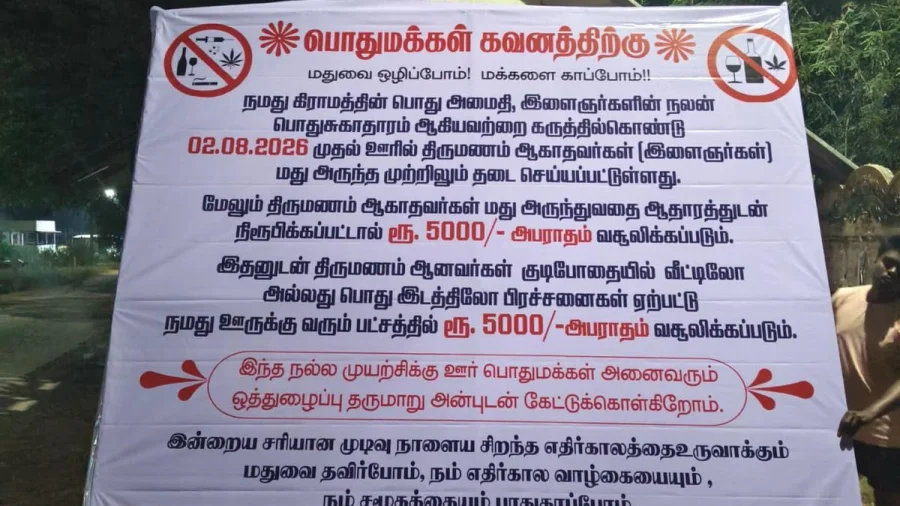
For young fishermen in a Nagapattinam village, the cost of a drink just went up a lot. The village's fishermen panchayat has announced that any local youth caught drinking alcohol will have to pay a fine of ₹5,000. It is a community decision driven by worry — about safety at sea, family money, and the habits taking root among the next generation of fishermen.
By Staff Reporter | Rural Tamil Nadu Desk
What the fishermen panchayat has announced
According to the original report, the fishermen panchayatdars — the elders who run the village's traditional council — have decided to ban alcohol consumption among the youth. The message is simple: if you drink, you pay. The fine of ₹5,000 is to be paid by those who violate the ban. The report does not say how the fine will be collected or who will monitor the rule.
Why a fishing community is taking this step
Fishing is physically demanding and dangerous. Alcohol can impair judgment and coordination on boats, putting fishermen and their crew at risk. In many coastal communities, drinking has also been linked to domestic friction, mounting loans, and household hardship. By targeting the youth, the panchayat appears to be trying to stop the problem before it deepens. This is contextual background, not stated in the announcement.
What we know — and what we don't
The one confirmed fact is the panchayat's announcement, as reported: youth are barred from drinking, and violations attract a ₹5,000 fine. The name of the specific village has not been given in the headline or the original story. It is also unclear when the ban was announced, whether the police have been involved, or how strictly it will be enforced. Until the panchayat or local authorities issue a confirmation, this remains a reported account of a community decision.
How traditional panchayats enforce such decisions
In many Tamil Nadu coastal villages, fishermen panchayats have historically played a strong role in managing common life — from disputes over nets and boats to family and community matters. Their authority comes from social consensus, not statutory police power. Enforcement often depends on peer pressure, public shaming, or collective decisions. Fines are typically collected through community pressure rather than court orders.
The human impact on young fishermen
For a young fisherman, a ₹5,000 fine is not a small amount. A day's earning can vary with the catch, weather, and fuel costs. Many young people in fishing families begin helping on boats in their teens. This ban places a financial penalty on personal behavior, which could push some to hide drinking rather than stop. But it also sends a clear signal from elders that drinking is unacceptable for the community's future.
Risks and questions around the ban
Not everyone may welcome this move. Some young people may see it as an unfair restriction on personal freedom. Others may question why the ban applies only to youth and not all adults. There is also the question of practical enforcement: without police backing, the fine could be ignored or lead to arguments. The panchayat's authority depends on how far the community is willing to back the decision.
Similar community-led prohibitions in Tamil Nadu
Tamil Nadu has seen several instances of communities, temple committees, and village councils imposing alcohol restrictions. Some local bodies have passed resolutions to close bars or ban sale of liquor on certain days. However, these are not the same as the statewide prohibition policy that ended decades ago. The Nagapattinam ban, if confirmed, would join this pattern of local-level social regulation aimed at addressing alcohol use.
What young villagers should do now
The safest course for young fishermen is to treat the ban as binding. That means avoiding alcohol, at least in public and in the village. Families can also help by discussing the rule with the panchayat and asking for clarity on how the fine will be applied. If the decision feels unfair, the proper route is a respectful dialogue with panchayat members, not confrontation.
Future outlook
If the community enforces the ban consistently, it could reduce alcohol-related incidents and encourage other fishing villages in Nagapattinam to consider similar measures. On the other hand, if enforcement is patchy or resented, it could weaken the panchayat's influence. The coming months will show whether this is a symbolic stand or a lasting social rule.
Our Take
This is a small community decision with a larger meaning. It shows that when formal institutions lag, communities often take charge of their own social problems. The ₹5,000 fine is more than a penalty — it is a price tag the elders have placed on what they see as a threat to their youth. Still, the ban's success will depend on fairness and acceptance. A rule imposed without trust rarely survives.
Frequently Asked Questions
What is the new rule in the Nagapattinam fishing village?
According to the original report, the fishermen panchayat has banned local youth from drinking alcohol. Anyone violating the ban will have to pay a fine of ₹5,000.
Who announced the alcohol ban?
The ban was announced by the fishermen panchayatdars — the members of the village's traditional fishermen council. The specific village name has not been confirmed in the available report.
Is the alcohol ban a government law?
No, this appears to be a community decision by the fishermen panchayat, not a state or police order. Traditional panchayats enforce rules through social consensus, not legal power.
What happens if a young villager is caught drinking?
As per the announcement, the violator will be liable to pay a ₹5,000 fine. The report does not specify how the penalty will be collected or monitored.



