
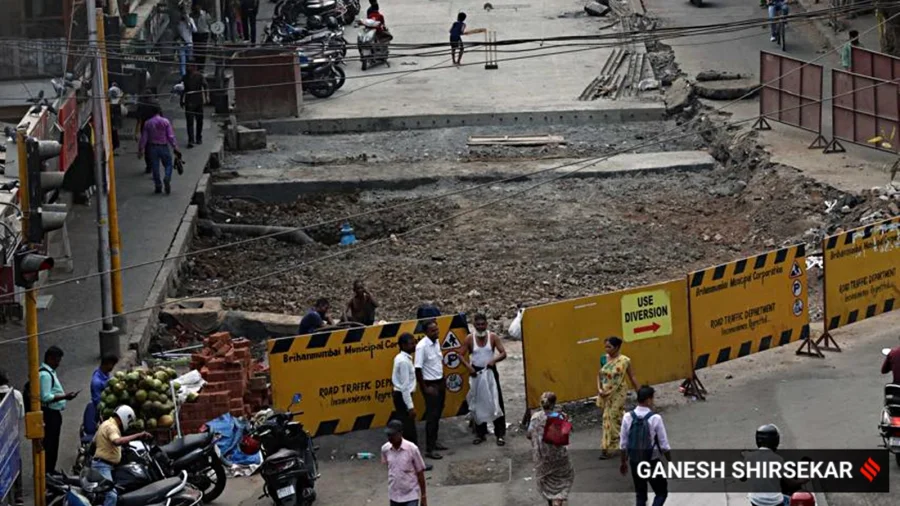
Mumbai has a rhythm most residents know too well. A road gets resurfaced, traffic moves smoothly for a few weeks, and then the orange barricades appear again. Another agency, another trench, another patchwork. After decades of this cycle, the Brihanmumbai Municipal Corporation (BMC) is now planning a policy aimed at fixing underground utility lines — a move that could finally end the city's endless road-digging.
What the BMC's planned utility-line policy aims to change
The reported plan focuses on the networks buried beneath Mumbai's roads — water pipes, sewerage lines, electricity cables, telecom fibre and gas pipelines. The broad intent, based on the headline story, is to bring order to how these lines are installed and repaired, so roads are not torn open repeatedly for one utility at a time.
In well-managed cities, utilities coordinate before a road is sealed: pending cable and pipe work is completed first, and the surface is restored only after. Mumbai's problem has been the opposite — digging happens piecemeal, with no single plan governing the process.
Why Mumbai's roads keep getting torn open
Mumbai's underground space is crowded. Water and sewerage networks belong to the BMC, while electricity, telecom and gas lines are handled by separate agencies and private companies. Each operates on its own schedule. A road may be opened by one utility in January, another in March and a third in June.
Every fresh cut shortens the life of the road surface. The tar patches that follow break down quickly, especially when monsoon water seeps into unsealed edges. This pattern of uncoordinated digging is a long-documented feature of Mumbai's civic life, though the frequency varies by area and ward.
The daily cost of the endless digging cycle
The damage is visible and personal. Lane closures slow buses, taxis and private vehicles by the hour. Two-wheeler riders wobble over uneven patches where trenches have been poorly reinstated. Pedestrians and schoolchildren walk past open or half-filled excavations. Markets along dug-up stretches lose footfall, and local businesses absorb the disruption without compensation.
There is also a compounding effect. Every unsealed cut gives rainwater a direct path into the road base, which is why a freshly patched stretch can develop potholes within a single monsoon season. The BMC spends repeatedly on restoration, yet the underlying cause — the digging itself — remains.
What is officially confirmed so far
At this stage, the available information confirms one central point: the BMC is planning such a policy. The headline report does not specify the draft rules, the list of utilities it will cover, a timeline for approval, or how enforcement will work. Until the civic body publishes details, those elements remain officially unconfirmed.
Readers should treat the news as a stated intention rather than a finished solution. The difference matters in a city where announcements and implementation have often moved at very different speeds.
Why this policy could break the cycle for good
A policy that fixes utility lines before roads are relaid has a simple, powerful logic: one coordinated sequence of work instead of many unplanned interruptions. If the BMC's plan follows approaches used elsewhere, new road projects and major resurfacing work could be opened for utility work only within a defined window.
Agencies that miss that window would wait for the next cycle rather than cutting a fresh trench. This creates a natural incentive for planning and reduces the random, year-round digging that Mumbaikars live with today.
The hard part: turning a policy into ground reality
The challenges are real. Emergency repairs — a burst water main or a leaking gas line — cannot wait for a scheduled digging window. Different utility agencies answer to different authorities, so coordination requires a strong nodal mechanism within the BMC. And many old lines may need full replacement, which means several years of intensive work before the benefits become visible.
None of this makes the policy wrong. It does mean execution, not intention, will decide the outcome. A policy that works on paper can still fail if agencies do not share plans or if enforcement is weak.
Confirmed facts vs what remains unclear
What is confirmed (based on the headline story): The BMC is planning a policy to fix utility lines, with the aim of stopping repeated road-digging.
What remains unclear: The specific provisions of the policy, whether private telecom and gas utilities will be covered, how emergency digging will be handled, who enforces the rules, and when implementation begins.
What is not known: No official quotes, dates or detailed statistics have been released in connection with this story so far.
A problem shared by Indian cities beyond Mumbai
Mumbai is not alone in this crisis of coordination. Delhi, Bengaluru, Hyderabad and Pune have all faced the same public anger over repeated road-cutting. Some cities have experimented with coordinated utility zones and pre-resurfacing clearance rules, with mixed results.
Mumbai's attempt, if it becomes formal policy, would place the BMC among Indian civic bodies trying to solve the problem systematically, rather than responding with fresh patchwork tenders every year.
What residents and commuters can do now
While the policy takes shape, citizens can keep the pressure on. Report open trenches and unsafe reinstatement to the BMC's ward offices and helpline. Document damaged stretches with photographs and dates. Ask local corporators for the status of utility coordination in your ward.
Residents can also use RTI applications to check which agencies have dug a particular road and whether restoration was completed within the promised time. These small acts of accountability create the public record that makes enforcement harder to ignore.
What happens next
The next visible step would be the BMC releasing a draft or framework of the policy for feedback. Once that happens, the details — coverage, penalties, emergency provisions and timelines — will reveal how serious the plan really is.
Until then, this remains a welcome intention. For a city that has watched its roads be dug up again and again, the hope is that this time, the digging finally stops.
Our Take
Mumbai's road-digging problem is not a technical mystery. It is a coordination failure — dozens of agencies working underground in the same cramped space with no shared clock. A policy that treats utilities as one system is the right direction, and long overdue.
But the city has seen enough paper reforms to know intent alone does not fill potholes. The BMC must back this policy with clear rules, public disclosure and accountable timelines. If it does, this could be the rare civic initiative that every Mumbaikar feels in their daily commute. If it does not, it will be another file that quietly disappears into the system.
Frequently Asked Questions
What is the BMC's planned utility-line policy?
The Brihanmumbai Municipal Corporation is reportedly planning a policy to address underground utility lines — water, sewerage, power, telecom and gas — so that roads are not repeatedly dug up for repairs or new connections. Detailed rules have not been released yet.
Why are Mumbai roads dug up so frequently?
Different agencies manage different underground utilities in Mumbai, and they often carry out work on their own schedules. This leads to the same road being opened multiple times a year, causing traffic disruption, surface damage and potholes.
When will the BMC road-digging policy be implemented?
No official timeline has been announced. The policy is said to be at the planning stage, based on the headline story. Implementation would begin only after the BMC finalises and formally publishes the policy framework.
Who is responsible for road-digging in Mumbai?
Multiple bodies are involved — BMC departments for water and sewerage, plus electricity, telecom and gas agencies, including private companies. The lack of coordination among these agencies is the main reason roads in Mumbai are dug repeatedly.
[NEWS_SCHEMA] { "@context": "https://schema.org", "@type": "NewsArticle", "headline": "Mumbai's endless road-digging may finally stop as BMC plans utility-line policy", "description": "The BMC is planning a policy to fix underground utility lines, which could finally end Mumbai's cycle of repeated road-digging and ease traffic disruption.", "image": "", "datePublished": "2025-05-16", "dateModified": "2025-05-16", "author": { "@type": "Person", "name": "Staff Reporter", "url": "", "sameAs": [] }, "publisher": { "@type": "Organization", "name": "City Desk India", "logo": { "@type": "ImageObject", "url": "" } }, "mainEntityOfPage


