
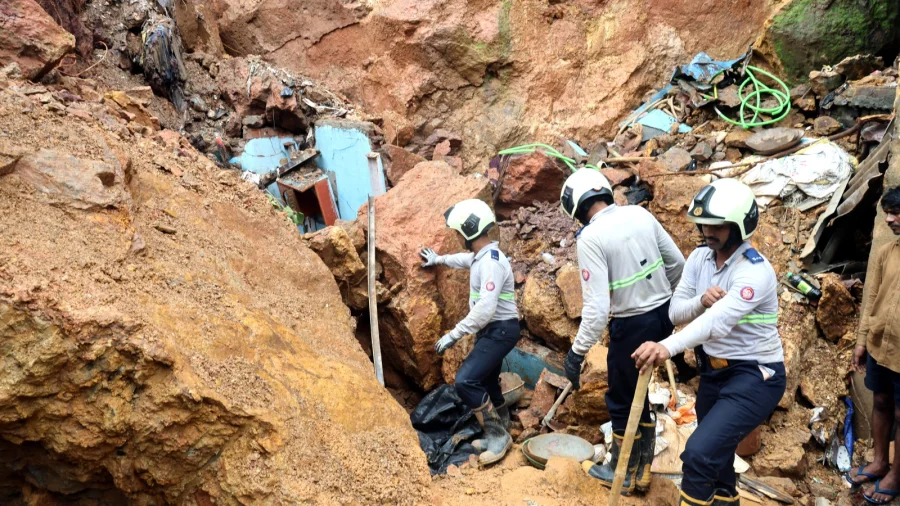
The ground failed in Mumbai this week, and within hours so did something else — a seven-year-old warning that many now say saw it coming. A 2018 report on landslide vulnerability in the city has resurfaced, and the comparison is startling. Those who have read both say it describes this week's disaster almost word-for-word.
The 2018 report that emerged after the earth moved
According to reports circulating after the landslide, the 2018 study identified the affected neighbourhood as vulnerable to slope failure during heavy rain. It is said to have spelled out the triggers — prolonged monsoon downpour, unstable soil, and structures built too close to steep gradients — matching conditions before this week's collapse.
The original document has not been officially released in full, and its specifics could not be independently verified from source material available for this article.
Why a seven-year-old warning matters now
The resurfaced report shifts the story from "natural disaster" to "preventable failure." If the risk was documented in 2018, the question becomes what was done about it in the years between — and why residents were still exposed.
For the families of those affected, the document is painful evidence: the danger was not unknown. It was recorded, filed, and arguably ignored.
Mumbai's landslide problem: a pattern, not an accident
Mumbai has a long history of rain-triggered landslides. Densely packed settlements on hillsides, combined with some of the world's heaviest monsoon rainfall, create recurring risk.
Previous disasters had already pushed authorities to map vulnerable zones. The 2018 report — if it is the document people say it is — was meant to be part of that effort.
Who was affected this week
The landslide hit working-class neighbourhoods where hillside homes sit dangerously close to slopes. Such settlements are frequently excluded from formal safety measures.
The human cost extends beyond direct victims. Neighbours, relatives and local workers have also lost access and livelihoods in the aftermath.
What officials have said so far
Official statements following the landslide have focused on rescue and relief, according to available information. Neither the municipal body nor state authorities have given a detailed public response to the resurfaced 2018 report.
Investigations into the cause of the collapse are reported to be underway. The extent of geological surveys conducted in the area since 2018 remains unclear.
The hard question: warnings that don't prevent
Mumbai does not lack reports — it lacks responses. Vulnerability maps and slope studies have been produced for years across Indian cities, but funding, relocation and enforcement rarely follow.
This week's event is a case study in that gap: a prediction, a collapse, and now a search for accountability.
Confirmed facts vs what remains unclear
Confirmed: A landslide occurred in Mumbai this week during heavy rain.
Reported: A 2018 report warned about the area and matched the event "almost word-for-word." Its full contents, authors and the official action taken on it remain unverified.
Unclear: Whether specific warnings reached residents before the collapse, and what follow-up surveys were conducted in the intervening years.
The wider pattern across India's cities
From the Himalayas to the Western Ghats, Indian cities are building on unstable ground with inadequate hazard mapping. Reports rarely translate into prevention because accountability for acting on them is weak.
Mumbai is not an outlier. It is the latest example of a national problem.
What residents and readers should do now
People living near slopes or retaining walls should report cracks, water seepage or soil movement to local authorities immediately. During heavy rain, stay alert to evacuation orders and avoid driving or walking near steep hillsides.
Residents can also ask municipal representatives when the last geological survey of their ward was conducted. Such questions force the issue into public record.
What happens next
Expect pressure on the civic body to release the 2018 report in full and audit every zone it flagged. There will also be calls for a fresh, independent survey of landslide-prone areas across Mumbai before the monsoon ends.
The strongest outcome would be enforcement — not another document.
Our Take
An "almost word-for-word" prediction is powerful because it removes the excuse of ignorance. The report — assuming it is what reports say it is — transforms this disaster from a tragedy into an indictment. The people of Mumbai deserve to read the document, and officials who received it deserve to answer for what they did with it.
Frequently Asked Questions
What was in the 2018 Mumbai landslide report?
The 2018 report is said to have identified landslide-prone zones in Mumbai and warned of conditions that could trigger slope failure. Its full text has not been officially released or independently verified.
Did the 2018 report really predict this week's Mumbai landslide?
Reports circulating after the event say the report's warnings match this week's landslide "almost word-for-word." That claim is based on the reported comparison, not on official confirmation.
Why wasn't the warning acted upon?
This is not yet clear. No detailed official response to the resurfaced report has been made public, and the timeline of follow-up surveys in the affected area remains unverified.
Are more Mumbai landslides expected this monsoon?
Mumbai remains at risk of further landslides while monsoon rains continue, particularly in hillside settlements. Authorities have urged residents in vulnerable zones to follow evacuation and safety instructions.



