
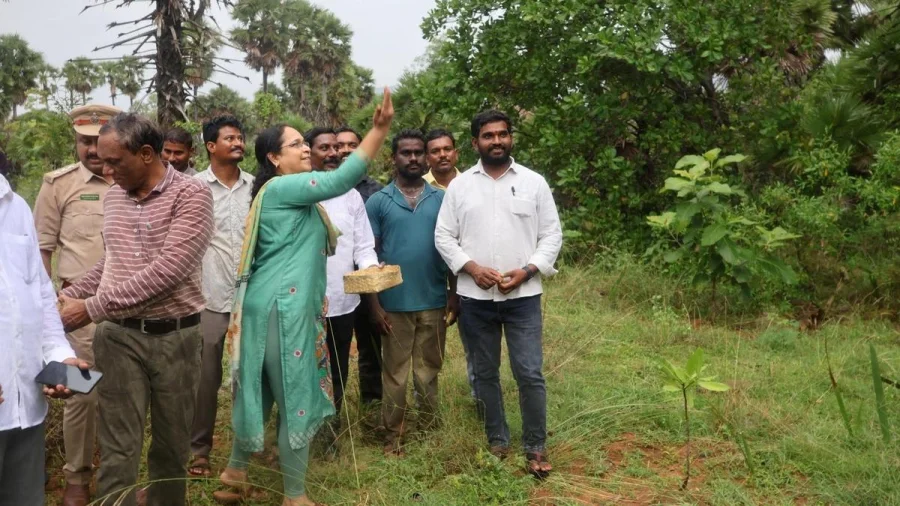
Nellimarla, a municipality in Andhra Pradesh's Vizianagaram district, has reportedly turned to the Miyawaki forest method to increase green cover — an urban greening approach that promises dense, fast-growing woodland on limited land. The development could matter to every resident who has watched open patches in the town shrink or turn to dust.
A Japanese solution for an Andhra Pradesh town
The Miyawaki method, developed by Japanese botanist Akira Miyawaki, involves planting native species close together in small plots. Because the saplings compete for sunlight, they grow faster — up to 10 times quicker than in conventional plantations — and form forests up to 30 times denser.
The technique works on plots as small as a fraction of an acre. That makes it attractive for municipalities that have little spare land but want visible green results within a few years, not decades.
Why the green cover push matters for Nellimarla
Towns across India face rising temperatures, air pollution, and loss of tree cover as built-up areas expand. A dense mini-forest within Nellimarla's municipal limits could help moderate local heat, improve air quality, and create a habitat for birds and insects.
For residents, the benefits are practical: cooler neighbourhoods, cleaner air, and green space for walking or community activity. For the local ecosystem, a native-species forest is far more valuable than ornamental, exotic planting.
What the headline confirms — and what it does not
The only confirmed information at this stage is the headline itself: Nellimarla has turned to the Miyawaki forest method to increase green cover. Beyond this, specifics — the size of the chosen plot, the number of saplings, the species mix, the budget, and the planting schedule — have not been published in the source material reviewed.
No official statement from Nellimarla Municipality was available for this report. This is a developing story, and details may change once the municipality releases project specifics.
Who stands to gain most
Schoolchildren could use the mini-forest as an outdoor classroom. Environmental groups could help monitor sapling survival. And a healthy Miyawaki forest typically becomes self-sustaining after about three years, needing little more than protection and occasional care.
But the gains are not automatic. The first two years, when saplings need regular watering, weeding, and mulching, often decide whether a project like this succeeds or quietly dies.
A trend that is growing across India
Nellimarla is not alone. Municipalities and government agencies across the country have experimented with Miyawaki forests to restore green cover in congested urban pockets. If Nellimarla's project is implemented well, it could become a model for neighbouring towns in north coastal Andhra Pradesh.
Risks and the balanced view
Experts who study urban afforestation caution that the Miyawaki method is not a magic fix. Poor species selection, inadequate watering, or neglect after planting can sharply reduce survival rates. A single micro-forest also cannot compensate for large-scale deforestation or the loss of agricultural and natural woodland.
The method works best as one layer of a larger greening strategy — not as a substitute for it.
What residents should watch for
Anyone interested in the project should look for official announcements from Nellimarla Municipality on the site location, species list, and plantation dates. Community participation in plantation and maintenance drives is usually a strong signal that such projects will survive.
Citizens can also ask which native species will be planted and how the forest will be watered during dry months — two questions that often determine success.
What happens next
If the initiative moves forward, the typical sequence would involve site preparation, soil enrichment, dense native planting, and a two-to-three-year maintenance phase. Whether Nellimarla scales this into multiple micro-forests will likely depend on the survival rate of the first plantation and public support.
These are expectations, not confirmed facts — and they could change once official details emerge.
Our Take
The headline is short, but the intent behind it is significant at a time when urban India is losing green cover to concrete. Nellimarla's reported turn to the Miyawaki method shows growing civic awareness that small-town India also needs quick, credible greening solutions.
The real test, however, is execution. A forest that is planted but neglected, or built with the wrong species, will only breed cynicism. If Nellimarla follows the method's core principles — dense, native, and genuinely maintained — this small initiative could become a meaningful green milestone for the town.
Frequently Asked Questions
What is the Miyawaki forest method?
The Miyawaki method is a Japanese afforestation technique developed by botanist Akira Miyawaki. Native species are planted densely in small plots, which makes them grow up to 10 times faster and form forests 30 times denser than conventional plantations.
Why is Nellimarla adopting the Miyawaki method?
According to the headline report, Nellimarla has turned to the Miyawaki forest method to increase green cover — likely because the technique creates dense, fast-growing woodland on limited urban land.
Where is Nellimarla located?
Nellimarla is a municipality in Vizianagaram district, Andhra Pradesh, India.
How long does a Miyawaki forest take to become self-sustaining?
A Miyawaki forest typically shows dense growth within three years and becomes largely self-sustaining after that, provided it receives proper care in the initial years. This is general documented knowledge about the technique, not a confirmed detail of Nellimarla's specific project.

