
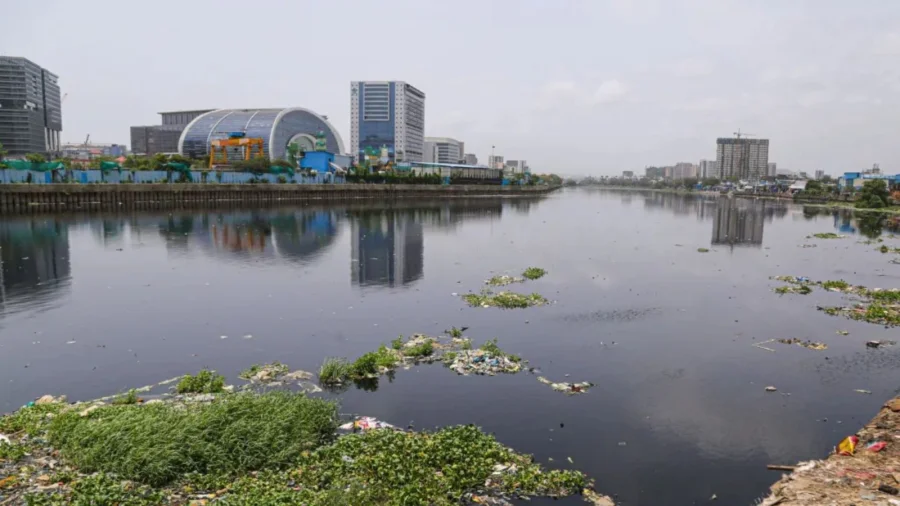
Mumbai's Mithi river has cut quietly through some of the city's most crowded neighbourhoods for decades — often treated as a drain, occasionally feared as a flood threat. Now it sits at the centre of a new urban ambition. After taking on the Dharavi redevelopment, an Adani firm is set to develop a 3.3-km waterfront along the river, a project that could become one of Mumbai's most visible civic transformations.
What the 3.3-km Mithi river waterfront plan involves
The reported development covers a 3.3-km stretch of the Mithi river. Waterfront projects of this kind typically bring promenades, landscaping, public seating, walking paths and improved flood-protection infrastructure. The specific design and construction timeline have not been officially disclosed so far.
Why this river matters to Mumbai
The Mithi is not an ordinary waterway. It runs through the heart of Mumbai, flowing past dense residential and commercial zones, and has long been tied to the city's flooding problem — most severely during the July 2005 deluge. Any waterfront development must therefore balance aesthetics with engineering that protects surrounding neighbourhoods.
How this connects to the Dharavi redevelopment
This is not the Adani Group's first major Mumbai assignment. The group earlier took on the Dharavi redevelopment, one of Asia's largest urban regeneration projects, which has been closely watched for its scale and complexity. The Mithi waterfront, if confirmed, would place the group at the centre of two of the city's most ambitious development efforts.
Who could benefit — and who may be affected
Residents living along the Mithi could gain cleaner surroundings and new public spaces. Commuters on bridges across the river might see better infrastructure. But questions remain about how the project will treat informal settlements near the river, local vendors, and the ecological needs of a waterway that still carries heavy pollution.
What authorities and Adani have said so far
No detailed official statement has been issued yet by either the Adani Group or Mumbai's civic administration regarding this waterfront plan. The news is based on the reported headline announcement, so funding, approvals and project phasing are yet to be confirmed through official channels.
What this signals for Mumbai's urban development
The project points to a growing trend in Indian cities: private developers stepping into public infrastructure that was once the state's domain. The Dharavi project set that precedent in housing. A Mithi river waterfront would extend it into Mumbai's environmental and civic infrastructure.
Confirmed facts vs what remains unclear
Confirmed: An Adani firm is reported to develop a 3.3-km Mithi river waterfront, following the group's Dharavi redevelopment role. Unclear: the exact stretch of the river, scope of construction, cost, timeline, environmental clearances and whether all approvals are in place. These details await official announcement.
Why the Adani Group's role in this project matters
The Adani Group brings experience in large-scale infrastructure across ports, airports and urban redevelopment. Its Dharavi mandate already gives it a working relationship with Mumbai's civic machinery. But bigger mandates also attract bigger scrutiny — on transparency, environmental impact and delivery timelines.
Risks and the other side of the story
Riverfront projects are rarely controversy-free. Critics of such developments point to risks of displacing communities, sidelining informal workers, and prioritising visual appeal over ecological health. The Mithi remains a polluted, flood-sensitive river. A development that does not address these fundamentals could face public resistance.
A wider pattern: India's riverfront development wave
From Ahmedabad's Sabarmati riverfront to Varanasi's ghats, Indian cities have increasingly embraced riverfront redevelopment as a symbol of urban pride. Mumbai's Mithi project would fit this national pattern — but with higher stakes, given the river's flood history and the density of people living around it.
What residents and observers should watch for
People living along the Mithi should look out for official announcements on exact project boundaries, environmental impact assessments and community consultation plans. Transparency on these points will decide whether the waterfront is seen as a genuine public gain or a privatised makeover.
What could happen next
The coming stages would include formal confirmation by the Adani firm and civic authorities, release of project designs, environmental reviews and phased construction. Given the complexity of working along a live river in a congested city, any of these stages could alter the timeline.
Our Take
This could be a genuine turning point for Mumbai. The Mithi river has been the city's forgotten waterway — polluted on ordinary days, dangerous during heavy rain. A serious, well-planned waterfront could improve life for lakhs of residents. But India's riverfront track record is mixed, and the difference between a pretty promenade and a real civic upgrade lies in the details: flood management, ecological restoration and genuine public participation. The headline is promising. The proof will come with the plan.
Frequently Asked Questions
Which Adani firm is developing the Mithi river waterfront?
The reporting identifies an Adani Group firm as the developer of the 3.3-km Mithi river waterfront project, though the specific entity has not been officially confirmed in available reports.
Where exactly is the 3.3-km Mithi river waterfront located?
The exact stretch of the river has not been officially disclosed yet. It is expected to cover a 3.3-km section of the Mithi river within Mumbai, but confirmation from authorities is still awaited.
What does a riverfront development usually include?
Riverfront projects typically feature promenades, gardens, walking and cycling paths, public seating, improved lighting and flood-protection measures. The final features of this project will depend on the approved design.
How is this connected to the Dharavi redevelopment project?
The announcement follows the Adani Group's earlier involvement in the Dharavi redevelopment. The Mithi waterfront would be another major Mumbai urban assignment for the group, building on that precedent.



