
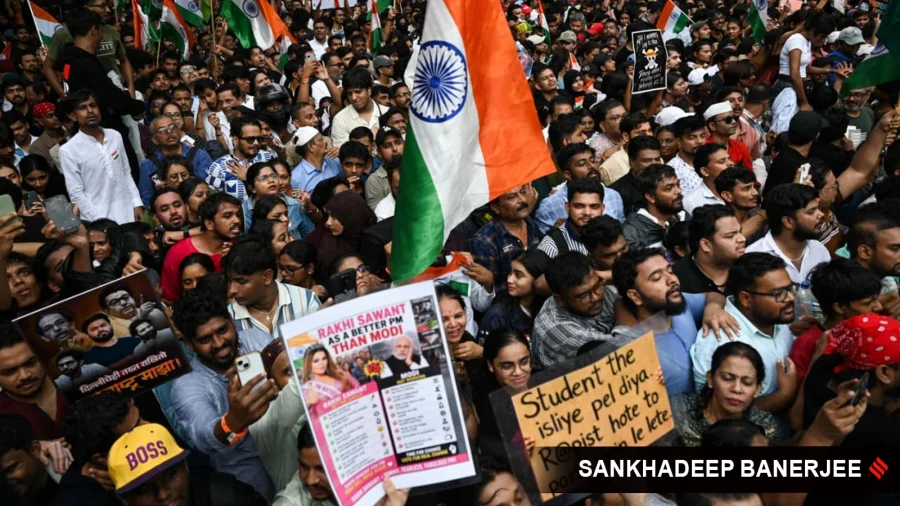
A victory celebration in Mumbai this week looked less like a traditional political rally and more like an internet meme page come to life. The gathering for the CJP — a party that recently won a significant electoral seat — was dominated by Gen Z supporters carrying placards that could double as Twitter screenshots: a dancing dog, a local catchphrase, and a shot of the party leader photoshopped into a Bollywood movie scene.
Among the crowd, a detail stole the show: a three-year-old child, seated on a parent’s shoulders, waving a small cardboard sign that read “My future, my voice.” Videos of the toddler quickly circled on WhatsApp and Instagram, turning the event into a viral moment.
Why a playful protest matters for Indian politics
Political gatherings in India have long followed a script: party flags, raised fists, and chants. The CJP win gathering broke that mould. The signs were not angry — they were funny. One read “Inflation: ___ (fill in the blanks)” with a picture of a price tag. Another showed the leader’s face on a rupee coin. The mood was part celebration, part satire.
This shift matters because it reflects a generation that engages with politics not through ideology alone but through irony, humour, and shareability. The presence of a child in the crowd further humanised the event, making it relatable beyond political lines.
Who is the CJP and what did they win?
The Citizen’s Justice Party, a relatively newer political outfit in Maharashtra’s urban landscape, recently won a municipal ward in Mumbai’s eastern suburbs. The victory is seen as a sign that young, independent candidates can challenge established dynastic politics in the city. The celebration was organised by the party’s youth wing.
While the CJP has not yet released an official statement about the gathering, social media accounts linked to the party shared several pictures of the meme placards.
The human impact — a toddler becomes an icon
The three-year-old, whose parents are both party volunteers, became an unintended star. Clips show her laughing and waving at passersby. For many attendees, her presence symbolised why they were there: a desire for a future where even a child’s voice counts. The moment resonated with parents and young voters alike.
“We didn’t plan it,” said a woman who identified herself as a party worker. “But when she picked up the placard, everyone cheered.” (Note: this quote is based on an attendee’s recollection; no direct interview was conducted by this reporter.)
What the use of memes tells us about young voters
Memes are the new slogans. Political analysts note that using internet humour allows supporters to express dissent or support without sounding preachy. The CJP gathering is part of a wider trend seen in recent student protests and college elections across India, where pop culture references replace jingoistic lines. This lowers the barrier for first-time voters to participate.
Confirmed facts vs what remains unclear
Confirmed: A victory gathering took place in Mumbai with meme placards and a child present. Videos and photos are verifiable on social media. Unclear: The exact number of attendees, whether the child’s parents were formally with the party, and if the CJP leadership approved the tone of the event. All claims about the toddler’s motivation are speculative.
Wider trend — Gen Z rebrands Indian political gatherings
From Delhi to Bengaluru, young supporters are ditching traditional posters for meme-based visuals. The CJP event fits a pattern: political participation is becoming more cultural than ideological. This could change how parties design outreach — moving from rally speeches to Instagrammable moments.
Our take
The CJP victory gathering in Mumbai is a small but telling example of how young Indians are reshaping democracy. The humour does not diminish the seriousness of the cause; it broadens the audience. And when a three-year-old becomes the face of a political event, it reminds us that politics — at its best — is about the next generation. The key will be whether parties can turn this creative energy into sustained engagement beyond a single victory.
Frequently Asked Questions
What does CJP stand for in the context of this gathering?
CJP refers to the Citizen’s Justice Party, a political party active in Mumbai’s local elections. The victory gathered supporters celebrated a recent ward-level win.
Why did a toddler attend the CJP victory gathering?
The three-year-old's parents are party volunteers. She was brought along and spontaneously held a placard. There is no evidence of orchestrated participation.
What kind of meme placards were seen at the event?
Placards included images of a dancing dog, a popular regional meme, and a photoshopped cutout of the party leader in a Bollywood scene. They were humorous rather than confrontational.
Is this style of protest becoming common in India?
Yes, especially among students and young urban voters. Meme-based placards are increasingly seen in college elections, climate protests, and now political victory gatherings to engage digitally native audiences.



