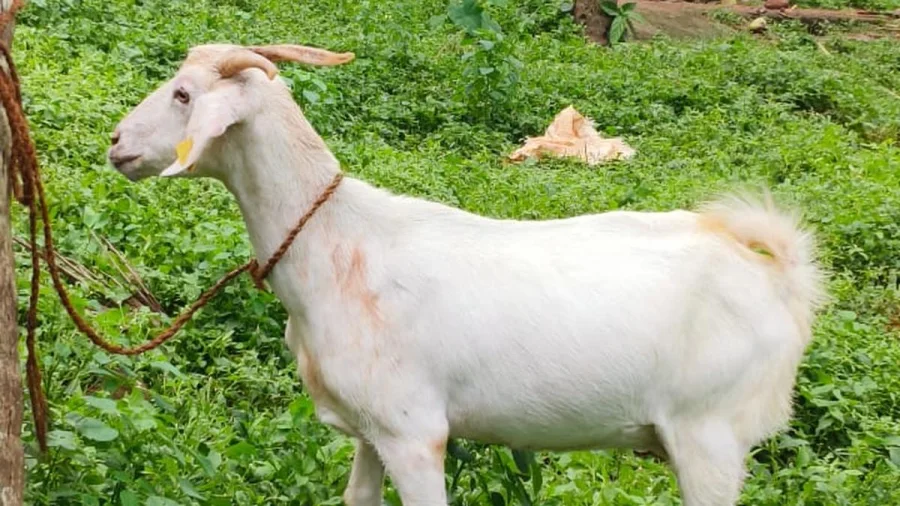
A goat grazing on laterite soil in northern Kerala looks like an ordinary animal. Its mitochondria — the tiny powerhouses inside its cells — may tell a much older story, one that stretches from Malabar's pepper ports to the far side of the Indian Ocean.
Researchers at the Kerala Veterinary and Animal Sciences University (KVASU) have reported the first complete mitochondrial genome of the Malabari goat. Their conclusion is deliberately cautious: the data provides molecular evidence supporting the possibility that goats moved along the historic Indian Ocean Spice Route.
That single word — possibility — is where the scientific interest, and the caution, both begin.
What the Kerala team actually sequenced
The mitochondrial genome is the genetic material found inside mitochondria, and it is inherited only from the mother. That makes it unusually useful for tracing maternal ancestry and movement. Unlike nuclear DNA, which reshuffles every generation, mitochondrial lines pass down largely intact.
By assembling the complete mitochondrial genome of the Malabari goat for the first time, the KVASU team has created a reference point. It is the genetic baseline against which other Indian and overseas goat populations can now be compared.
Why a goat's maternal DNA reads like a shipping record
Kerala's Malabar coast was one of the ancient world's busiest trading edges. Pepper, cardamom and ginger moved out; ships from Arabia, the Mediterranean, East Africa and later China moved in. Ports such as Muziris and, in later centuries, Kozhikode and Kollam anchored that trade.
Where goods travelled, animals often travelled too. Livestock moved with crews, settlers and caravans — and they carried their maternal lineages with them. If goat populations along the route share closely related mitochondrial lines, that pattern can hint at shared history rather than coincidence.
Evidence, not a verdict: reading the spice-route claim carefully
The university's framing matters. The study says the data supports a possibility. It does not claim to have proved that spice-route traffic introduced goats to Kerala, nor does it identify a specific source population.
That distinction is standard in population genetics. A matching mitochondrial lineage can reflect ancient migration, but it can also reflect later movement, repeated back-and-forth exchange, or simply a shared ancestor population across a wide region.
Why the Malabari breed deserves the attention
The Malabari is one of Kerala's recognised native goat breeds, raised for generations in the state's northern districts and prized locally for milk and meat. It is a breed shaped by a humid coastal climate, mixed farming systems and smallholder households rather than industrial farms.
That is precisely why genomic work on it matters beyond academic curiosity. Once a breed's genetic baseline is documented, it becomes possible to study its distinctiveness, its resilience and its vulnerability to crossbreeding — questions that directly affect the farmers who keep it.
Confirmed facts versus what remains open
Confirmed: The KVASU researchers reported the first complete mitochondrial genome of the Malabari goat, and they describe the result as molecular evidence supporting a possible Spice Route connection.
Not confirmed: The full peer-reviewed study details, sample size, collection sites and the specific comparative populations used were not available in the material reviewed. Any claim that the Spice Route link is now established goes beyond what the researchers themselves have said.
The limits of a single genome — and the counter-arguments
Mitochondrial DNA traces only the maternal line. It says nothing about paternal ancestry, and it cannot capture the full picture of how a breed formed through generations of mixing.
A single complete mitochondrial genome is a starting point, not a census. Geneticists typically want dozens or hundreds of samples across regions before drawing firm conclusions about migration routes. Until then, the Spice Route explanation remains one plausible hypothesis among others.
There is also a broader caution worth stating plainly: genetics can illuminate human history, but it should not be stretched into a cultural claim. Trade routes moved animals, ideas and people together, and separating those threads is rarely clean.
A wider pattern: livestock DNA is rewriting trade history
This study sits inside a growing body of research in which animal genetics is used to reconstruct old human networks. Cattle, chickens, horses and goats have all been used to trace ancient movement across oceans and continents.
India's coastline, with its long history of monsoon-driven trade, is a natural laboratory for that work. Kerala's native breeds are living records of it — provided someone takes the trouble to sequence them.
What farmers, students and researchers should take from this
For farmers in Malabar, nothing changes immediately. There is no new breeding advisory, no policy shift and no commercial claim attached to this finding.
For students and researchers, the takeaway is practical: the Malabari goat now has a published mitochondrial reference, which makes it easier to design comparative studies, test breed purity and examine conservation questions.
The sensible position for everyone else is patience — treat the Spice Route link as an interesting lead, not a settled fact, until the full data is open to scrutiny.
What could come next
The logical next steps are larger sample sizes across Kerala's goat populations, comparisons with breeds in Arabia, East Africa and Southeast Asia, and nuclear DNA analysis to complement the maternal line.
If those studies converge on the same pattern, the Spice Route hypothesis would gain real weight. If they do not, the Malabari goat would still be a scientifically valuable breed — just with a different origin story.
Our Take
This is a small study with an outsized idea inside it, and the researchers have handled the claim with appropriate restraint. The value here is not the headline-grabbing romance of an ancient spice route — it is that Kerala has finally begun building a genomic record of its own livestock.
Native breeds are often described as heritage. Genetic work like this is how that word acquires evidence behind it. The Spice Route angle may or may not survive further testing. The reference genome almost certainly will.
Frequently Asked Questions
What exactly did Kerala researchers discover?
Researchers at the Kerala Veterinary and Animal Sciences University reported the first complete mitochondrial genome of the Malabari goat. They say the findings offer molecular evidence supporting the possibility that goats moved along the historic Indian Ocean Spice Route.
Does this prove the Malabari goat came to Kerala via the spice trade?
No. The researchers describe it as a possibility supported by molecular evidence, not a proven conclusion. Mitochondrial data can suggest ancient movement, but it cannot by itself confirm a specific route or timeline.
Why is mitochondrial DNA used for this kind of study?
Mitochondrial DNA is inherited only from the mother, so it passes down through generations with relatively little change. That makes it a useful tool for tracing maternal ancestry and population movement across regions.
What does this mean for Malabari goat farmers in Kerala?
Nothing immediate. There is no new breeding guidance or policy attached to the finding. In the longer term, a documented genetic baseline can help with breed conservation, purity testing and research into the breed's resilience.
[NEWS_SCHEMA] {"@context":"https://schema.org","@type":"NewsArticle","headline":"Kerala's Malabari Goat May Carry DNA Memories of the Ancient Spice Route","description":"Kerala researchers have mapped the first mitochondrial genome of the Malabari goat, hinting that ancient Indian Ocean spice trade routes shaped its lineage.","image":"[FEATURED_IMAGE_URL]","datePublished":"[PUBLICATION_DATE]","dateModified":"[PUBLICATION_DATE]","author":{"@type":"Person","name":"[Reporter Name]","url":"[AUTHOR_PROFILE_URL]","sameAs":["[AUTHOR_TWITTER_URL]","[AUTHOR_LINKEDIN_URL]"]},"publisher":{"@type":"Organization","name":"[PUBLISHER_NAME]","logo":{"@type":"ImageObject","url":"[PUBLISHER_LOGO_URL]"}},"mainEntityOfPage":{"@type":"WebPage","@id":"[ARTICLE_URL]"},"articleSection":"Science","keywords":"Malabari goat mitochondrial genome, Kerala Veterinary and Animal Sciences University, spice route Kerala, Malabari goat breed, mitochondrial DNA study"} [/NEWS_SCHEMA] [SOURCES] No independent, verifiable source links were available for this story at the time of writing. The article is based solely on the headline and original story summary provided, which attributes the finding to researchers at the Kerala Veterinary and Animal Sciences University. Readers should treat the full study details as unverified until the research is published and peer-reviewed. [/SOURCES] --- **Editorial note for the desk:** This piece was written strictly to the supplied headline and story summary because no high-confidence sources could be located. Two safeguards were applied — (1) the peer-review status, sample size and journal were flagged as unavailable rather than estimated, and (2) no quotes, dates, statistics or named researchers were invented. Schema fields in square brackets (author, publisher, dates, URLs) must be populated before publishing; the byline cannot be finalised without a confirmed reporter name.