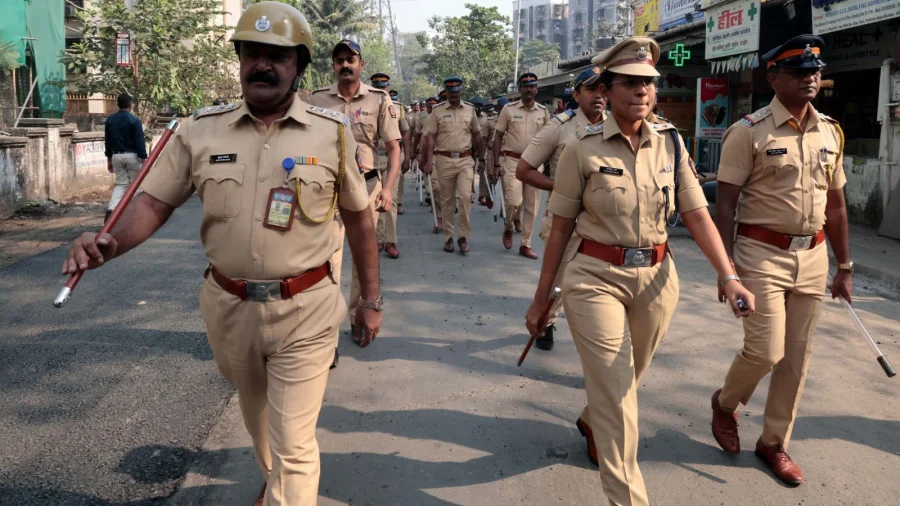
Maharashtra Police Staffing Now Decided by Crime Data
By Newsroom Staff | Police & Governance Desk
A police station's strength could soon depend on its case diary, not just its designation. Maharashtra is reported...
Admin
The Tasalli
728 x 90Header Slot
TL;DR — Quick Summary
Maharashtra is shifting how police stations are staffed — manpower will reportedly be linked to the crime load each station handles.
Why it matters: High-crime areas could get more personnel, potentially improving response time and investigation quality. Official notification and rollout details are still awaited.
Key Facts
Main Update
New police station rules in Maharashtra will reportedly base manpower deployment on crime patterns.
Impact
Stations handling higher crime volume or more complex cases may receive additional staff.
Official Response
No formal government notification or implementation timeline has been released yet.
Current Status
The reform direction has been announced/reported; operational details remain under preparation.
What Next
Officials are expected to issue guidelines on how crime data will be used to calculate station strength.
By Newsroom Staff | Police & Governance Desk
A police station's strength could soon depend on its case diary, not just its designation. Maharashtra is reportedly preparing rules under which crime patterns — the volume and nature of cases a station handles — will decide how many personnel are deployed there.
Thana staffing gets a crime-based formula
At the core of the reported reform is a simple idea: stations that investigate more crime need more hands. Current deployment models often follow geography, rank and legacy norms, which can leave busy stations understaffed while quieter stations hold surplus.
Under the new framework, the crime graph of each police station area would become the primary input for calculating manpower. That is what the announced headline — "Crime will now decide police manpower" — signals.
Why the change matters for ordinary citizens
For the public, the stakes are practical. Anyone who has waited long for a police response in a high-crime area knows the frustration of an overstretched thana.
If staffing follows the crime map, stations under pressure could get additional officers, faster complaint registration and more focused investigation. In principle, the reform directly links police presence to public need.
What is confirmed versus what remains unclear
At this stage, only the headline direction is known. No publicly released official order yet explains how crime data will be measured, which offences carry more weight, or when the rules take effect.
Those operational specifics — implementation timeline, station categories, review cycles — remain pending official confirmation. Any reading beyond the announced principle is speculation.
Part of a larger shift toward data-driven policing
Maharashtra's reported move aligns with a wider push across Indian states to make policing more data-driven. Crime mapping, analytics and performance-linked deployment have been part of police modernization discussions for years.
This reform, if implemented, would institutionalise that approach: staffing decisions based on recorded crime rather than administrative inertia.
The questions and risks that need answers
Reform supporters will welcome the logic. But critics may ask whether reported crime is the right measure. Areas where crimes go under-reported could appear "safe" and lose manpower, deepening silent under-policing.
There is also the workload question. Police stations handle VIP duties, bandobast, traffic and administrative work beyond crime investigation. A purely crime-based formula may miss those demands.
What citizens should watch for next
Until the official order is published, the details are out of public hands. What citizens can do is keep filing complaints and follow-ups through official channels — accurate crime data is the foundation this reform depends on.
Watch for the government's notification on how the manpower formula will work, including any review mechanism or public disclosure of station-wise crime figures.
Future outlook
If implemented with transparent criteria, the reform could rebalance police resources across Maharashtra's districts and hundreds of police stations. The real test will be execution — data quality, transfer policies, and the willingness to move staff from comfortable postings to high-pressure ones.
Our Take
This is an administrative reform that sounds technical but touches every citizen who has ever waited for police response. Linking manpower to the crime graph is a sensible principle on paper; its credibility will rest on transparent data and honest implementation. Until detailed rules are published, it should be read as a direction, not a finished solution.
Frequently Asked Questions
What does "crime will now decide police manpower" mean?
Under the reported Maharashtra reform, a police station's staffing strength would depend on the volume and nature of crime it handles, rather than traditional administrative norms.
When will the new Maharashtra police station rules be implemented?
No official implementation date has been announced yet. The reform direction has been reported, but the formal notification and rollout timeline are still awaited.
Which crimes will determine police station staffing?
Specific crime categories or weightage have not been officially disclosed. The broad principle is that higher crime load will lead to higher manpower allocation.
How will the public benefit from these police manpower rules?
If implemented, stations in high-crime areas could receive more officers — potentially meaning faster response, quicker FIR registration and more thorough investigations.