
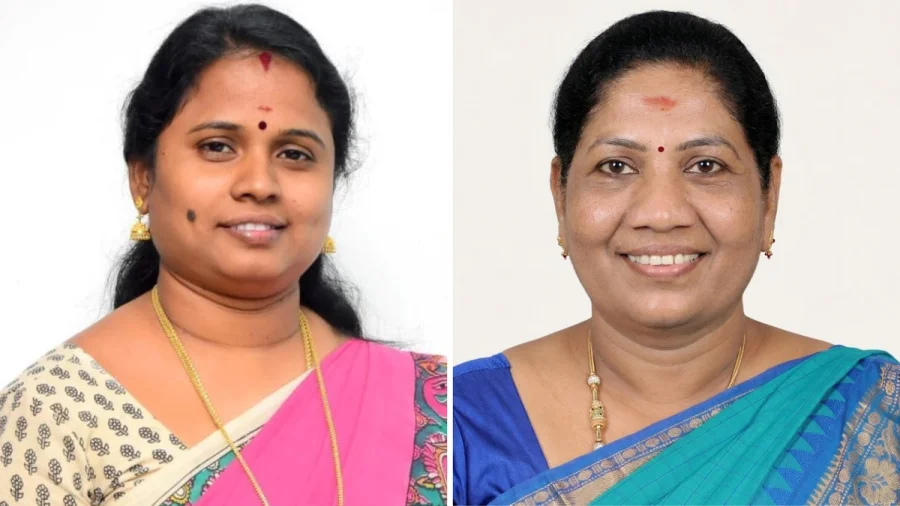
A legislator wins an election. Months later, the seat is surrendered. Then the same candidate returns to the same voters, asking to be sent back. The Madras High Court has now asked a question that goes to the heart of that sequence — whether it amounts to treating the voter's first verdict as disposable.
Justice S.M. Subramaniam of the Madras High Court observed that MLAs who resign and then seek re-election in the bye-election caused by their own resignation may amount to insulting the voters. He also wondered why the Election Commission of India should not frame guidelines to address the issue.
The words matter. This was a judicial observation during proceedings, reported in the source material available — not a final ruling, and not yet a binding direction.
A Blunt Framing: When a Mandate Is Returned and Then Re-Requested
The logic behind the remark is straightforward. A bye-election is not a routine event. It exists to fill a seat that has fallen vacant, usually because of death, disqualification or resignation. When the vacancy is created by the winner's own choice, the electorate is asked to vote a second time for a contest it did not ask for.
The cost is paid in public money, administrative time, and voter patience. The judge's framing sharpens that into a question of respect: how many times should a voter be asked to ratify the same decision?
Why a Resignation Followed by a Contest Is Not a Technicality
In Indian politics, resignation has long been used as a political instrument — sometimes as a matter of principle, sometimes as a calculated move to seek a fresh mandate on new terms. Parties frame it as a return to the people. Critics see it differently: a mandate is meant to run its term, and a mid-term exit shifts the burden of that disruption onto the voter.
The distinction between the two readings is where the controversy lives. And it is precisely the kind of grey zone that courts and the Election Commission have historically been asked to clear.
The Question the Bench Put to the Election Commission
The Election Commission of India is the constitutional authority responsible for the superintendence, direction and control of elections. That is the machinery the judge pointed to when he asked why guidelines should not be framed.
At this stage, it is not known from the available material whether the court has issued a formal direction, whether the Commission has been asked to respond, or whether anything will follow. The remark itself is the news — its legal afterlife is still open.
Reading the Observation for What It Is — and What It Is Not
In Indian judicial practice, an oral observation from the bench carries weight as a signal of judicial thinking, but it does not by itself change the law. A formal order, a direction to an authority, or a written judgment does that. The difference is not a technicality for lawyers — it determines whether anything actually changes on the ground.
That distinction is why this story deserves to be read carefully rather than as an immediate rule change.
Confirmed Facts vs What Remains Unclear
Confirmed in the source material: the observation was made by Justice S.M. Subramaniam of the Madras High Court, and it concerned resigned MLAs seeking re-election in bye-elections, along with a question about why the ECI should not frame guidelines.
Unclear and unverified: the specific case in which the observation was made, the full composition of the bench, the state or constituency involved, whether a written order exists, and whether the ECI has been formally put on notice. No independent high-confidence source was available at the time of writing, so this report rests on the original account alone. Anything beyond that would be speculation.
The Case Against Hard Rules — and the Risk of Over-Correction
There is a genuine counter-argument. Resignation is a legal right. A legislator who resigns and re-contests submits to the voter voluntarily, often on a clearer question than the original election offered. A blanket restriction could be read as limiting both the representative's right and the electorate's freedom to choose.
There is also an administrative problem: guidelines that bar re-contest would need to define intent, which is notoriously difficult to legislate. Resignation on principle and resignation as strategy can look identical at the point of resignation. Any framework would have to draw that line without punishing legitimate exits — a narrow path, and one the Commission would have to walk carefully.
A Question That Keeps Returning to India's Electoral Debate
This is not an isolated flashpoint. Across states, resign-and-recontest has repeatedly triggered debate about whether the practice respects the mandate or exploits it. Courts have historically been cautious about entering what is seen as the political domain, while the Election Commission has tended to act through guidelines and advisories rather than sweeping rules.
What makes this observation notable is where it lands: not on a specific politician's conduct, but on the design of the system itself.
What It Means If Your Constituency Heads to a Bye-Election
For voters, the practical effect today is unchanged. If a bye-election is announced in your constituency, the process stays the same — check the Election Commission's official notification, verify candidate affidavits, confirm your name on the electoral roll, and check your polling booth in advance.
What is worth watching is the candidate list. If a resigned legislator is contesting again, the vote becomes a referendum on the resignation itself, not just on the candidate. That is a sharper decision than a routine election, and turnouts often reflect it.
What Could Happen Next
Several outcomes are possible, though none is confirmed. The court could convert the observation into a formal direction, which would push the Commission to respond. The Commission could choose to examine the suggestion independently. Or the matter could remain an observation with no immediate procedural consequence.
Anything beyond this point is speculation, and it should be read as such.
Our Take
The judge's remark is less about any single politician and more about a principle that Indian elections are built on: that a vote is a term-long contract, not a renewable licence. Whether or not guidelines follow, the question has been placed on the record by a constitutional court — and that itself shifts the conversation.
The harder issue is the remedy. Voters deserve protection from being made to vote repeatedly on the same seat. Legislators deserve the freedom to resign and seek a fresh mandate. A workable framework would have to protect both, and that is much easier to demand than to draft.
Frequently Asked Questions
What did the Madras High Court say about resigned MLAs contesting bye-elections?
Justice S.M. Subramaniam observed that MLAs who resign and then seek re-election in the bye-election triggered by their resignation may amount to insulting voters. He also questioned why the Election Commission of India should not frame guidelines on the issue.
Is this a binding order against the Election Commission?
No confirmation of that is available. It has been reported as a judicial observation made during proceedings. Only a formal order or written judgment would create a binding obligation — and none is confirmed in the source material.
What is a bye-election?
A bye-election is a special election held to fill a seat that has become vacant before the end of its normal term. A vacancy can arise from resignation, death, disqualification or a seat being declared void.
Can the Election Commission of India frame such guidelines on its own?
The ECI is the constitutional authority for superintendence of elections and has historically issued guidelines and advisories. Whether it does so here is unknown — no response from the Commission is available in the source material.
Does this change anything for voters right now?
No. Voting procedures, notifications and eligibility remain exactly as they are. The practical change, if any, would come only after a formal order or new Commission guidelines.



