
By Staff Reporter | Education & Law Beat
A gherao that ran through the night. A resignation the next morning. And a phrase — "forced to quit" — that now sits at the centre of an argument no Indian law college has fully solved: how often must a student show up before an institution can say no?
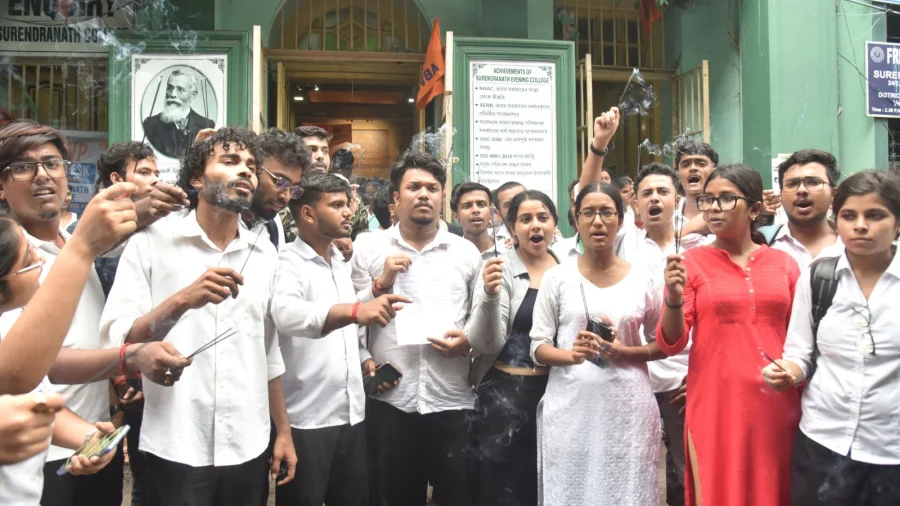
The vice-principal of a Kolkata law college has said he was forced to step down after students staged an overnight gherao over the attendance issue. Beyond that, the public record is thin — no verified account yet from the college management, and no official confirmation of the sequence of events.
What the Vice-Principal Says Happened — and What Triggered the Night
According to the development, the dispute centred on attendance, and the pressure took the form of a gherao — students surrounding the official and refusing to let the matter rest until it was addressed. The standoff stretched through the night, and the vice-principal has since said he was forced to quit.
What is not established: the college's name, the exact date, how many students were involved, whether the protest was confined to one office or spread across the campus, and whether any written complaint was filed by either side.
An Attendance Rule That Almost Nobody Agrees On
Attendance is the least glamorous and most explosive rule on any law campus. Under Bar Council of India norms, law students are generally required to attend a minimum of about 70% of classes to be eligible for examinations — a threshold most colleges then layer with their own conditions, detention policies, and condonation processes.
The rules exist for a reason: legal education is regulated, and degrees feed into enrolment as advocates. But their enforcement is where friction lives — especially when students say the shortage was caused by internships, court visits, illness, or timetable clashes rather than indifference.
Why "Gherao" Sets Off Alarm Bells in Indian Institutions
Gherao — physically surrounding a person to force compliance — is a familiar tactic in Indian labour and campus politics, and it sits in an uneasy grey zone. It is a visible, hard-to-ignore form of pressure. It is also, by its nature, coercive, and Indian courts have repeatedly viewed it with suspicion when it shades into confinement or intimidation.
That ambiguity is exactly why these episodes escalate so quickly. Institutions treat gherao as a breach that cannot be negotiated with; students treat it as the only channel that gets a hearing.
Who Actually Pays the Price When a Standoff Ends in a Resignation
The immediate cost falls on the person who leaves — in this case, an administrator whose career now carries a public dispute attached to it. But the ripples reach further.
Faculty who enforce attendance next may hesitate, or may harden. Students who were not part of the protest inherit an institution in conflict. And the enrolling batches that follow will study under whatever informal precedent gets set: that pressure works, or that it backfires badly.
What Is Confirmed — and What This Report Cannot Yet Verify
Confirmed: the vice-principal has publicly said he was forced to quit, and the trigger described is an overnight gherao over attendance.
Unverified: the institution's official version, whether any demand was formally conceded, whether the resignation was accepted or contested, and whether the students had earlier raised their attendance grievance through any formal channel. Any claim about what was "agreed" during the night should be treated as unconfirmed until an official statement surfaces.
Protest, Pressure, or Both? Reading the Incident Fairly
There are two credible readings here, and honest reporting requires holding both. One: students facing detention or exam debarment over attendance often find formal grievance systems slow or unreachable, and an overnight sit-in is what finally forces a response. Two: an overnight gherao of a single official is pressure applied to a person, not an argument, and it can cross from protest into coercion.
Neither reading cancels the other. What it does mean is that the loudest version of this story — whichever side it comes from — is unlikely to be the complete one.
Why Attendance Disputes Keep Flaring Across Indian Campuses
Three shifts have made this combustible. Attendance is now tracked digitally, so shortages surface early and coldly, without the informal leeway of a register. Regulatory pressure on law colleges to maintain standards has made administrations stricter. And student expectations have changed — internships, moot courts, and litigation exposure are now seen as learning, even when they cost classroom hours.
The result is a rule that everyone accepts in principle and contests in practice.
If You Are a Law Student or a Teacher, Here Is What to Do Now
Students: check your attendance record against the official portal yourself, in writing, before it becomes a detention issue. Raise shortages early — medical certificates, internship letters, and prior intimation matter far more before a deadline than after. Use the college grievance cell, then the affiliating university's redressal mechanism. Documentation, not confrontation, is what usually moves a decision.
Faculty and administrators: written policy, applied consistently and communicated before the deadline, removes most of the oxygen from these disputes. So does a named grievance route with a stated response time.
What Could Happen Next
The reasonable possibilities: the college issues a clarification, the affiliating university or the state's higher education department seeks a report, or the matter simply fades from public view with the resignation standing as the outcome. A formal police complaint or an inquiry is possible but not confirmed.
Our Take
This is a small campus story with a large question inside it. Indian law colleges are being asked to enforce measurable standards while managing students who increasingly see the classroom as one part of their education rather than the whole of it. That tension will not be resolved by a resignation — or by a night-long sit-in.
What would resolve it is boring and unglamorous: published attendance policy, a grievance process with deadlines, and an institutional habit of answering students before they feel they have to surround an office to be heard.
Frequently Asked Questions
What happened at the Kolkata law college?
According to the reported development, the vice-principal of a Kolkata law college said he was forced to quit after students staged an overnight gherao over the attendance issue. No independent official statement confirming the full sequence of events was available at the time of writing.
What does "gherao" mean?
Gherao is the practice of surrounding a person — usually an official or manager — and refusing to let them leave until their demands are addressed. It is a common pressure tactic in Indian labour and campus disputes, and is generally viewed as coercive rather than a recognised legal right.
How much attendance do law students in India need?
Under Bar Council of India norms, law students are generally required to attend a minimum of about 70% of classes to be eligible to appear for examinations. Individual colleges often add stricter conditions, detention rules, and limited condonation provisions.
What should a student do if attendance rules are applied unfairly?
Put the request in writing, gather supporting documents such as medical certificates or internship letters, and route it through the college grievance cell and then the affiliating university's redressal mechanism. Escalation through documented channels is usually more effective — and safer — than a confrontation.



