
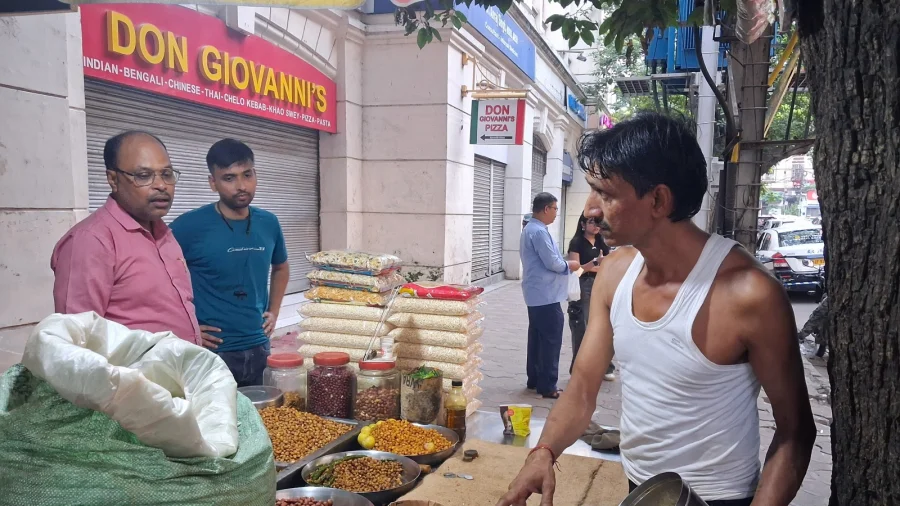
On a Kolkata street, the queue outside a decades-old cabin and the sizzle at a pavement stall have almost nothing in common — except that both now sit in the same set of inspection papers. Food safety checks in the city have widened beyond the familiar pavement sweep to include long-established, much-loved eateries, according to the story.
For a city that measures its mornings in kochuri and its evenings in rolls, that is not a small shift. It changes who gets nervous when the inspector's van stops.
The Net Has Widened — and That Is the Story
The headline is not really about hygiene. It is about scope.
Food enforcement in most Indian cities has historically been reactive and uneven — a push after a contamination scare, a sweep before a festival, a crackdown on the most visible vendors. What this story suggests is a broader approach: the same scrutiny applied to a licensed, air-conditioned institution that it is applied to a cart with a tarpaulin roof.
That distinction matters because these two kinds of businesses operate under very different conditions — and very different levels of accountability.
Why Kolkata's Kitchens Were Always Going to Be a Hard Beat to Police
Kolkata's food economy is unusually layered. There are heritage establishments that have run for generations. There are neighbourhood tea shops and cabin restaurants. There are thousands of registered and unregistered street vendors. And there are home kitchens selling through delivery apps — a category that barely existed a decade ago.
Each layer falls under a different mix of rules, licences and enforcement capacity. A single drive cannot treat them identically, which is precisely why the question of who is being checked, and on what basis, matters.
From Cart to Cabin: How the Scanner Moves Through a City's Food Chain
Under India's food safety framework, every food business — from a single-pan vendor to a large restaurant — is expected to hold either a registration or a licence issued under the Food Safety and Standards Act, 2006.
The key compliance points are consistent across formats: a valid registration or licence, displayed prominently; trained food handlers; safe water; clean storage; pest control; and documented sourcing. For petty food businesses, the requirement is a basic registration; larger operations need a state licence, and the biggest need a central licence.
When inspections widen, the first thing they usually test is not the food itself but the paperwork behind it.
Who Feels It First: The Vendor, the Owner, the Regular Customer
For a street vendor, a bad inspection can mean a lost day, confiscated equipment or a lost spot — a livelihood shock with no cushion. Vendors are protected under the Street Vendors (Protection of Livelihood and Regulation of Street Vending) Act, 2014, which provides for vending certificates and town vending committees. How that protection interacts with a hygiene drive is a genuine question, not a technicality.
For an established eatery, the risk is different but real: reputation. A name built over forty years can be dented in a single afternoon of news coverage, whether or not a violation is eventually proven.
And for the customer — the person actually eating — the stakes are physical. Foodborne illness is not an abstraction.
What Regulators Have Said — and the Silence That Matters
In the material available for this report, no specific statement from the Kolkata Municipal Corporation, the state food safety authority or any named official was available for verification.
That absence is itself worth noting. In enforcement stories, official clarity usually answers three questions: what triggered the drive, which premises were inspected, and what action followed. Until those answers are on record, the story should be read as an ongoing development rather than a concluded one.
Confirmed Facts vs What Remains Unclear in the Kolkata Food Checks
Reasonably established: Food safety enforcement in Kolkata operates under national food law, with municipal and state bodies handling licensing and inspection. Businesses across formats are expected to comply with the same core hygiene and licensing standards.
Reported but not independently confirmed: That the current drive specifically includes legacy or long-established eateries alongside street stalls, and the scale of it.
Unclear: How many premises were inspected, which ones, what violations — if any — were found, whether penalties were imposed, and whether this is a short sweep or a sustained programme. Any claim of numbers at this stage would be speculation.
The Risk of Enforcing a City's Food Culture Too Hard
There is a strong case for stricter enforcement. Contaminated water, reused oil, unrefrigerated meat and untrained handling cause real illness, and the burden falls hardest on people with the least ability to absorb it.
But there is a counter-argument that deserves airing, not dismissal. Kolkata's street food is a livelihood for thousands and a cultural inheritance for millions. Enforcement that arrives without warning, without a clear compliance pathway and without proportionate penalties can push vendors further into informality rather than toward safety — the opposite of the intended outcome.
The honest position is that both things can be true: the inspections are necessary, and the way they are carried out determines whether they actually work.
The Same Question Is Being Asked Across India
Kolkata is not an outlier. Cities from Mumbai to Chennai to Lucknow have run similar drives, and the pattern repeats: an enforcement push, a wave of coverage, then a quiet return to the status quo once attention moves on.
The states that have seen measurable improvement are generally the ones that paired inspections with vendor training, subsidised hygiene upgrades and a transparent complaints process — not the ones that relied on raids alone.
If You Eat Out in Kolkata, Here's What's Worth Checking
You cannot inspect a kitchen, but you can check a few things in seconds.
Look for the displayed FSSAI registration or licence number — a legitimate business should have it visible. Take note of basic hygiene you can actually see: the person handling your food, the water source, how raw and cooked items are stored, and whether the oil looks fresh. Keep a receipt or a payment record, because it is your only proof of where you ate if you fall ill.
If something is wrong, the complaint route is official, not social media: FSSAI's consumer grievance mechanism and the local municipal health department both accept food safety complaints.
What Happens Next
Three things will determine whether this drive matters. First, whether regulators publish findings — inspections without disclosure change nothing. Second, whether action is proportionate, distinguishing between a genuine hazard and a technical lapse. Third, whether compliance support reaches the vendors least able to afford it.
If those three pieces fall into place, this becomes a genuine reform story. If they do not, it becomes another sweep.
Our Take
The instinct to widen food checks beyond the pavement is not unfair — it is overdue. A city's most trusted kitchens should not be exempt from the standards its smallest vendors are held to.
But the test of any enforcement drive is not how many doors it knocks on. It is whether the food actually becomes safer six months later, and whether the people who cook it can still make a living. Kolkata's food culture is not an obstacle to food safety — it is the reason the work is worth doing properly.
Frequently Asked Questions
Why are Kolkata's food safety checks expanding to legacy eateries?
The reported widening suggests a shift toward uniform enforcement — the same licensing and hygiene standards applied across business sizes, rather than concentrating only on the most visible street vendors. Official confirmation of the trigger behind this specific drive was not available.
Are street food vendors in Kolkata being shut down?
There is no confirmed information indicating a blanket shutdown. Enforcement action against individual premises, where it occurs, is typically tied to specific violations. Street vendors also have legal protections under the Street Vendors Act, 2014, including vending certificates and town vending committees.
How can I check if a Kolkata eatery is food-safety compliant?
Look for the displayed FSSAI registration or licence number, which food businesses are required to show. You can verify a licence number on FSSAI's official portal. For street vendors, a vending certificate issued by the local authority is the relevant document.
What should I do if I get sick after eating at a Kolkata restaurant or stall?
Keep the bill or digital payment record and seek medical attention. You can file a complaint through FSSAI's consumer grievance channel or with the Kolkata Municipal Corporation's health department. A documented complaint with evidence is what allows authorities to act, and it protects other diners too.



