
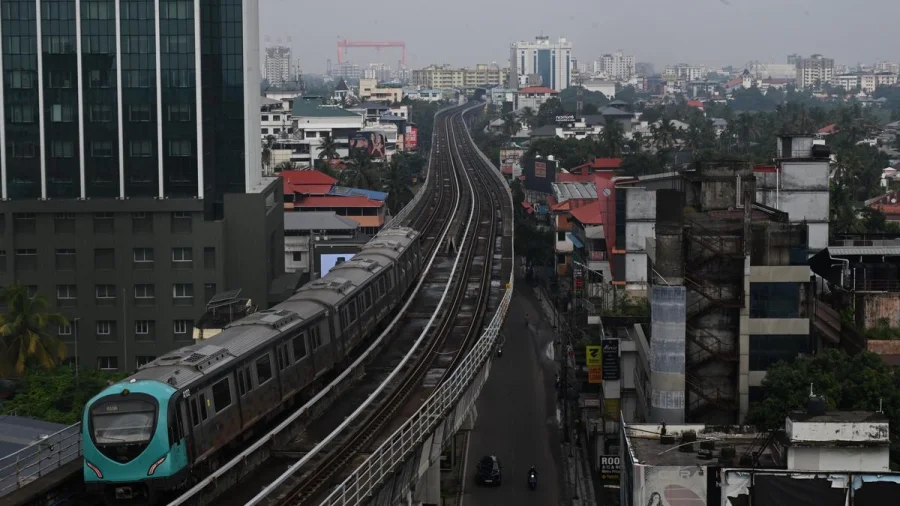
For years, Indian metro rail has been measured by a familiar number: the size of the loss. Kochi Metro has just delivered a different headline — an operational profit, and a smaller net loss.
Kochi Metro Rail Limited (KMRL), the agency that runs the network in Kerala's commercial capital, has recorded an operational profit in its latest financial reporting period, according to the published headline report. The company also narrowed its net loss, a sign that the gap between what the metro earns and what it costs to run is closing.
What 'operational profit' actually means for Kochi Metro
Operational profit — sometimes called operating surplus — means revenue from fares, advertising, leasing and related activities covers the day-to-day cost of running trains: electricity, salaries, maintenance. It does not include depreciation or interest on loans.
For a metro system, that distinction matters. Most Indian metro networks lose money at the operational level itself. Kochi recording an operating surplus puts it in a small, creditable group.
The net loss, meanwhile, is the bottom line after interest, depreciation and other financial costs are subtracted. KMRL lowering that net loss suggests better revenue generation or tighter cost management — or both.
Why a metro making operational profit is a big deal
Indian metros are built as social infrastructure, not profit engines. But every rupee of operational loss becomes a burden on taxpayers and state governments, which compensate for revenue shortfalls.
An operational profit means commuters' fares and non-fare revenue are now paying for the trains to actually run. That reduces the subsidy demand on the Kerala government and strengthens the financial credibility of the project.
It also improves the investment case for future expansion. A metro that can cover its own running costs is far easier to justify than one that cannot pay its electricity bills.
What this means for commuters and taxpayers
For thousands of daily Kochi Metro passengers, the announcement is largely invisible — trains run the same, fares do not change overnight. But behind the scenes, it matters.
A financially healthier metro has more headroom to invest in reliability, station upkeep and passenger experience rather than chasing revenue gaps. For Kerala taxpayers, it signals a slowly shrinking burden from one of the state's largest urban infrastructure projects.
What officials have said so far
As of this report, no detailed statement from KMRL management, the Kerala government, or the Ministry of Housing and Urban Affairs has been published in the available source material. The headline announcement itself is the confirmation; specific figures, reporting periods, and managerial commentary remain awaited.
How Kochi Metro reached this point
Kochi Metro began commercial operations in mid-2017, launched in phases along its main corridor. Like most Indian metros, its early years were shaped by high capital costs, interest burdens, and a gradual ridership build-up.
Metro economics typically improve as ridership matures, train frequency increases, and non-fare revenue from station leasing, advertising and land development grows. The latest result is consistent with that pattern.
What the numbers likely say — and what they do not
An operational profit does not mean the metro is self-sustaining overall. The net loss remains, even if smaller. Interest on borrowed capital and depreciation on expensive assets continue to weigh on the bottom line.
But the sequence matters: first operational break-even, then net loss reduction, and eventually — theoretically — full profitability. Kochi appears to have crossed the first two thresholds.
Confirmed facts vs what remains unclear
Confirmed by the headline: Kochi Metro recorded an operational profit and reduced its net loss.
Not yet clear: the exact crore figures, the financial year or quarter covered, ridership growth, and any official statement from KMRL on what drove the performance.
All background context in this report is industry-generic and should not be read as a specific claim about KMRL's accounts.
Why Kochi Metro's model stands apart
Kochi Metro is notable for integrating multiple modes of mobility — most visibly its extension to the Water Metro, among India's first attempts to blend ferry and rail networks into one ticketing ecosystem. Integration supports ridership, and ridership supports operational revenue.
Non-fare revenue from station real estate and leasing is widely seen in the sector as the key to metro financial health. Kochi's compact, urban-friendly corridor gives it a density advantage that sprawling systems do not always enjoy.
Risks and a balanced view
The most important caution: one reporting period of operational profit is not the same as durable financial health. Interest costs remain, expansions require fresh borrowing, and ridership can be sensitive to competition from private transport and any future fare revision.
Critics of metro expansion often point out that operating surpluses rarely translate into full cost recovery, including capital costs, within a reasonable horizon. The reduction in net loss is positive, but the gap to full sustainability remains the real measure.
A broader shift in Indian metro finances
Indian metro rail is gradually moving beyond the era in which heavy losses were treated as unavoidable. Several networks are exploring non-fare revenue and operational efficiencies. Kochi's result adds evidence to the argument that disciplined, compact metro systems can approach financial sustainability.
What to watch next
For commuters: no fare change has been announced, and this operational profit should not be read as an imminent fare revision signal. Metro fares are typically set through a Fare Fixation Committee process, not by annual results.
For policy watchers and infrastructure investors: KMRL's detailed annual financial report is the document to watch. It will disclose the exact operational profit margin, the scale of net loss reduction, and the contribution of non-fare revenue.
What could happen next
If Kochi Metro sustains operational profitability, it strengthens the investment case for the city's planned corridor extensions. The government may also use it as a demonstration that patronage — not just construction — can drive metro economics.
The decisive test will be whether the net loss continues to narrow in future periods, ideally reaching zero over the medium term. That trajectory, not a single reporting period's surplus, will determine the legacy of this milestone.
Our Take
Operational profit is genuinely significant — most Indian metros could not claim it even after years of operation. But this headline should be read with precision: it is progress, not transformation. The disciplined path Kochi appears to be on — operational self-sufficiency first, then debt service — is exactly the order in which metro economics become viable. The absence of detailed figures in this update is a reminder to wait for the audited numbers before celebrating the scale of the achievement.
Frequently Asked Questions
Has Kochi Metro become fully profitable?
No. Kochi Metro has recorded an operational profit — meaning it covers day-to-day running costs — and has reduced its net loss. The net loss itself remains, so the metro still does not cover depreciation, interest, and other financial charges entirely from its own revenue.
What is the difference between operational profit and net loss?
Operational profit is revenue minus the direct costs of running the metro, such as electricity, salaries, and maintenance. Net loss is the final result after also subtracting interest, depreciation, and taxes. A metro can post an operational profit and still report a net loss.
When will Kochi Metro's official financial figures be available?
Exact figures were not included in the available source material. Kochi Metro Rail Limited's detailed audited financial statement, when published, is expected to disclose the precise size of the operational profit and the reduction in net loss.
Does operational profit mean metro fares will change?
No. No fare revision has been announced in connection with this result. Metro fares in India are generally determined through the Fare Fixation Committee process rather than by annual financial performance.



