
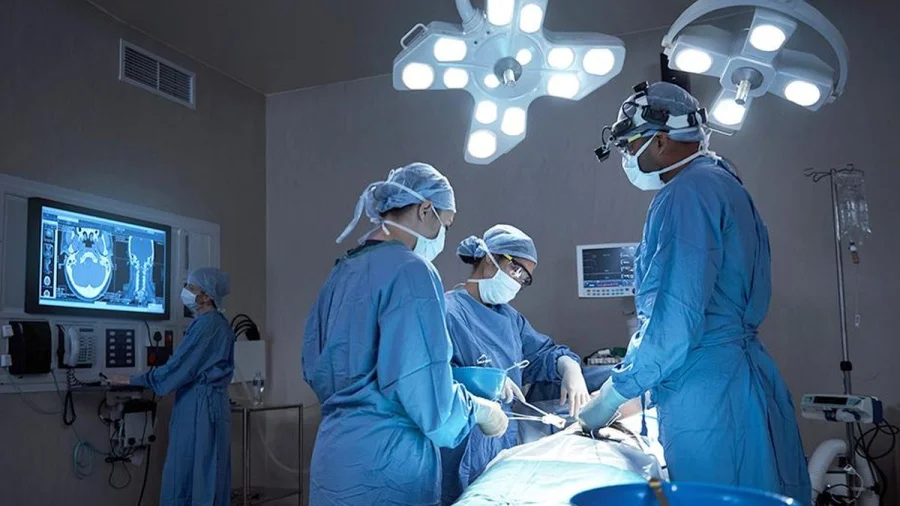
A blocked coronary artery does not wait for office hours. When it closes suddenly, the muscle it feeds begins to die within minutes — and the only thing that changes the outcome is how fast someone can open it again.
KIMS Saveera said its cardiology team has done exactly that, performing what it described as a complex emergency angioplasty. The hospital has not released the patient's age, condition or result, so what is publicly known so far rests on the hospital's own account of the procedure.
What KIMS Saveera Has Actually Confirmed
In its statement, the hospital said the case was handled by its interventional cardiology team as an emergency. Dr. Moode Sandeep, Chief Interventional Cardiologist at KIMS Saveera, said the cardiology team is equipped to manage complex cardiac emergencies with advanced technology and multidisciplinary expertise.
That is the extent of the verified information. No timeline, no procedural detail, no outcome. Anything further would be assumption, not reporting.
What Makes an Angioplasty "Complex" — and Why It Is a Different Test
A routine angioplasty involves threading a catheter to a narrowed artery, inflating a balloon and usually placing a stent to hold the vessel open. Most such procedures are planned days or weeks in advance, with imaging already reviewed.
An emergency case is a different exercise. The team is working on a patient who may be unstable, with limited history, often at night. "Complex" typically signals a blocked artery that is difficult to reach or reopen — severe calcification, a blockage at a branch point, more than one vessel involved, or a patient in cardiogenic shock where the heart is already failing to pump.
Each of those factors raises the technical difficulty and shortens the margin for error. It also demands more than one specialist in the room at the same time.
The Ninety-Minute Clock That Decides Everything
In a major heart attack caused by a fully blocked artery, international cardiology guidelines widely followed in India recommend reopening the vessel within about 90 minutes of the patient reaching hospital — the "door-to-balloon" window.
Every additional minute of delay adds to the amount of heart muscle permanently lost. This is why emergency angioplasty capability is not a prestige item for a hospital; it is a survival variable for the population around it.
Who This Actually Matters To
The person on the cath lab table is only part of the story. Behind every emergency procedure is a family that made a split-second decision — whether to wait, whether to drive, whether to call an ambulance.
For patients in smaller cities and surrounding districts, the practical question is not whether a hospital can perform angioplasty at all, but whether it can do so at 2 a.m. on a public holiday, with a full team available. A hospital publicly stating it can handle complex emergencies is, in effect, making a claim about its readiness.
Why Hospitals Emphasise Multidisciplinary Teams
Emergency angioplasty is rarely a solo performance. It draws on interventional cardiologists, anaesthetists, cath lab technicians, nurses trained in cardiac emergencies, radiographers and, where needed, critical care and cardiothoracic surgery backup.
"Multidisciplinary expertise," the phrase used by Dr. Sandeep, refers to that chain. A single missing link — no anaesthetist, no functioning cath lab, no ICU bed — can turn a manageable case into an unmanageable one.
Confirmed Facts vs What Remains Unclear
Confirmed: KIMS Saveera says a complex emergency angioplasty was performed by its cardiology team, and its Chief Interventional Cardiologist has commented on the hospital's emergency cardiac capability.
Unclear: The date of the procedure, the patient's presenting condition, what made the case complex, whether a stent was implanted, the outcome, and whether the case has been documented in any clinical registry. The hospital's statement has not been independently verified, and no third-party confirmation of the case is available.
Readers should treat the hospital's account as an official statement, not as independently audited clinical data.
The Balanced View: A Good Sign, Not a Scoreboard
Individual case announcements are encouraging, but they are not the same as outcomes data. What matters over time is a hospital's consistent performance: median door-to-balloon times, procedural success rates, complication rates and long-term patient follow-up.
Those figures are rarely published, which makes it difficult for patients and families to compare hospitals objectively. Emergency cardiac care also carries real risks — bleeding, stroke, kidney injury from contrast dye, re-blockage — and no centre avoids them entirely.
There is also a capacity question. A functioning cath lab and a 24×7 cardiac team are expensive to maintain, and how consistently that readiness is available is something only the hospital can confirm.
The Wider Pattern: Emergency Heart Care Is Moving Closer to Home
For years, the most serious cardiac emergencies in smaller Indian cities meant a long, often fatal transfer to a metro hospital. That has been shifting, as private multi-specialty hospitals build cath labs and 24-hour cardiac units outside the biggest cities.
The change is meaningful because the geography of heart disease has not stayed urban. Risk factors — diabetes, hypertension, smoking, sedentary work, high-stress living — are now common across smaller towns and rural districts, where access to a cath lab has historically been the weakest link in the chain.
What Patients and Families Should Do
Chest pain that lasts more than a few minutes, spreads to the arm or jaw, or comes with sweating, breathlessness or nausea is a medical emergency. Call an ambulance rather than driving yourself — you may need treatment on the way.
Keep recent reports, prescriptions and a list of current medicines in one place at home. If you live far from a cath-lab hospital, know in advance which one is closest and open at night. And if a doctor advises immediate transfer for angioplasty, the delay for a second opinion can cost heart muscle.
What Could Happen Next
If KIMS Saveera releases further details, the picture will sharpen — particularly the patient's outcome, which is the only fact that ultimately tests the claim. A single case, however successful, does not establish a pattern.
Over time, the more useful indicator will be whether the hospital reports sustained emergency cardiac capability rather than isolated procedures.
Our Take
The news here is not that angioplasty was performed — it is a routine, widely available procedure. The news is the word "complex," in an emergency setting, at a hospital positioning itself as a cardiac referral point beyond the metros.
That said, one case is an anecdote, not evidence. Hospitals are rightly proud of difficult saves, and they are also businesses with reputations to build. The responsible way to read this statement is as a capability claim awaiting confirmation through outcomes data — not as proof of a regional transformation.
What is unambiguously true is simpler: for a patient whose artery is blocked, distance and delay remain the two deadliest factors. Anything that shortens them is worth noting.
Frequently Asked Questions
What did KIMS Saveera announce?
The hospital said its cardiology team performed a complex emergency angioplasty. Its Chief Interventional Cardiologist, Dr. Moode Sandeep, said the team is equipped to manage complex cardiac emergencies with advanced technology and multidisciplinary expertise.
What is an emergency angioplasty?
It is a procedure to reopen a suddenly blocked coronary artery. A thin catheter is guided to the blockage, a balloon is inflated, and a stent is usually placed to keep the artery open. In a major heart attack, it is the fastest way to restore blood flow to heart muscle.
What makes an angioplasty "complex"?
Commonly, heavily calcified blockages, blockages at artery branch points, multiple blocked vessels, or a patient who is unstable or in cardiogenic shock. These cases take longer, need more equipment, and carry higher risk than a standard planned procedure.
Are the patient's details available?
No. The hospital has not disclosed the patient's age, condition, the date of the procedure or the outcome. Until that information is released or independently confirmed, the clinical specifics of the case remain unverified.

