
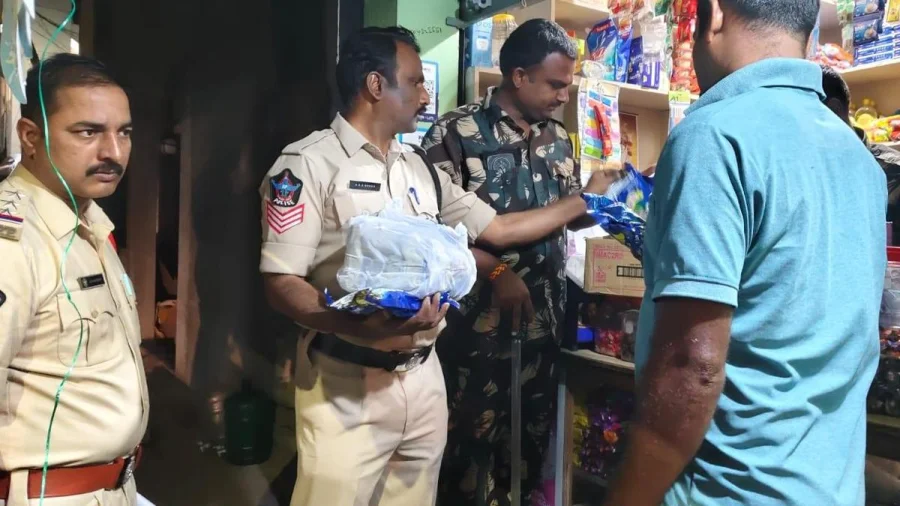
Seized tobacco products were sitting inside a Kerala police station, tagged and waiting to be produced in a case. Officials now say they are gone — and the officer named in the probe into that disappearance has not been seen since the matter surfaced.
The officer under investigation is Senior Civil Police Officer Sabith, according to officials quoted in the initial report. He is suspected of removing the seized products from the station. No arrest has been reported, and the sequence of how the items left the station's custody is still being pieced together.
What Officials Say Happened — and What They Haven't Said Yet
The account released so far is short. Seized tobacco went missing from the station's custody. Suspicion fell on a senior civil police officer. When the incident came to light, he could not be traced.
What officials have not disclosed matters just as much: how much was taken, when the loss was noticed, whether the storage area was locked, whether the seizure register shows gaps, and whether anyone else is being questioned. Those gaps are not proof of anything — they are simply what an investigation at this stage has not finished answering.
Why a Missing Consignment of Seized Tobacco Matters More Than It Looks
Seized tobacco sounds like small change. In a courtroom, it is not. It is the physical proof that the offence described in the FIR actually happened and that a specific quantity of contraband was recovered.
When such goods disappear, the case built around them weakens at the seams. The prosecution loses its exhibit. The defence gets a straightforward argument that the record is unreliable. And a station's seizure register — meant to be tamper-evident — becomes a document a court must take on faith rather than verify.
The Chain of Custody Every Seizure Depends On
Policing runs on paperwork: seizure memo, mahazar, register entry, storage, handover. Each step is designed to fix responsibility for a seized item on a named person at a named time.
Break one link, and the whole chain becomes arguable. That is why the central question here is not only where the tobacco went, but who signed for it, who last had access, and whether the station's own records can answer that.
An Officer Who Cannot Be Traced Changes the Shape of the Probe
A suspect who is available can be questioned, confronted with records and produced before a court. A suspect who is missing forces investigators to work backwards — through registers, duty rosters, storage logs and colleagues' statements.
It also pushes the matter in two directions simultaneously: a criminal line of inquiry into the alleged theft, and a departmental process examining conduct and discipline. In police service, the two can run in parallel — and they do not always end the same way.
What Is Confirmed, and What Officials Have Not Explained
Confirmed by the official account: an investigation is under way against Senior Civil Police Officer Sabith; seized tobacco products went missing from the station; the officer has been untraceable since the incident came to light.
Not confirmed: the quantity and value of the missing products; the date the loss was detected; whether a formal FIR has been registered; whether the officer has been suspended; whether others are under scrutiny; and whether any of the material has been recovered. Anything beyond the official account at this point is speculation, and should be read as such.
Why One Station's Evidence Room Is a Larger Question
Allegations that seized contraband has gone missing are rarely only about one officer or one building. They raise a structural question: how secure are the rooms where a court's future exhibits are kept, who inspects them, and how often.
For the public, a sack of seized tobacco is a minor thing. For someone facing trial, it can decide whether a case stands or quietly collapses. That asymmetry is what makes custody lapses consequential far beyond the value of the goods.
Risks, and the Case for Not Rushing to Judgment
It is worth stating plainly: an investigation is not a finding. Senior Civil Police Officer Sabith has not been convicted of anything, and no court has examined evidence in the matter. An unexplained absence can have explanations; a missing consignment can, in principle, stem from a records failure rather than a theft.
That said, the custody of seized goods is a strict responsibility, not a clerical formality. If the loss is confirmed and traced to an officer, the damage goes beyond one case — it erodes the presumption that a seizure memo means something in court.
What the Coming Weeks Are Likely to Decide
The immediate steps are procedural: locating the officer, auditing station records, and determining whether the matter proceeds purely as a departmental inquiry or also as a criminal case.
Officials have not indicated a timeline. Until they do, predictions about suspension, arrest or recovery remain guesswork — and readers should treat them that way.
What This Means If You Are a Party to a Case
If you are connected to a matter where seized goods are exhibits, you are entitled to ask about their custody through your lawyer at the appropriate stage. Courts can and do seek explanations when an exhibit cannot be produced.
If you are filing a complaint, keep your own copy of the seizure memo or acknowledgment. Paper protects you when memory fails.
Our Take
The headline value of this story is not the tobacco. It is the small, unglamorous promise a police station makes to a court: that what was seized will be produced, intact, when asked for. When that promise is doubted, every pending case in that station feels slightly less certain — and that is a bigger loss than any consignment.
The right response is not outrage but process: a clean audit, a traced officer, and a public explanation of what the records actually show.
Editor's note: This report is based on the limited details available at this stage. No independent confirmation of the quantity involved or the officer's whereabouts was available at the time of publication.
Frequently Asked Questions
Who is the officer under investigation in the Kerala seized tobacco case?
Officials have named Senior Civil Police Officer Sabith. He is suspected of stealing seized tobacco products from the station and has reportedly been untraceable since the incident came to light. He has not been convicted of any offence.
What exactly went missing from the police station?
Seized tobacco products that were being held in the station's custody in connection with a case. Officials have not made public the quantity or the value of the missing items.
Has the officer been arrested or suspended?
No such confirmation exists in the details released so far. The investigation is ongoing, and officials have not announced either an arrest or disciplinary action.
Why does missing seized goods matter for a court case?
Seized items are physical evidence. If they cannot be produced, the prosecution's case can weaken and the reliability of station records can be challenged — which may affect the outcome for the accused.



