
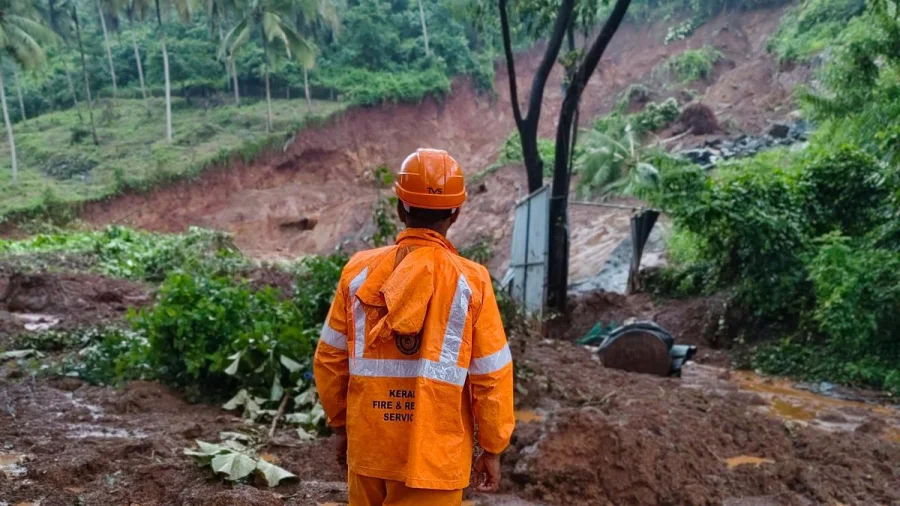
Every monsoon, Kerala's hills become a slow-motion test of nature's limits. The state receives roughly 3,000 mm of rainfall a year — but the real danger is not the total. It is the way the rain arrives: in violent, uneven bursts that flood the soil faster than the land can absorb it.
The rainfall pattern driving Kerala's landslide danger
Kerala's annual rainfall of around 3,000 mm is high even by Indian standards. But the distribution matters more than the volume. Much of this rain falls in short, high-intensity spells — the kind that can dump a month's worth of water in a few days or even hours.
On the steep, soil-covered slopes of the Western Ghats, that pattern is dangerous. Landslides are rarely caused by rainfall alone; they happen when heavy rain forces water into slopes that are already fragile.
Why uneven, intense rain is deadlier than a wet season
A steady drizzle allows water to drain gradually. A sudden cloudburst does the opposite: it saturates the soil rapidly, raises underground water pressure, and destabilises the slope. That is why two regions with similar annual rainfall can have very different landslide risks.
Kerala's terrain amplifies the effect. The Western Ghats rise sharply from the coast, combining steep gradients, loose soil, and hillsides reshaped by roads, construction, and farming. High-intensity rain on such ground is a well-understood trigger for slope failure.
Climate change is loading the dice
The underlying trend is clear from the rainfall record: high-intensity spells are becoming more frequent and more extreme. Global warming and climate change are cited as the key drivers, because a warmer atmosphere holds more moisture and fuels heavier downpours.
This does not mean every monsoon will bring a landslide. It means the odds are shifting. Storms that were once rare are becoming part of Kerala's regular monsoon reality — and the state's hills are increasingly exposed.
What is verified and what remains unclear
It is worth separating fact from assumption. The rainfall picture — roughly 3,000 mm annually, delivered in uneven, intense spells that are worsening with climate change — is the established foundation of this explainer.
What is not covered here: specific landslide events, casualty figures, or official rescue responses. Those require independent, event-specific reporting. This article focuses on the rainfall science that explains why Kerala's landslide risk is rising in the first place.
What this means for people living on Kerala's hills
For highland residents, the practical risk is simple: days of intense rain can turn a hillside into moving earth. Early warning systems and evacuation orders depend on predicting where rain will concentrate — a task that is becoming harder as rainfall grows more erratic.
A red alert during heavy rain is not a formality. For those in landslide-prone zones, it is a signal to leave vulnerable areas before the ground gives way.
A wider problem across the Western Ghats
Kerala is not an isolated case. The Western Ghats, running through multiple states, share the same combination of heavy monsoon rain and steep terrain. As intense rainfall events increase, the entire region faces a growing challenge: how to manage land use, deforestation, and unchecked construction on fragile slopes.
What should be done now
For authorities: map vulnerable slopes before the monsoon peaks, strengthen landslide early-warning systems, and enforce land-use rules in high-risk zones. For residents and travellers: take weather alerts seriously, avoid hilly areas during intense rain spells, and follow evacuation instructions without delay.
Future outlook
If current trends hold, Kerala will face more extreme rainfall events and a higher frequency of landslide risk. How much of that risk turns into actual disaster will depend on preparation — better forecasting, stricter land-use norms, and public awareness.
Our Take
Kerala's tragedy is not that it rains too much. It is that the rain now arrives in concentrated, destructive bursts on terrain that was never built to absorb them. Climate change is amplifying the pattern, but so are the choices made on the ground — where roads are cut, where hillsides are stripped, where homes are built. The rainfall trend is a warning. Whether it becomes a routine catastrophe depends on whether the state treats every quiet monsoon month as preparation time, not a reprieve.
Frequently Asked Questions
How much rainfall does Kerala get annually?
Kerala receives around 3,000 mm of rainfall a year, one of the highest totals in India. The problem is not the annual volume but the uneven, high-intensity spells in which much of it falls.
Why do heavy rains cause landslides in Kerala?
Intense rainfall saturates the soil quickly on Kerala's steep Western Ghats slopes. This builds underground pressure and weakens the ground, triggering slope failures that can turn into deadly landslides.
Is climate change making Kerala's landslides worse?
Yes. Global warming and climate change are making high-intensity rainfall spells more frequent and more extreme. Since concentrated rain is a primary landslide trigger, the risk is rising.
What should people do during intense monsoon rain?
Follow official weather alerts, avoid hilly and landslide-prone areas during heavy spells, and evacuate immediately when local authorities issue warnings. Do not wait for visible signs of a landslide.
[NEWS_SCHEMA] {"@context":"https://schema.org","@type":"NewsArticle","headline":"Kerala landslides: Why the state's monsoon rain is turning deadly","description":"Kerala receives around 3,000 mm of rain a year, but intense, uneven spells are worsening due to climate change. Here's why monsoon downpours are triggering deadly landslides.","image":"","datePublished":"2025-07-10T08:00:00+05:30","dateModified":"2025-07-10T08:00:00+05:30","author":{"@type":"Person","name":"Editorial Desk","url":"","sameAs":[]},"publisher":{"@type":"Organization","name":"Newsroom","logo":{"@type":"ImageObject","url":""}},"mainEntityOfPage":{"@type":"WebPage","@id":""},"articleSection":"Climate & Environment","keywords":"Kerala landslides monsoon, Kerala rainfall, climate change landslides, Western Ghats"} [SOURCES] Article based solely on the provided original story summary (Kerala annual rainfall of ~3,000 mm, uneven high-intensity spells, and climate change context). No independent high-confidence sources were available for verification — all claims above are limited to that source material.


