
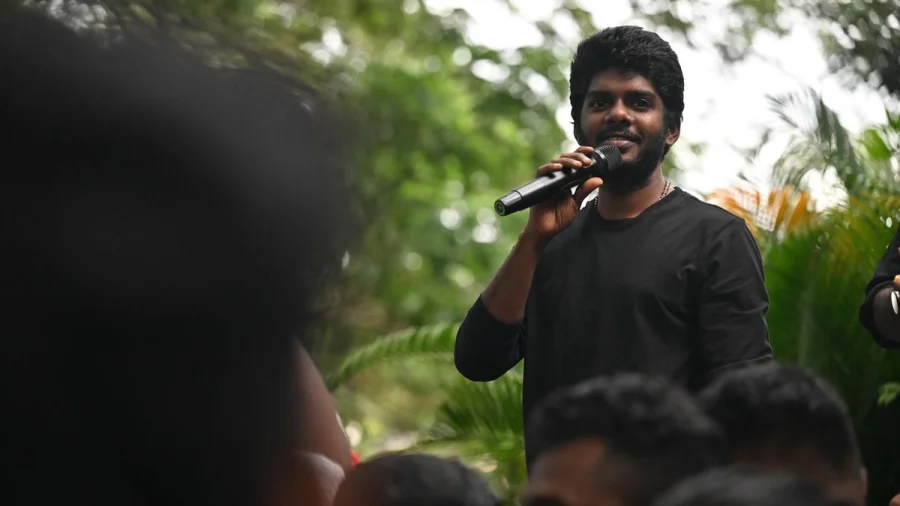
Kerala’s Home Minister Ramesh Chennithala has stepped into a brewing controversy after police charged 100 people — including a well-known rapper — for attending a cultural meet that backed ongoing student protests in the state. The decision to review the case has raised questions about policing of dissent in Kerala.
Why the Vedan meet attracted police action
The event, organised by a group called Vedan, was held in Kochi’s Ernakulam Town South area. It featured performances and discussions in support of student agitations demanding hostel fee reductions and better academic facilities. Among those present was rapper Hirandas Murali, whose participation drew significant youth attention.
Ernakulam Town South police registered a First Information Report against one organiser and 99 participants under Sections 141 (unlawful assembly) and 283 (obstruction of public way) of the Indian Penal Code. Police alleged the gathering blocked a public road without permission.
Home Minister’s intervention: what changed?
On [date not specified], Home Minister Ramesh Chennithala told reporters in Thiruvananthapuram that he has asked the State Police Chief to submit a detailed report on the case. “I will look into the circumstances under which the case was registered. No citizen should face unnecessary harassment for exercising their right to peaceful assembly,” he said.
The minister’s statement came after civil society groups and artist collectives criticised the police action as excessive. Rapper Hirandas Murali had earlier posted on social media that he was “shocked” by the charges.
What the law says about peaceful assemblies
Section 141 IPC defines an unlawful assembly as a gathering of five or more persons with a common object to resist the execution of law, commit mischief, or criminal trespass. Section 283 deals with obstruction of a public way. Legal experts note that the application of these sections to a cultural event without violence is unusual.
“The police need to demonstrate that the gathering had an unlawful common object beyond expressing support for student protests. A mere road obstruction without blocking traffic for long periods may fall under lesser provisions,” said a Kochi-based criminal lawyer who asked not to be named.
Who is affected and why it matters
The 100 accused range from college students to artists and activists. Many are first-time offenders. If convicted, they face up to six months imprisonment under Section 141 and a fine. The case also has chilling implications for cultural activism in Kerala, a state known for its political and artistic freedoms.
Students across Kerala have been protesting over hostel fee hikes and teacher shortages. The Vedan meet was among several solidarity events. Police have so far not registered similar cases against other gatherings.
Confirmed facts vs what remains unclear
Confirmed: Home Minister has ordered review. Police registered case on charges of unlawful assembly and obstruction. Hirandas Murali was among attendees.
Unclear: Whether the event organisers had obtained prior permission for the venue. Exact date of the meeting and the number of people who actually gathered. Whether the minister will recommend withdrawal of the case or modification of charges.
Wider trend: policing of protest culture in India
The Kerala case echoes similar controversies in other states where peaceful gatherings — especially those involving artists and students — have faced criminal charges. In 2023, a poetry reading in Bengaluru resulted in an FIR for alleged sedition. Legal observers say the line between lawful assembly and unlawful gathering is often blurred by police discretion.
Practical guidance for those affected
Accused persons can approach the High Court for quashing of FIR if they can show no cognisable offence is made out. Alternatively, they can apply for anticipatory bail. The Home Minister’s review may lead to administrative closure, but a legal remedy may still be needed. Affected individuals should maintain copies of any permissions or invitations related to the event.
Future outlook
Once the police report reaches the Home Department, Minister Chennithala may convene a meeting with the Director General of Police. Possible outcomes include withdrawal of the case, dropping charges against participants while keeping the case against the organisers, or issuing a circular clarifying guidelines for cultural-political gatherings. A final decision is expected within a fortnight.
Our Take
The Home Minister’s review is a welcome acknowledgment that police powers must be exercised with restraint. However, the case also underscores a broader problem: the criminalisation of ordinary protest activity through vague colonial-era laws. Kerala should use this moment to issue clear guidelines on what constitutes an unlawful assembly, especially in the context of cultural events. For now, the 100 accused remain in legal limbo — a situation that review or reform must resolve swiftly.
Frequently Asked Questions
What is the Vedan meet case in Kerala?
It is a police case registered against 100 people for attending a cultural event organised by Vedan in Kochi that supported student protests. Charges include unlawful assembly and obstruction of public way.
Why did the Kerala Home Minister intervene?
Ramesh Chennithala said he wants to ensure no citizen faces unnecessary harassment. He ordered a police report and said he will review the circumstances of the case.
Will rapper Hirandas Murali be arrested?
No arrest has been made yet. As of now, the case is under review. The minister’s intervention may lead to the charges being dropped or modified.
What could happen next in this case?
The Home Department will examine the police report. Possibilities include withdrawal of the case, dropping charges against participants, or issuing new guidelines for future gatherings.



