
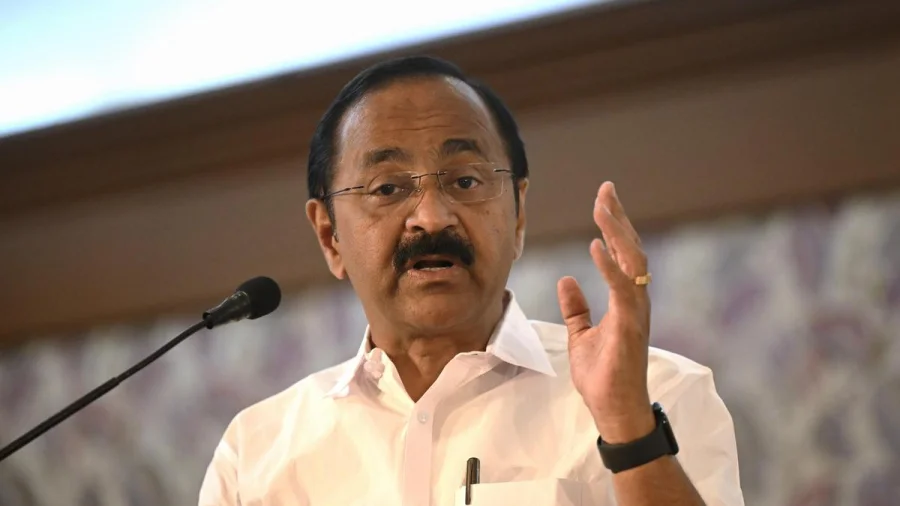
Kerala Chief Minister Pinarayi Vijayan has dropped a political bombshell, stating that the former CPI(M)-led LDF government had agreed to appoint non-Muslim members on the Waqf Board. The statement, made in response to allegations by UDF leader V.D. Satheesan, has reignited a bitter political feud in the state.
What did the Kerala CM say about the Waqf Board?
Speaking to the media, CM Vijayan claimed that the previous LDF government had already consented to the appointment of non-Muslim members on the Waqf Board. He did not provide specific details on when this agreement was reached or who was involved in the discussions.
Why is this statement significant for Kerala politics?
The remark is significant because it directly contradicts the UDF's narrative that the LDF is trying to communalize the issue. V.D. Satheesan, the Leader of Opposition, had earlier accused Vijayan of attempting to "foment communal sentiments" against the Congress-led UDF government over the Waqf Board appointments.
What did V.D. Satheesan allege?
Satheesan alleged that CM Vijayan was deliberately stoking communal tensions by raising the issue of non-Muslim members on the Waqf Board. He claimed that the UDF government was following the law and that the LDF's past actions showed a different stance.
How did the LDF and UDF positions differ?
The LDF, under Vijayan's leadership, has been accused of flip-flopping on the issue. While the CM now says the LDF had agreed to non-Muslim members, the UDF claims that the LDF is now opposing the same principle for political gain. This has created confusion among the public about the actual stance of both parties.
What is the legal framework for Waqf Board appointments?
The Waqf Board, a statutory body under the Waqf Act, traditionally consists of Muslim members. However, there have been debates about including non-Muslim members, especially in states with diverse populations. The Kerala government's decision to appoint non-Muslim members has been challenged in court by some Muslim organizations.
What are the political implications of this controversy?
The controversy has deepened the political divide in Kerala. The UDF is using the issue to paint the LDF as communal, while the LDF is accusing the UDF of playing politics. The debate is likely to feature prominently in upcoming local body elections.
Confirmed Facts vs What Remains Unclear
Confirmed: CM Vijayan has stated that the LDF government had agreed to non-Muslim Waqf Board members. Unclear: The exact timeline of this agreement, who was involved, and whether it was a formal decision or a verbal understanding. The UDF's specific allegations about Vijayan's motives also remain unverified.
Risks and Balanced View
The controversy carries risks of communal polarization in Kerala, a state known for its religious harmony. Critics argue that both parties are using the Waqf Board issue for political mileage. Supporters of the LDF say the CM is merely stating facts, while UDF supporters see it as a deliberate provocation.
Wider Trend: Waqf Board politics in India
The issue of non-Muslim members on Waqf Boards is not unique to Kerala. Several states have debated similar proposals, with some facing legal challenges. The debate reflects broader tensions between secular governance and religious autonomy in India.
Practical Reader Guidance
For readers following Kerala politics, it is important to verify claims from both sides. The Waqf Board issue is complex and involves legal, religious, and political dimensions. Avoid drawing conclusions based on unverified social media posts.
Future Outlook
The controversy is unlikely to die down soon. With elections approaching, both the UDF and LDF are expected to use the issue to mobilize their respective vote banks. Legal challenges to the Waqf Board appointments may also escalate.
Our Take
This is a classic case of political one-upmanship in Kerala. While CM Vijayan's statement adds a new twist, it does not resolve the core question: should non-Muslims be appointed to a religious board? The answer lies in a careful balancing of constitutional principles and community sensitivities. Both parties would do well to avoid turning this into a communal flashpoint.
Frequently Asked Questions
Did the LDF government really agree to non-Muslim Waqf Board members?
CM Pinarayi Vijayan has claimed so, but no official documents have been released to confirm this. The UDF has questioned the timing and motive of the statement.
Why is the Waqf Board appointment controversial?
The Waqf Board is a religious body for Muslims, and appointing non-Muslim members has been opposed by some Muslim organizations who see it as interference in religious affairs.
What is the UDF's main allegation against CM Vijayan?
UDF leader V.D. Satheesan alleges that Vijayan is trying to foment communal sentiments by raising the issue now, after having agreed to it earlier.
What happens next in this controversy?
The issue is likely to be debated in the Kerala Assembly and may also be taken to court. It will also feature in election campaigns.



