
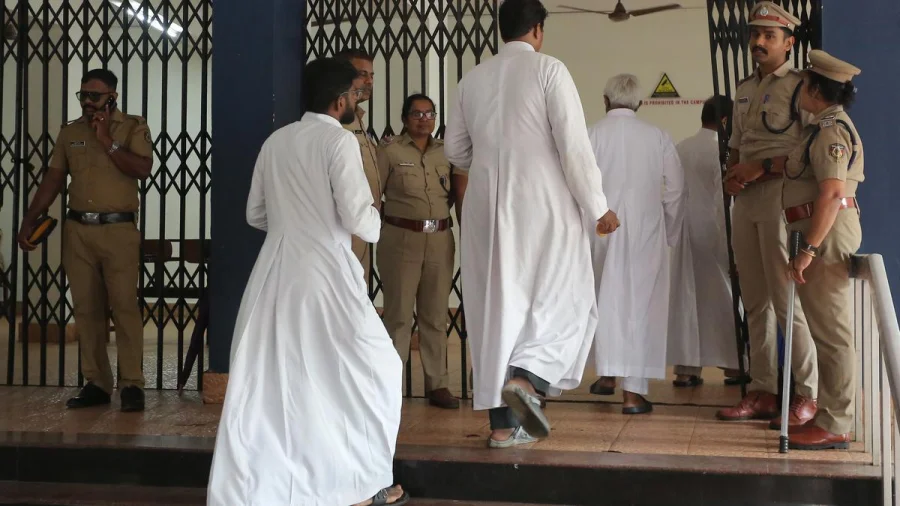
Two Christian factions in Kerala, locked in a decades-long fight over who controls a church, now face the law from both directions at once. Police have registered separate cases against priests and believers from both the Jacobite and Orthodox factions after a clash over church ownership — a reminder that this dispute has not ended with court verdicts.
Kerala Church Ownership Clash: What the Case Registrations Show
According to the original report, 10 people from the Jacobite faction — including priests — have been booked in one case. Separately, 12 priests and believers of the Orthodox faction face a case of their own.
The fact that cases were filed against both sides, rather than one, suggests police are treating the clash as a conflict with responsibility on both ends. The confirmed report does not specify whether anyone was injured or arrested.
Why This Church Ownership Dispute Keeps Boiling Over
For ordinary parishioners, the dispute is not abstract. Church ownership determines who leads worship, who controls land and finances, and which hierarchy a congregation answers to. Every escalation drags the conflict out of courtrooms and back into neighbourhoods.
A clash over a church building is thus not merely a property dispute — it touches faith, family tradition and community identity at the same time.
The Long Legal History Behind the Orthodox-Jacobite Rift
The conflict traces back to divisions within the Malankara Church over administrative authority. One faction is aligned with the Malankara Orthodox Syrian Church; the other with the Jacobite Syrian Christian Church.
This is well-documented background context, not a new detail from the current incident. Over the years, the dispute has produced multiple court rulings, yet clashes at disputed churches have repeatedly resurfaced despite judicial intervention.
Who Is Affected by the Church Ownership Conflict
Clergy and lay believers on both sides now face legal proceedings. The emotional weight is heavy: for many families, the church is where baptisms, weddings and burials take place — and many families have members on both sides of this divide.
Incidents like this deepen personal rifts that go far beyond the courtroom.
What Police Have Said So Far
The confirmed report states only that separate cases were registered — one against the Jacobite group and one against the Orthodox group. No official statement on the sequence of events, the specific church involved, or the condition of those involved has been confirmed.
Until investigation details emerge, the public record remains limited to the case registrations themselves.
Why Booking Both Sides Matters
The decision to register cases against both factions is significant. It signals that authorities are not, at this stage, assigning blame to a single faction.
It may also reflect a pattern seen in past disputes of this kind: church possession clashes often produce cross-complaints, with each side accusing the other of provocation. This is analysis based on the known pattern, not a confirmed finding in this case.
Confirmed Facts vs What Remains Unclear
Confirmed: separate cases against 10 persons, including priests, of the Jacobite faction; separate cases against 12 priests and believers of the Orthodox faction; the clash relates to church ownership in Kerala; police are the registering authority.
Unclear: where and when the clash occurred; whether anyone was hurt; which church property is in dispute; whether arrests have been made. These details are genuinely unknown at this stage and must not be guessed at.
Risks: Legal Cases Alone Cannot Settle a Property Feud
The immediate risk is that criminal cases add a new layer of tension without resolving the underlying ownership question. Each faction's supporters often claim the other side provoked violence; without a completed police investigation, those claims cannot be weighed.
Supporters of legal action see accountability as necessary; critics argue that court cases have not stopped past clashes. Both views deserve space in the public conversation.
A Recurring Pattern in Kerala's Church Disputes
Kerala has seen repeated clashes between Orthodox and Jacobite factions at disputed churches, often following court orders or during festival seasons. The pattern reflects a broader challenge: when religious property disputes run for decades, judicial verdicts — however clear — are difficult to implement on the ground without local acceptance.
What Parishioners and Families Should Do Now
Parishioners should avoid being drawn into confrontations at disputed churches and rely only on official information. Families with members across both factions should expect elevated tension and take care to protect relationships.
Anyone with direct knowledge of this incident should assist the police through proper channels. Unverified messages and forwarded rumours should be disregarded.
Tracking What Happens Next
The next phase depends on the police investigation — witness statements, evidence collection and possible arrests. The ownership dispute itself is likely to continue until both factions accept or exhaust the legal process.
Court-monitored mediation, if attempted, may offer the most realistic path to long-term calm. This is an outlook, not a confirmed development.
Our Take
This case matters beyond Kerala because it shows how unresolved religious ownership disputes keep returning to the streets despite years of litigation. Registering cases against both sides is a necessary first step, but criminal law cannot by itself fix an ecclesiastical dispute.
The real test for authorities will be whether they can enforce court orders and broker a durable settlement — before the next clash becomes the next case.
Frequently Asked Questions
Why did police register cases against both factions?
The confirmed report says separate cases were filed against 10 people of the



