
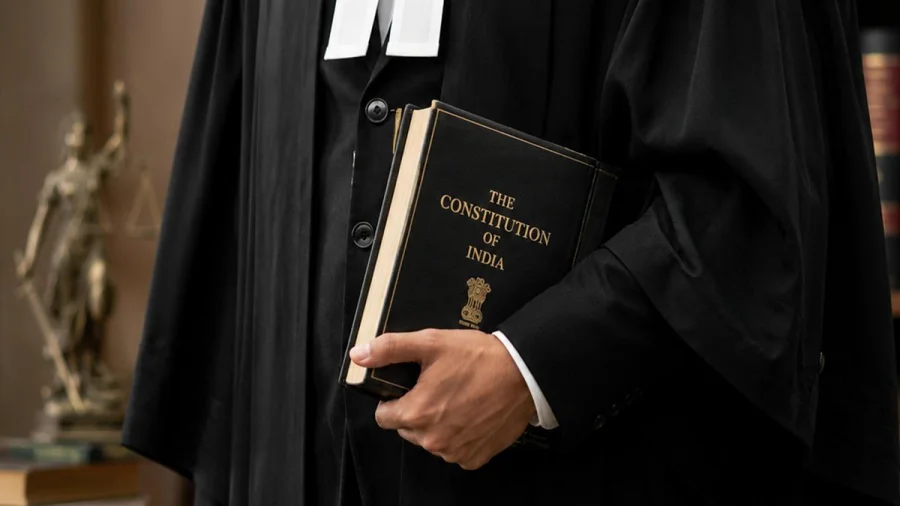
The next time you sit across from a lawyer in a Kerala courtroom, there is a question nobody is officially answering: is this person actually verified to practise? The latest figures from the state's bar rolls suggest thousands may not be — and the system itself cannot say for sure.
The numbers behind the bar council gap
Around 81,000 lawyers are on the rolls of the Bar Council of Kerala. Of these, only 27,000 hold certificates of practice — the mandatory document that authorises a lawyer to practise law.
The reported figures say certificates of around 25,000 lawyers are pending with various universities for verification. That leaves roughly 22,000 lawyers on the rolls who are neither certified nor pending verification in the available data.
Why an unaccounted lawyer is a legal problem
A certificate of practice is not a formality. Under India's legal framework, a state bar council issues it as proof that an enrolled advocate is legally entitled to appear in court. Without it, a person on the rolls has no clear authority to practise.
If thousands of enrolled lawyers are practising without valid certificates — or if thousands on the rolls have moved, retired, or stopped practising without their records being updated — the integrity of the register itself collapses. Courts, litigants and the council all depend on this roll as the official record of who is a lawyer in Kerala.
The verification backlog at universities
A large part of the problem lies in a slow administrative chain. Certificates of about 25,000 lawyers are reportedly stuck with universities pending verification of educational documents. Law degrees, enrolment records and academic credentials must be confirmed before a certificate of practice can be issued or renewed.
This backlog points to a systemic bottleneck between universities and the Bar Council. Until verification is completed, these 25,000 lawyers remain in a grey zone — enrolled on paper, but not fully certified to practise.
What this means for litigants and young lawyers
For the public, the stakes are practical. A litigant has no easy way to check whether the advocate they have hired holds a valid certificate. When the official roll cannot be trusted, client confidence is the first casualty.
For young lawyers, the impact is direct. Those waiting for verification may find their careers stalled — unable to appear in court, uncertain of their status, and dependent on an opaque process. The reported figures suggest this is not an individual problem but an institutional one.
The authority responsible — and the missing official response
The Bar Council of Kerala is the statutory body responsible for maintaining the rolls and issuing certificates of practice. As of now, the source story reports no detailed public statement from the council explaining the discrepancy between 81,000 enrolled, 27,000 certified and 25,000 pending verification.
That silence itself is significant. A gap of this size demands an official explanation — whether it points to record-keeping failures or something more serious.
What the numbers actually tell us — a data problem
Read carefully, the figures reveal a record-keeping failure as much as a legal one. A bar roll should be a living document, updated as lawyers enrol, retire, transfer or pass away. When thousands cannot be accounted for, the register has clearly not been reconciled with ground reality for a long time.
This is not necessarily evidence of widespread malpractice. Enrolment rolls across India often contain lawyers who have moved to other states, taken non-practising jobs, or stopped practising years ago without formal removal. But without reliable data, it is impossible to separate the innocent from the problematic.
Confirmed facts vs what remains unclear
Confirmed by the reported story: the Bar Council of Kerala's rolls contain around 81,000 lawyers; only about 27,000 hold certificates of practice; and around 25,000 certificates are pending university verification.
What remains unclear: the identity and current status of the roughly 22,000 unaccounted lawyers; whether any are practising without valid certificates; and how the council plans to reconcile the register. No official comment has been reported. All of this is open to clarification, not assumption.
Risks — and the balanced view
The obvious risk is that thousands of enrolled lawyers may be practising without valid authorisation, exposing clients to unverified practitioners and undermining the credibility of legal representation. It could also raise questions about bar council oversight.
The balanced view matters equally. A large enrolment roll does not mean every listed lawyer is actively practising — many may be inactive, employed elsewhere, or deceased but still listed. The university verification delay is an administrative backlog, not proof of wrongdoing. The core failure is that the system has not produced a clear, verified list.
A wider pattern in India's legal profession
Kerala is not an outlier. Bar councils across India have struggled with outdated rolls, delayed verification of law degrees, and weak data infrastructure. The Advocates Act framework entrusts state bar councils with enrolment and discipline, but enforcement of practice certificates has often been inconsistent.
This case fits a national pattern: a legal profession expanding faster than the regulatory systems meant to track it. The Kerala numbers are a local snapshot of a country-wide accountability gap.
What litigants and law students should do now
For litigants: ask your advocate directly whether they hold a valid certificate of practice from the Bar Council of Kerala. It is a legitimate question and a basic client right. Though no public verification portal is mentioned in the reported story, the council itself is the proper authority to confirm enrolment status.
For law students and young lawyers: ensure your educational documents are complete before applying, and actively track your verification status with both your university and the Bar Council. If you are among those waiting, follow up formally in writing.
What happens next
The future hinges on two things: completion of university verification for the 25,000 pending certificates, and a clear public reckoning with the 22,000 unaccounted names. If the council undertakes a serious reconciliation exercise, the rolls could shrink to a more realistic and trustworthy number.
If it does not, the questions will only grow — in courtrooms, in client consultations, and in the public's faith in who gets to practise law.
Our Take
This is not just a story about missing paperwork. The right to legal representation depends on the credibility of the people providing it. A legal system that cannot account for thousands of its own enrolled lawyers cannot fully protect the clients who trust it.
The 22,000 unaccounted lawyers are not a statistic. They are the visible symptom of a regulatory apparatus that has fallen far behind the profession it is meant to govern.



