
Summary
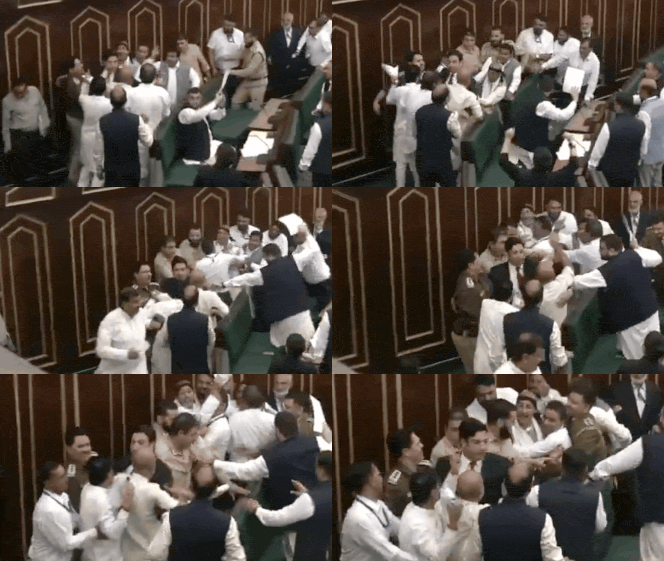
The Jammu and Kashmir Assembly turned into a scene of chaos today as members of the National Conference (NC) staged a loud protest. The protest focused on the reported killing of Iran’s former Supreme Leader, Ayatollah Ali Khamenei, and recent military actions by the US and Israel in the region. This led to a physical and verbal clash between NC and BJP lawmakers, forcing the Speaker to stop the session. The event highlights the deep political and emotional divides within the local government regarding international conflicts.
Main Impact
The immediate impact of this ruckus was the total halt of legislative work for the day. While the assembly was supposed to discuss local issues like infrastructure and public services, the focus shifted entirely to global politics. This disruption shows how international events can directly affect local governance in Jammu and Kashmir. The clash between the National Conference and the BJP also signals a growing gap between the two parties, making it harder for them to work together on laws that help the people of the region.
Key Details
What Happened
As soon as the assembly session began, several MLAs from the National Conference stood up and started shouting slogans. They were protesting against the military strikes in Iran and the death of the Iranian leader. They carried posters and demanded that the house pass a resolution condemning the violence. Members of the Bharatiya Janata Party (BJP) quickly opposed this, arguing that the assembly should focus on local problems rather than foreign affairs. The argument quickly turned into a scuffle, with members from both sides moving into the well of the house, pushing and shouting at each other.
Important Numbers and Facts
The incident took place on March 27, 2026, during a scheduled morning session. More than a dozen MLAs were involved in the direct physical confrontation. The Speaker was forced to adjourn the house twice before finally ending the session for the day. Chief Minister Omar Abdullah later addressed the media to clarify his party's position. He emphasized that while the assembly is a place for local lawmaking, the feelings of the people regarding global events cannot be ignored. He specifically criticized the use of military force to change the government in any country.
Background and Context
Jammu and Kashmir has a long history of reacting strongly to events in the Middle East. Many people in the region feel a cultural and religious connection to Iran. When major leaders in the Muslim world are killed or when military conflicts break out in that region, it often leads to protests in Kashmir. In this case, the death of Ayatollah Ali Khamenei and the involvement of the US and Israel created a very emotional atmosphere. The National Conference often represents these local sentiments, while the BJP usually insists that Indian legislative bodies should stay out of international disputes that do not directly involve India's borders.
Public or Industry Reaction
The reaction to the assembly ruckus has been split. Supporters of the National Conference praised their leaders for standing up for what they believe is a human rights issue. They feel that the killing of a foreign leader via military action sets a dangerous example. On the other hand, many citizens expressed frustration on social media, saying that the MLAs are wasting time and taxpayer money. They argued that the assembly should be fixing roads and schools instead of fighting over events happening thousands of miles away. BJP leaders called the protest a "political stunt" designed to distract from local failures.
What This Means Going Forward
Looking ahead, this event might lead to stricter rules inside the Jammu and Kashmir Assembly. The Speaker may introduce new measures to prevent members from bringing up international issues that are not on the official agenda. There is also a risk that the relationship between the NC and the BJP will get worse, leading to more frequent shutdowns of the legislative process. For the public, this means that important bills regarding the economy and security might be delayed. Internationally, such protests show that local political groups in India continue to keep a close watch on global power shifts.
Final Take
The chaos in the assembly is a reminder that politics is never just local. While the primary job of these lawmakers is to serve the people of Jammu and Kashmir, global events often trigger deep-seated emotions that spill over into the halls of power. Moving forward, the challenge for the government will be to balance these strong feelings with the practical need to run the state effectively. Without a way to manage these disagreements, the assembly risks becoming a place of constant protest rather than a place of progress.
Frequently Asked Questions
Why did the NC MLAs protest in the assembly?
They were protesting the killing of Iran's leader, Ayatollah Ali Khamenei, and military actions by the US and Israel, which they believe are unjust.
What was the BJP's reaction to the protest?
The BJP opposed the protest, stating that the assembly should only discuss local issues and that foreign policy is the job of the central government, not state MLAs.
What did Chief Minister Omar Abdullah say about the situation?
He condemned the military violence and stated that using bombs to change a country's government is wrong and does not lead to lasting peace.



