
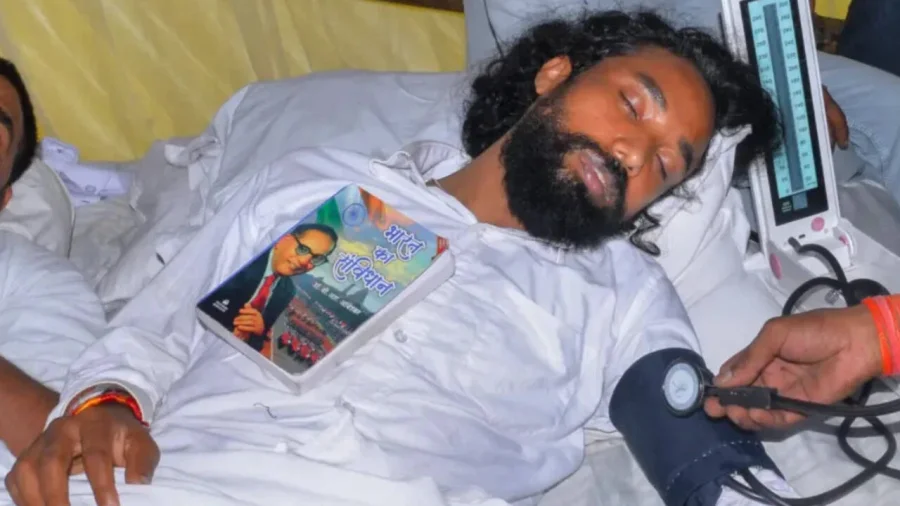
Nine days into a hunger strike that had become a symbol of youth frustration in Jharkhand, Devendra Mahto was taken to hospital on Monday evening. The man who had stopped eating to demand answers on recruitment exams was, according to his aide, not brought down by hunger — but by a police baton near the state assembly.
Protest leader hospitalised after ninth day of fast
Devendra Mahto, a job aspirant who had been fasting for nine days, was hospitalised following a clash outside the Jharkhand assembly, officials said. His aide Pankaj Kumar, who was with him at the hospital, claimed Mahto was injured during the police lathi-charge near the assembly complex.
The claim remains unverified. Hospital authorities have not yet issued a detailed medical bulletin on Mahto's condition.
Why thousands of job aspirants are on the streets
The protest centres on alleged irregularities in recruitment examinations conducted by the Jharkhand government. Job aspirants have accused authorities of paper leaks, manipulation, and opaque evaluation processes — allegations that have fuelled persistent unrest in the state.
For lakhs of educated youth in Jharkhand, government jobs are among the few stable employment routes. Allegations of unfair exams strike at a deeply personal level; for many aspirants, this struggle is about their entire future.
How Monday's clash near the Jharkhand assembly unfolded
According to officials, the confrontation began when agitators gathered near the assembly. Police responded with water cannons, tear gas, and lathi-charge to disperse the crowd.
Officials said several agitators and four policemen were injured during the clash. The exact sequence of events — who escalated first and when the baton charge began — has not been officially detailed.
The human cost: aspirants and police among the injured
Beyond the leaders and the headlines, Monday's clash left ordinary protestors and policemen injured. Each injured person represents a family waiting for news outside hospitals, caught between a demand for justice and the state's response to public mobilisation.
The fact that four police personnel were also hurt underscores how volatile the standoff has become. Neither side emerged from Monday untouched.
Police version versus the aide's account
Officials have confirmed that police used force to control the crowd, but they have not confirmed that Mahto was specifically targeted. The injury claim comes from his aide Pankaj Kumar, and is not yet an officially documented fact.
This is a critical distinction. Verified information — from police records, hospital reports, or independent evidence — is still awaited. Until then, the competing narratives remain just that.
What the confrontation signals for the recruitment crisis
Monday's violence suggests that the recruitment dispute in Jharkhand is no longer a bureaucratic issue — it has become a political flashpoint. The sight of police clashing with aspirants near the assembly, and a fasting leader being hospitalised, raises the stakes for both the administration and the protest movement.
The longer the accusations of exam irregularities remain unresolved, the more space there is for escalation. Both sides now operate under heightened public scrutiny.
Confirmed so far versus what remains disputed
Confirmed by officials: Several agitators and four policemen were injured during the clash near the Jharkhand assembly. Police used water cannons, tear gas, and lathi-charge to disperse protestors.
Claimed, not yet verified: That Mahto was injured in the lathi-charge — this is the account given by his aide Pankaj Kumar.
Unclear: Mahto's current medical condition, the extent of his injuries, and whether any official action will be taken on the protestors' allegations. All of this remains subject to verification.
The risks in an escalating standoff
For the protestors, continued confrontation risks more injuries, arrests, and a loss of public sympathy if unrest turns violent. For the police, a heavy-handed response risks accusations of excessive force and a deepening of public resentment.
For the Jharkhand government, the crisis carries a political cost. Ignoring the aspirants' demands could invite further mobilisation; acting too aggressively could convert a recruitment dispute into a wider movement.
A pattern of exam-related unrest across states
Jharkhand is not alone. Across India, recruitment exam controversies — paper leaks, question paper irregularities, and demands for re-examinations — have triggered protests in multiple states. This is part of a broader national pattern where young job aspirants, facing scarce opportunities and intense competition, respond strongly to any perceived unfairness.
What happens in Ranchi could, therefore, be watched closely by aspirants and administrations elsewhere.
What job aspirants and families should keep in mind
For now, the immediate priority is Mahto's health and the treatment of the injured — both agitators and policemen. For families of aspirants, relying on verified information from official sources is critical, especially as unverified claims circulate on social media.
At the same time, the government has a clear responsibility to address the substantive allegations of examination irregularities. Protestors, in turn, would be well served by ensuring the movement remains peaceful and well-documented.
What happens next in the recruitment dispute
The next few days will likely bring a medical update on Mahto, an official response to the hospitalisation and clash, and possibly negotiations. Whether the protest movement regroups or escalates will depend on how the administration responds to both the injuries and the underlying demands.
Speculation aside, one thing is certain: the recruitment irregularities issue is not going to resolve itself without a transparent and credible official process.
Our Take
What matters here is not just whether Mahto was injured by a police baton or by the strain of nine days without food. The deeper story is that thousands of young people in Jharkhand feel their futures are being decided by a system they do not trust. Monday's clash was the physical expression of that frustration.
Both claims deserve scrutiny — the aide's allegation against police, and the official account of the clash. Neither should be accepted blindly. The credibility of the administration, the police, and the protest leadership depends on full transparency in the coming days.
Frequently Asked Questions
Who is Devendra Mahto?
Devendra Mahto is a job aspirant in Jharkhand who had been on a nine-day hunger strike protesting alleged irregularities in recruitment examinations. He was hospitalised after Monday's clash near the Jharkhand assembly. His aide claims he was injured in a police lathi-charge, though this has not been officially confirmed.
Why are Jharkhand job aspirants protesting?
The protest is against alleged irregularities in recruitment examinations conducted for government jobs in Jharkhand. Aspirants claim the process was unfair and have been demanding accountability and corrective action from authorities.
What happened near the Jharkhand assembly on Monday?
According to officials, a clash broke out between police and job aspirants. Police used water cannons, tear gas, and lathi-charge to disperse the crowd. Several agitators and four policemen were reported injured.
How serious is the situation now?
The hospitalisation of the fasting leader has escalated tension, but the full picture — his medical condition and the exact circumstances of his injury — is still awaited. The situation remains sensitive, and both official confirmation and a transparent inquiry are needed.



