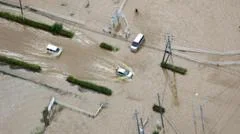
Six people are dead, more than 20,000 households are without power, and nearly 7,000 travellers are stranded at Tokyo's Narita airport. The storm that officials have called "unprecedented" has not just brought rain — it has shut down everyday life for thousands of people at once.
A storm described as 'unprecedented' overwhelms daily life
The word "unprecedented" carries real weight in Japan, a country that regularly faces severe weather. When authorities use that term, it signals that the rainfall has exceeded what infrastructure was designed to handle.
That scale is now visible in the human toll: six confirmed deaths, widespread power failure, and an international airport pushed into crisis.
20,000 households in darkness: When the lights go out in a storm
Power cuts affect far more than convenience. Without electricity, families lose refrigeration, heating, lighting and access to reliable information during an emergency.
For elderly residents and families with young children, even a short outage during extreme weather can become a safety issue. The scale of this disruption — more than 20,000 homes — points to significant damage to the power network.
7,000 stranded at Narita: An airport becomes a waiting room
Tokyo's Narita airport became the focal point of the travel chaos, with roughly 7,000 people left stranded as the storm shut down operations.
Passengers faced a familiar nightmare in an unfamiliar form: no clear departure time, limited transport options out of the airport, and the uncertainty of waiting out a storm that had already proven deadly.
How the situation developed
The full timeline is still being pieced together. What is known is that rainfall reached levels authorities deemed unprecedented, triggering cascading failures across transport and essential services.
Initial reports confirmed the six deaths, the power outages and the airport stranding. The specific circumstances of each casualty have not yet been released.
Who bears the brunt of the storm's impact
For households in the dark, the priority is safety and getting power restored. For stranded travellers, it is finding a way home. For the wider public, the storm raises deeper questions about how prepared critical infrastructure is for extreme weather events.
Airports, power grids and transport networks are the systems modern life depends on — and this storm tested all three at once.
What officials have confirmed so far
Authorities have not yet issued a comprehensive damage assessment. The verified details available so far are limited to the initial impact report: six deaths, power outages affecting more than 20,000 households, and around 7,000 people stranded at Narita.
A clearer official picture is expected as the storm subsides and emergency teams reach affected areas.
What 'unprecedented rain' really means for Japan
Japan is no stranger to heavy rain. The use of the term "unprecedented" suggests this event fell outside the range of recent historical experience.
That distinction matters because infrastructure is built around historical data. When weather exceeds those baselines, the margin for error disappears — and the consequences become visible in the form of power cuts, stranded passengers and, tragically, lost lives.
Confirmed facts vs what remains unclear
Confirmed: Six deaths have been reported; power was cut to more than 20,000 households; approximately 7,000 people were stranded at Tokyo's Narita airport; the rainfall was described as "unprecedented."
Unclear: The exact circumstances of the deaths, the full extent of property damage, the time needed to restore power, and when stranded passengers will be able to leave the airport. These details remain subject to official confirmation.
Risks that persist after the rain stops
The danger does not end when the rain eases. Damaged power lines, waterlogged roads and stressed emergency services can prolong the crisis for days.
For stranded travellers, ongoing flight disruptions and saturated transport links mean the wait at Narita could extend further. For residents, the risk shifts from flooding to recovery-related hazards.
Practical guidance for those affected
Residents in affected areas should follow official guidance, avoid unnecessary travel and rely on verified updates from authorities rather than unconfirmed social media reports.
Stranded passengers at Narita should stay in direct contact with their airlines and monitor official airport announcements for rescheduled departures.
What happens next
Attention now shifts to restoration: returning power to households, clearing transport routes and reuniting thousands of stranded travellers with their destinations.
A fuller picture of the human and economic cost will emerge as officials complete their assessments and release verified numbers.
Our Take
This storm is a reminder that "unprecedented" is not an abstract word — it describes what happens when weather exceeds the limits of planning. Six deaths represent a human cost behind every headline, and the 7,000 people stranded at Narita show how quickly modern life can be upended.
The recovery will take time, but the bigger question for Japan — and every country facing intensifying weather — is whether infrastructure can keep pace with what the climate now delivers.
Frequently Asked Questions
How many people died in the Japan rain?
Six people have died in the "unprecedented" rainfall, according to initial reports. The circumstances of the deaths have not yet been fully detailed.
How many people were stranded at Narita airport?
Around 7,000 people were left stranded at Tokyo's Narita airport after the storm disrupted flight operations and transport links.
How many households lost power in the storm?
The storm cut electricity to more than 20,000 households across affected parts of Japan, according to the original impact report.
Why is the rain being called 'unprecedented'?
Authorities described the rainfall as "unprecedented," meaning the volume exceeded what has typically been recorded in the region — a level that overwhelmed infrastructure and triggered severe disruption.