
Summary
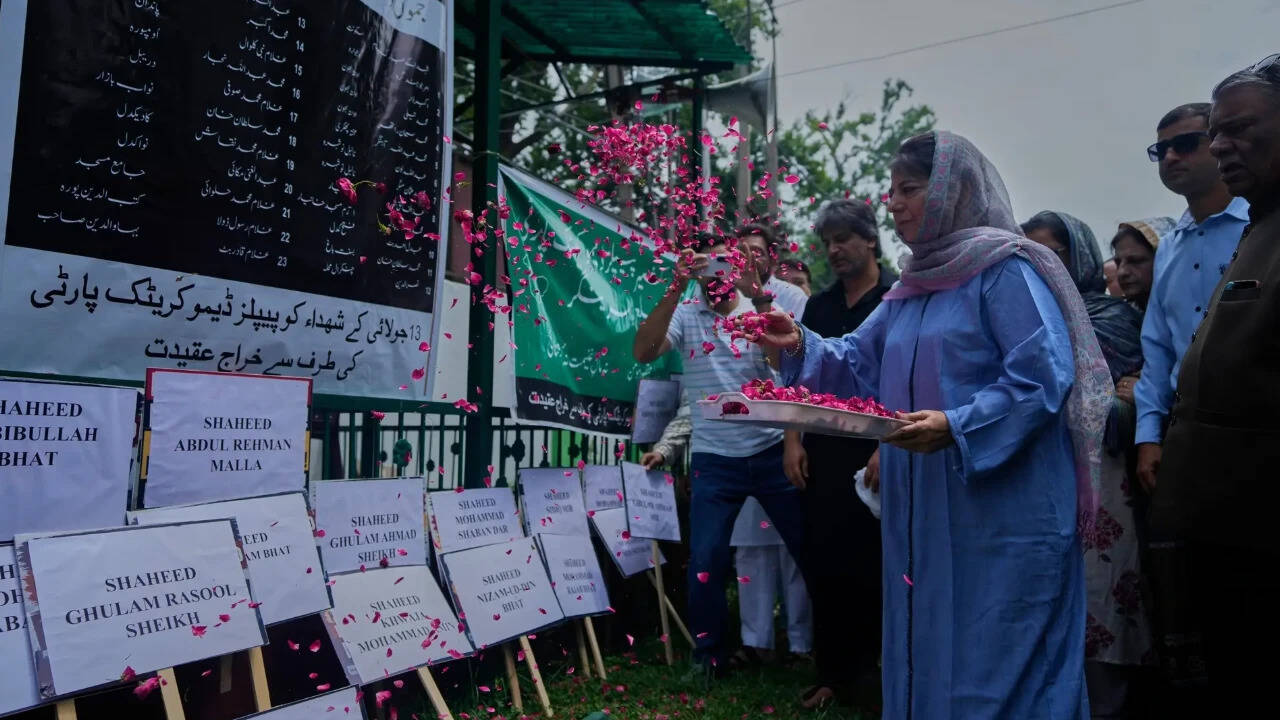
Authorities in Jammu and Kashmir sealed the Martyrs' Graveyard in Srinagar on Monday, preventing public access. Political leaders, including former Chief Minister Omar Abdullah and People's Democratic Party (PDP) chief Mehbooba Mufti, paid homage at their party offices instead. The move comes as the administration removed July 13 and December 5 from the list of public holidays, following the abrogation of Article 370 in 2020.
Main Impact
The sealing of the Martyrs' Graveyard marks a significant shift in how the government handles commemorations linked to political events in Jammu and Kashmir. By restricting access, authorities aim to control public gatherings and prevent potential unrest. This action has drawn sharp criticism from opposition leaders, who view it as an attempt to erase the region's political history.
Key Details
What Happened
On Monday, the Jammu and Kashmir administration sealed the Martyrs' Graveyard in Srinagar, a site where political leaders and citizens traditionally pay respects to those killed in political violence. The graveyard is associated with the July 13, 1931 massacre, when British forces killed 22 protesters demanding rights for Kashmiris. December 5 marks the death of Maqbool Bhat, a separatist leader executed in 1984.
Political leaders like Omar Abdullah and Mehbooba Mufti were unable to enter the graveyard. Instead, they held ceremonies at their party offices. Last year, Omar Abdullah had bypassed barricades to reach the site, but this year, security was tighter.
Important Numbers and Facts
The administration removed July 13 and December 5 from the list of public holidays in Jammu and Kashmir. This decision was made after the abrogation of Article 370 in January 2020, which changed the region's special status. The graveyard has been a focal point for political rallies and memorial events for decades.
Background and Context
The Martyrs' Graveyard holds deep emotional and political significance in Kashmir. July 13 is known as Martyrs' Day, commemorating the 1931 massacre. December 5 marks the death of Maqbool Bhat, a figure revered by separatists. These dates have been used by political parties to mobilize support and highlight grievances against the Indian government.
Since the abrogation of Article 370, the central government has taken steps to integrate Jammu and Kashmir more closely with the rest of India. Removing these holidays is part of a broader effort to reduce the influence of separatist narratives and promote a unified national identity.
Public or Industry Reaction
Opposition leaders strongly condemned the sealing of the graveyard. Omar Abdullah called it an attack on the region's history and identity. Mehbooba Mufti said the government is trying to silence the voices of the people. Both leaders paid homage at their party offices, with supporters gathering in smaller numbers.
Pro-government voices argue that the move is necessary to maintain law and order. They say the graveyard has been used for political activities that could lead to unrest. The administration has not commented on the specific reasons for the sealing.
What This Means Going Forward
The sealing of the Martyrs' Graveyard could lead to increased tensions in the region. Political parties may use this as a rallying point to criticize the government. The removal of holidays also signals a long-term shift in how the state commemorates its past.
For ordinary citizens, the restrictions limit their ability to participate in traditional memorial events. This could deepen feelings of alienation among some communities. The government's focus on security may continue to shape public life in Jammu and Kashmir.
Final Take
The sealing of the Martyrs' Graveyard is a clear sign of the government's intent to control political narratives in Jammu and Kashmir. While aimed at preventing unrest, it risks alienating those who see these sites as part of their heritage. The coming months will show how this affects the region's political landscape.
Frequently Asked Questions
Why was the Martyrs' Graveyard sealed?
The Jammu and Kashmir administration sealed the graveyard to prevent public gatherings and potential unrest. It is a site linked to political events and commemorations.
What are July 13 and December 5?
July 13 is Martyrs' Day, marking the 1931 massacre of protesters in Kashmir. December 5 is the death anniversary of separatist leader Maqbool Bhat. Both were previously public holidays.
How did political leaders respond?
Omar Abdullah and Mehbooba Mufti paid homage at their party offices instead of the graveyard. They criticized the government for restricting access and erasing history.



