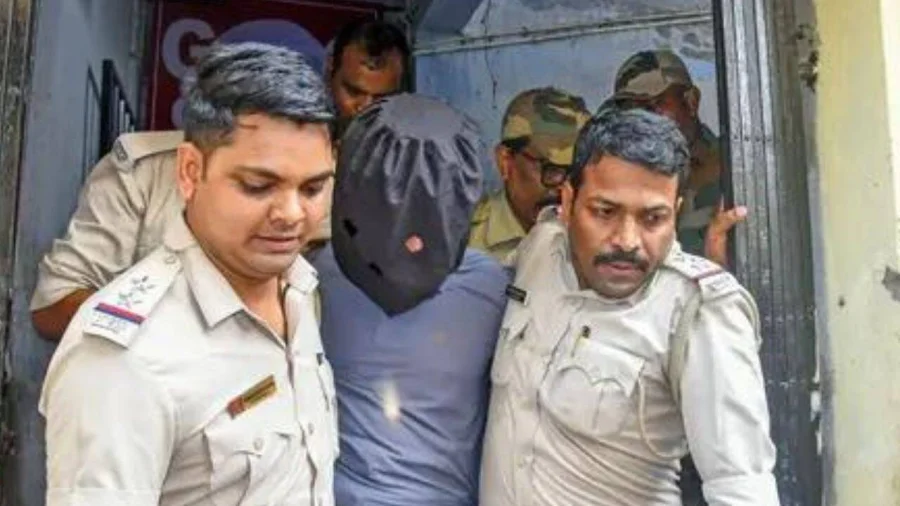
Jaish-e-Mohammed Suspect Surveyed Suvendu Adhikari Home
By Editorial Desk | National Security Desk
A single disclosure from a security official — that an arrested Jaish-e-Mohammed suspect had surveyed the area near...
Admin
The Tasalli
728 x 90Header Slot
TL;DR — Quick Summary
An official has said the arrested Jaish-e-Mohammed suspect surveyed the area near West Bengal BJP leader Suvendu Adhikari's residence. The disclosure points to possible terror reconnaissance around a senior political figure, but key details remain unconfirmed. The investigating agency, the timing of the survey, and the suspect's identity have not been officially disclosed.
Key Facts
Main Update
An official said the arrested Jaish suspect surveyed the area near Suvendu Adhikari's residence.
Impact
The claim raises serious security questions around the Leader of Opposition in West Bengal.
Official Response
No detailed public statement beyond the official's remark has been released.
Current Status
The suspect is in custody; the investigating agency has not been publicly identified.
Correction
Adhikari is the Leader of Opposition, not a Chief Minister as the original headline suggested.
What Next
A formal statement from authorities is needed to clarify the timeline and scope of the probe.
By Editorial Desk | National Security Desk
A single disclosure from a security official — that an arrested Jaish-e-Mohammed suspect had surveyed the area near Suvendu Adhikari's residence — has put West Bengal's political-security machinery on notice. The claim, reported in its barest form, raises questions the authorities have not yet answered publicly.
The official disclosure, as reported
The official's statement, as carried in the original report, says the arrested Jaish suspect surveyed the area near the residence of West Bengal BJP leader Suvendu Adhikari. No further details were provided — neither when the survey happened, nor how it came to light. It is also unclear which agency is leading the investigation.
Why this matters beyond one residence
Adhikari is the Leader of the Opposition in the West Bengal Legislative Assembly and among the state's most prominent BJP figures. Intelligence suggesting terror reconnaissance around a senior political leader is treated seriously regardless of whether an attack was imminent — because surveillance itself signals intent, preparation, or both.
The man at the centre of the security concern
Suvendu Adhikari, once a powerful Trinamool Congress leader and state minister, joined the BJP in 2021 and is now the Leader of the Opposition. The original headline described him as "CM"; that is inaccurate — he has not served as Chief Minister. The distinction matters for accurate reporting on a security matter.
Jaish-e-Mohammed and the threat context
Jaish-e-Mohammed is a Pakistan-based terror organisation proscribed by India and the United Nations. It has been blamed for high-profile attacks, including the 2019 Pulwama bombing. If a suspect linked to this group was surveying ground near a political leader's home, the implications extend well beyond one household. However, the extent of the alleged link is still unverified.
What remains unconfirmed
This much is clear: the suspect is under arrest, and an official has said he surveyed the area near Adhikari's residence. Everything else — the suspect's identity, the timing of the arrest, the method of detection, the group's alleged role, any recovery of weapons or material — has not been disclosed. Public speculation should be treated as exactly that.
Confirmed facts versus open questions
The only confirmed element in this story is the official's assertion, as reported. The suspect's name, the arrest date, the location of the residence relative to the surveyed area, and the status of the case in court are all unknown. Labelling this gap honestly is essential; presenting the claim as a fully developed terror plot would be misleading.
The investigation's next test
State and central agencies in India routinely coordinate on terror cases, and the National Investigation Agency often takes over matters with cross-border links. Whether that has happened here is not known. What is known is that the official's remark, without accompanying detail, leaves the public with a serious claim and very little proof of its scope.
A pattern worth watching
Security agencies have repeatedly warned that terror groups use physical and digital reconnaissance before selecting targets. If confirmed, this case would fit that pattern — and it would not be the first instance of surveillance reported around a political figure in West Bengal. Officials have not drawn such a comparison, and this report does not do so without evidence.
What residents and citizens should do
There is no reported public threat advisory tied to this disclosure. Citizens should rely on official channels for updates, avoid spreading unverified messages about the case, and understand that terror probes often take months to produce formal charges. Patience with the process protects the integrity of the investigation.