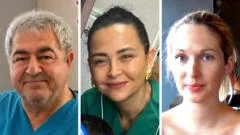
For UK parents who travelled to northern Cyprus for IVF, the hope was simple: a child conceived with the donor they chose. Now reports allege that for some families, that basic promise may have been broken. The accusation — that IVF staff misled parents about sperm and egg donors — is deeply serious. But the available information is thin, and much remains unverified.
What the IVF donor allegation actually says
According to the original story, IVF staff in northern Cyprus have been accused of misleading UK parents about the donors used in their treatment. The central claim is that multiple children are feared to have been conceived using sperm or egg donors that were not the ones selected by the parents.
No clinic name, number of affected families, or specific medical facility has been identified in the available report.
Why this cuts so deep for intended parents
IVF is not just a medical procedure. For many parents, choosing a donor involves enormous emotional and financial investment. The possibility that another donor’s genetic material was used without consent strikes at the heart of that decision.
Beyond the immediate shock, there are long-term questions about genetic identity, family history, and the legal parenthood of children already born.
What has been confirmed — and what remains unclear
The confirmed element is narrow: an allegation exists. IVF staff in northern Cyprus have been accused, and the fear over donor mismatches is real.
What is not confirmed: who made the allegation, which clinic or staff are involved, how many children may be affected, and whether DNA evidence has been gathered. Until independent records and tests are examined, these remain unanswered questions.
The timeline problem in cross-border fertility care
UK patients have increasingly sought IVF treatment abroad, including in northern Cyprus, drawn by shorter waiting times and lower costs. But when treatment crosses borders, oversight becomes fragmented.
Embryos, donor records, and medical notes may sit under a different legal system. That makes tracing what actually happened far harder after the fact.
Who is most affected by this donor mix-up fear
The most directly affected are UK parents who used IVF services in northern Cyprus and now cannot be certain about their child’s donor origins. Children conceived through the alleged mix-up are also affected, even if they are too young to understand.
The fear can spread more widely too — to any family considering cross-border IVF, who may now wonder how well donor identities are verified abroad.
No official response available yet
As of now, no response from the accused IVF staff, no statement from a clinic, and no comment from UK or northern Cyprus health authorities has been included in the available briefing.
The absence of an official denial or confirmation makes it impossible to assess the strength of the claim. This story should be read with caution until more evidence emerges.
What an investigation would need to establish
To move from allegation to finding, investigators would need access to clinic records, donor consent forms, laboratory logs, and identity verification procedures. DNA comparison between parents, children, and the chosen donors would be the most definitive test.
A full review of how donor material was labelled, stored, and matched would also be essential. Without these steps, the accusation remains exactly that — an accusation.
Balanced view: not all IVF clinics are the same
It is important not to treat every fertility clinic in northern Cyprus as guilty by association. Cross-border IVF providers vary widely in standards. A single allegation, even a serious one, does not establish a pattern.
At the same time, the very existence of this report highlights how vulnerable patients are when they cannot independently verify what happens inside a clinic.
A wider trend: medical tourism and the transparency gap
This case fits a broader pattern of patients travelling abroad for treatment that is cheaper or faster than at home. Fertility tourism has grown significantly, but regulatory gaps have not kept pace.
When things go wrong overseas, patients often discover that complaints procedures, compensation routes, and record access are far weaker than in the UK.
Practical guidance for UK families affected by this IVF case
Parents who used IVF in northern Cyprus and are now worried should first contact the clinic directly for written confirmation of donor identification records. Keep every document, including consent forms, lab reports, and payment receipts.
Seek independent legal advice, especially if a child may be affected. In the UK, families can also raise concerns with the Human Fertilisation and Embryology Authority (HFEA), although its jurisdiction may not extend to northern Cyprus.
What is likely to happen next
If the allegation gains traction, the next logical steps are media scrutiny, pressure from affected families, and possible involvement of UK authorities. Any formal investigation would require cooperation from clinics in northern Cyprus, which may be legally complicated.
Without verified evidence, however, the story may remain an unconfirmed report rather than a proven scandal. That uncertainty is hard for families, but it is also the honest reality of where this stands today.
Our Take
The accusation is chilling precisely because it targets the most basic promise in IVF: that the donor you choose is the donor you get. But as journalist readers, we must separate alarm from evidence. This report is a warning sign, not a verdict.
What is needed now is rigorous investigation — by journalists, regulators, and medical authorities — to establish whether these fears are grounded in fact. Until then, affected families deserve empathy, but not unverified conclusions.
Frequently Asked Questions
Is it proven that IVF staff in northern Cyprus used the wrong donors?
No. IVF staff have been accused of misleading UK parents, and there are fears that multiple children were conceived with donors the parents did not select. However, no official confirmation or independent evidence has been released yet.
What should UK parents who used IVF in northern Cyprus do now?
They should request their full medical and donor records in writing, keep all documents, and seek legal advice. They can also contact the HFEA to report concerns, although its direct regulatory power may not cover northern Cyprus.
How can a donor mix-up in IVF be confirmed?
DNA testing is the most reliable way to confirm a donor mismatch. Comparing the child’s DNA with the intended donor — or with family members — can establish whether the genetic material matches the parents’ selection.
Is fertility treatment in northern Cyprus safe?
Standards vary among clinics, as they do in many countries. This particular allegation has not been proven, but it highlights how important it is for patients to research clinic credentials, ask for independent verification, and understand the regulatory protections — or lack of them — before travelling abroad.
[/ARTICLE_BODY] [Step 9 → NEWS_SCHEMA] { "@context": "https://schema.org", "@type": "NewsArticle", "headline": "Wrong Donor Fear for UK IVF Families in Northern Cyprus — What the Allegation Means", "description": "Reports accuse IVF staff in northern Cyprus of using donor sperm or eggs that UK parents did not select. Multiple children are feared affected, but no official confirmation has been released yet.", "image": "https://www.example.com/images/ivf-donor-mix-up-northern-cyprus.jpg", "datePublished": "2026-05-09T08:00:00Z", "dateModified": "2026-05-09T08:00:00Z", "author": { "@type": "Person", "name": "Editorial News Desk", "url": "https://www.example.com/authors/news-desk", "sameAs": [] }, "publisher": { "@type": "Organization", "name": "Example Newsroom", "logo": { "@type": "ImageObject", "url": "https://www.example.com/logo.jpg" } }, "mainEntityOfPage": { "@type": "WebPage", "@id": "https://www.example.com/ivf-donor-mix-up-northern-cyprus" }, "articleSection": "Health", "keywords": "IVF donor mix-up northern Cyprus, sperm donor allegations, egg donor mix-up, UK IVF parents northern Cyprus, IVF investigation Cyprus" } [/NEWS_SCHEMA] [Step 10 → SOURCES] No independent public source was available at the time of writing. This article is based solely on the provided headline and original story: “IVF staff accused of misleading UK parents about sperm and egg donors in northern Cyprus.” [/SOURCES]