Summary
Iran has launched a military strike near a sensitive Israeli nuclear facility, marking a sharp increase in regional tension. This move follows claims from Tehran that its own nuclear sites were recently targeted in a separate attack. The head of the International Atomic Energy Agency (IAEA) has issued an urgent plea for both nations to show restraint. This event has raised fears of a wider war and the potential for a nuclear accident that could affect the entire region.
Main Impact
The primary impact of this strike is the breaking of a long-standing "red line" in international conflict. For decades, nuclear facilities have been seen as off-limits because of the extreme danger they pose if damaged. By firing weapons near such a site, the conflict has moved into a much more dangerous phase. This action suggests that both sides are now willing to risk a massive environmental and humanitarian disaster to prove their military strength. It also makes it much harder for international diplomats to find a peaceful solution.
Key Details
What Happened
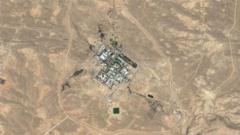
According to military reports, several projectiles were fired toward the area surrounding an Israeli nuclear research center. While the facility itself was not reported to be destroyed, the proximity of the explosions caused immediate alarm. This strike appears to be a direct response to an earlier incident where Iran claimed its own nuclear infrastructure was sabotaged. Both countries are now engaged in a cycle of direct attacks rather than using secret operations as they have in the past.
Important Numbers and Facts
The International Atomic Energy Agency (IAEA) is the global body that monitors nuclear safety. Its chief, Rafael Grossi, called for "maximum military restraint" immediately after the news was confirmed. While specific damage figures have not been released by the Israeli military, the event triggered high-level security meetings in several world capitals. Experts note that nuclear reactors contain radioactive materials that, if released, could spread across national borders within hours depending on wind patterns.
Background and Context
The rivalry between Iran and Israel has lasted for many years, but it has mostly been fought in the shadows. This "shadow war" usually involved cyberattacks, small-scale sabotage, or the use of third-party groups. However, the situation changed recently as both nations began launching direct strikes from their own soil. Iran has long maintained that its nuclear program is for peaceful energy purposes, while Israel views it as a direct threat to its existence. This mutual distrust is the main reason why nuclear sites have become the center of the current military tension.
Public or Industry Reaction
The international community has reacted with deep concern. Leaders from the United Nations and various European countries have urged both sides to step back from the brink of a full-scale war. Within the nuclear energy industry, experts are worried that these attacks set a bad example for future conflicts. They argue that if nuclear sites become regular targets, no country can feel safe. In the financial world, oil prices showed signs of instability as investors worried about how a war in the Middle East would affect global energy supplies. Many people living in the region are also expressing fear, as the threat of radiation is a danger that cannot be seen or easily stopped.
What This Means Going Forward
The next steps will depend on how Israel chooses to respond to this latest strike. If the response is another attack on an Iranian nuclear site, the cycle of violence could spiral out of control. There is a high risk that a mistake by either side could lead to a direct hit on a reactor. This would create a crisis that goes far beyond a typical military battle. Moving forward, the IAEA will likely push for more inspections and better protections for these sites. Diplomats are also expected to try and set up new "rules of engagement" to ensure that nuclear facilities are never targeted again, though success is not guaranteed given the current level of anger.
Final Take
The world is currently facing a very risky situation where military pride is being placed above global safety. Attacking near nuclear facilities is a gamble with stakes that are too high for anyone to win. If cool heads do not prevail, the region could face a disaster that lasts for decades. The only way to ensure safety is for both sides to stop targeting sensitive infrastructure and return to diplomatic talks.
Frequently Asked Questions
Why is hitting a nuclear site so dangerous?
Nuclear sites contain radioactive materials. If a reactor or storage area is damaged, these materials can leak into the air or water. This can cause long-term health problems for people and damage the environment for many years.
What is the IAEA?
The IAEA stands for the International Atomic Energy Agency. It is an international organization that works to promote the peaceful use of nuclear energy and prevents the spread of nuclear weapons.
Will this lead to a bigger war?
While it is not certain, the risk of a larger war increases every time a sensitive site is targeted. International leaders are working hard to prevent the situation from getting worse, but the tension remains very high.