For migrants stranded on the wrong side of Morocco, the final barrier to Europe is no longer just a physical fence—it is profit. A new investigation by the BBC's Top Comment podcast has uncovered a disturbing trend: Instagram profiles that promise a way across the Ceuta border, but only for those who can pay.
The digital bridge to a dangerous swim
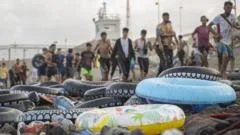
According to the BBC report, these Instagram accounts are glamourising the swim around the breakwater that connects Morocco to the Spanish enclave of Ceuta. What was once a desperate act of survival is now being packaged and sold as advice.
The accounts reportedly offer instructions and guidance, effectively turning a life-threatening border crossing into a paid service. The existence of these profiles points to an uncomfortable reality: the crisis is not just about migration—it is also about exploitation.
Why the monetisation of migration routes matters
This is not a victimless transaction. The swim around the Ceuta fence is acknowledged to be extremely hazardous, with strong currents and cold waters putting even strong swimmers at risk.
When social media influencers or anonymous account runners profit from sharing "advice," they create a financial stake in the desperation of others. For a young person searching for a way out of poverty, seeing this content on Instagram can look less like a warning and more like a chance—a chance that often ends in drowning.
How the Ceuta crossing situation developed
Ceuta and its sister enclave Melilla have long been flashpoints on the European Union's southern border. Over the years, waves of migrants have attempted to storm the fences or swim around them as a way to enter Europe.
In recent years, social media has emerged as a new variable in this equation. The BBC's Top Comment podcast has now highlighted how Instagram has become a marketplace for dangerous travel advice, adding a digital dimension to the physical barriers at the border.
The human cost behind the glamourised posts
For the migrants who view these accounts, the swim is not a workout—it is a survival gambit. The difficulty of the route is significant, and the emotional toll on families watching from afar is immense.
By framing the crossing as achievable, with the right "tip," these accounts may be giving false confidence to people who would otherwise not risk the journey. This is concern about the influence such content has on vulnerable audiences looking for a lifeline.
Who is responsible for these accounts?
The BBC report indicates this is a network of profiles, but at this stage, the identities and motivations remain largely unclear.
In some cases, these may be independent operators seeking financial gain. In others, the lines between smuggling, informal advice, and community support may blur. Officials in Spain and Morocco have yet to issue a detailed public response specifically to this BBC finding, according to the available source material.
Analysing the new economics of the border
The emergence of "paid advice" fundamentally changes the dynamics of the border. Previously, smugglers controlled the information and the boats. Now, knowledge itself is being sold on mainstream platforms.
This lowers the barrier to entry for migration attempts while simultaneously introducing a "middleman" that is extremely difficult for border authorities to track. You are no longer just fighting the fence; you are fighting an algorithm that pushes desperate people to pay for the privilege of risking their lives.
Confirmed Facts vs What Remains Unclear
Confirmed: The BBC's Top Comment podcast has published an investigation (as per the headline provided) documenting Instagram profiles providing this paid advice.
Unclear/Unreported: Specific account names, the exact amount of money charged, whether the accounts are run by smugglers or independent actors, and any immediate action taken by Meta (Instagram's parent company) remain unclear.
Note: This article is based solely on the headline and story summary provided. Independent verification of the podcast's specific screenshots or interviews has not been performed by this desk.
The wider trend of social media in migration
This Ceuta story is part of a broader pattern of social media's role in migration. Platforms like TikTok and Instagram have been used to portray crossing attempts in short, dramatic videos.
This trend raises a global question: how do social networks police content that is not explicitly illegal but is undeniably harmful? The push and pull between freedom of expression and the responsibility to block dangerous instructions is becoming a defining challenge for tech companies.
What this means for families and prospective migrants
The key takeaway from this investigation is the importance of source verification. Content seen on social media is not a safe substitute for official, verified information about border status.
For those considering the route, the advice being sold may be false advertising, lacking any guarantee of safety. For families concerned about loved ones, it is a signal that online encouragement is often detached from the terrifying reality of the sea and the fence.
Risks and Balanced View
It is important to view these findings with balance. Not every Instagram account discussing migration is a scam; some may be run by activists providing humanitarian warnings.
However, the BBC report specifically highlights accounts that are monetising the crossing. The risk is that these paid-for tips replace official safety information, leading to an increase in attempts at the most dangerous points of the border.
The future of border enforcement vs. online advice
As long as there is geographic inequality, there will be a demand for ways to cross borders. The question is whether platforms will adapt to stop this specific form of harm.
Future actions could include automated flagging of "how to cross" content or increased cooperation between tech companies and border agencies. Without intervention, the "swim around the fence" story may continue to be told—one paid post at a time.
Our Take
The BBC's report represents responsible journalism by exposing the supply chain of desperation. It clarifies that in the modern migration crisis, the enemy of safety is not just the sea, but the con-artist on the other side of the screen.
This story underscores the need for a societal debate about how we treat dangerous advice online. The line between freedom and harm is blurred here, but from an editorial perspective, the protection of vulnerable lives must weigh heavily on the side of caution.
Frequently Asked Questions
What is the Ceuta crisis?
Ceuta is a Spanish enclave on the coast of Morocco. Migrants often attempt to enter the European Union by climbing over or swimming around its border fences, a practice that has led to periodic mass crossings and several tragedies.
How do Instagram accounts help people cross?
According to the BBC's Top Comment podcast, certain accounts provide paid guidance and instructions on how to navigate the swim around the border fence, often glamourising the journey to attract desperate migrants.
Is it illegal to share crossing advice online?
Legality depends on the jurisdiction. Facilitating illegal entry is often a crime, but proving that social media advice constitutes facilitation is complex. The accounts raised in the BBC report are part of an ongoing investigation into this grey area.
What should migrants trust for safe information?
Migrants are advised to seek information from official sources such as UNHCR (UN Refugee Agency) or government consulates rather than unverified social media profiles. Paid advice from unknown accounts often disregards the safety of the individual.