
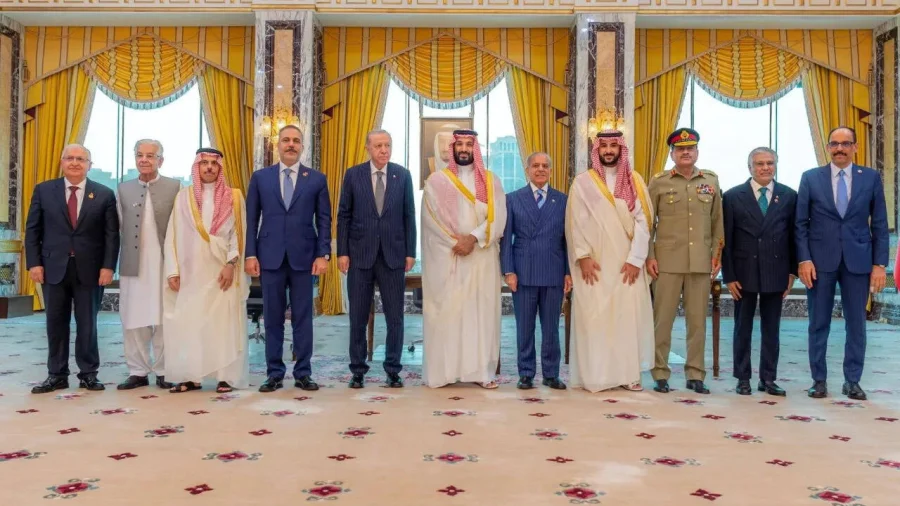
When New Delhi uses the word "assessing" about a defence pact, it is rarely a formality. It is a strategic signal — and right now, that signal is fixed on the Mecca defence pact, a Gulf-linked security arrangement whose full details remain outside public verification. The implications could reach from India's energy ledger to the safety of millions of Indians working across the Gulf.
What the Assessment Tells Us — and What It Cannot
The verified core of this development is a single, significant fact: India is assessing the implications of the Mecca defence pact. That much is in the public headline. Around it, the record is thin. The pact's membership, mandate, commitments and timeline have not been confirmed in high-confidence sources.
What can be said with analytical confidence is that the assessment reflects a view in New Delhi that the pact touches Indian interests deeply enough to require official study. An assessment of this kind is not a bureaucratic reflex. It is a deliberate exercise in understanding consequences before choosing words or positions.
The Real Stakes Beneath the Diplomacy
An Indian strategic review of a Gulf security arrangement is rarely an academic exercise. Energy flows, maritime trade and the welfare of millions of Indian workers across the region give Middle East security a direct domestic face.
If a Gulf defence pact changes the regional balance, Indian consumers can feel it in fuel prices, Indian businesses can feel it in trade routes, and Indian families with earners in the Gulf can feel it in everyday stability. That web of dependency is almost certainly what makes this assessment necessary rather than optional.
Why an Assessment Is Also a Balancing Act
This is where analysis must be careful but honest. India's foreign policy has long rested on strategic autonomy — the ability to deal with every power without being locked into any single bloc. A Gulf security pact that hardens regional lines, particularly around Iran, could press India into uncomfortable choices.
The assessment, in that light, is not just about understanding the pact. It is about finding room to protect long-standing relationships on all sides. For a nation with interests across the entire Gulf spectrum, that balancing exercise is delicate.
The Human Dimension Behind the Headline
For Indian households, this is not abstract geopolitics. The Gulf region hosts a vast Indian workforce whose remittances support families and local economies across India. Any security disruption there ripples directly into Indian homes.
Officials assessing the pact are therefore not merely studying alliance mathematics. They are evaluating consequences for real people — workers, families, businesses and communities whose daily lives are tied to Gulf stability.
What Is Verified Versus What Remains Unclear
Confirmed: India is assessing implications of the Mecca defence pact. That is the full extent of verified information in this development. Unclear: the pact's members, its formal objectives, its legal character, and whether India holds any association with it.
No detailed official statement on India's assessment was available in the verified public record at the time of writing. All additional commentary, including parts of this article, is analytical context — not confirmed reporting.
Reading Too Much, or Too Little: The Risk on Both Sides
There are two opposite errors available here. The first is over-reading the headline — assuming India's assessment implies eventual membership or endorsement. Nothing in the verified record supports that leap. The second is under-reading it — dismissing the assessment as routine when Gulf security architecture is shifting quickly around Indian interests.
The balanced view treats the assessment as what it is: a serious pause, neither a commitment nor a dismissal, from a government that prefers studied caution in volatile neighbourhoods.
The Pattern: Gulf Security Is Now a Core Indian Concern
Place this assessment in context, and it looks less like an isolated item and more like a trend. The Gulf has moved to the centre of Indian strategic thinking in recent years, driven by energy dependence, diaspora linkages and maritime geography.
As regional security architecture evolves, Indian assessments of Gulf pacts are likely to become a recurring feature of the defence and diplomatic calendar. This episode may be remembered less for its headline than for what it signals about India's deeper engagement with West Asia.
What to Watch For Next
Three signals would matter for observers. First, any Indian statement moving beyond the word "assessing" toward a clearer position. Second, clarity on the pact's membership, mandate and timeline from official or credible sources. Third, any visible adjustment in India's engagements with Gulf partners or Iran.
Until those appear, the accurate summary is simple — India is watching, and watching carefully.
Our Take
The most important word in this story is the one India chose: assessing. It is neither endorsement nor rejection — it is a disciplined pause. That posture has an upside and a downside. The upside is calibration, a chance to study the pact before committing. The downside is tempo: regional security arrangements can solidify quickly, and an assessment can be overtaken by events.
For now, the responsible reading is that India is keeping its options open. For a nation with interests on every side of the Gulf divide, that may be the only honest position available.
Frequently Asked Questions
What is the Mecca defence pact?
Publicly verified information about the Mecca defence pact is limited. Based on the headline development, it is a Gulf-linked defence pact whose implications India is currently assessing. Its precise membership and provisions have not been confirmed in high-confidence sources.
Why is India assessing the Mecca defence pact?
Because the pact touches strategic Indian interests — energy security, millions of Indian workers in the Gulf, maritime trade routes, and India's broader West Asia relationships. An assessment allows New Delhi to study those consequences carefully before taking any position.
Has India joined the Mecca defence pact?
No. There is no verified indication that India has joined. The confirmed position, per the headline development, is that India is assessing the pact's implications — not that it has entered into any commitment.
What happens next in India's assessment?
India is likely to weigh its strategic autonomy, its relationships with Iran and Gulf partners, and its energy and diaspora interests before any formal position emerges. The timing and outcome of the assessment have not been disclosed.



