
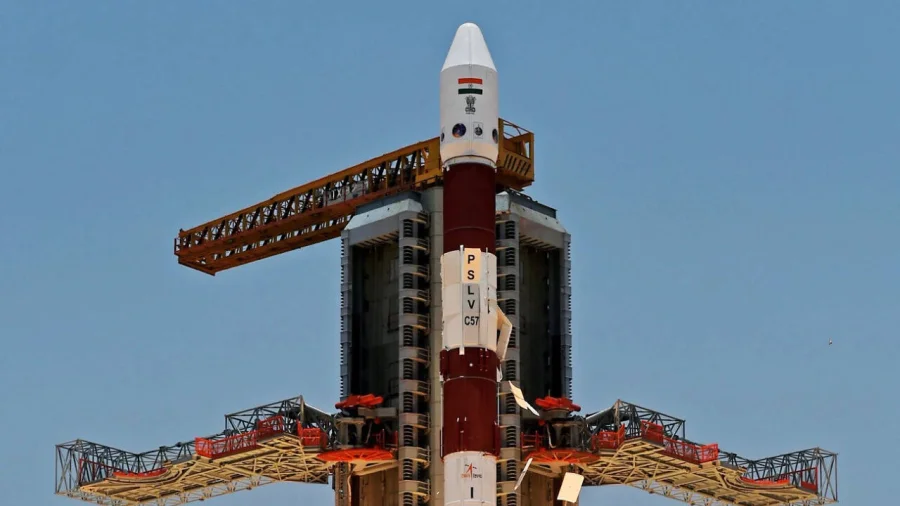
Most space deals are announced with flags and photographs. The real ones look like a supply chain being quietly assembled.
That is what the latest round of India-France space cooperation appears to be: three agreements between companies — not just governments — covering satellite launch arrangements, the development of space surveillance systems, and technology supply for an Indian satellite constellation.
For India, the pull is technology and capability. For France, it is access to India's industrial base and launch ecosystem. For anyone watching the space sector, the interesting part is who is now doing the work.
What the Three India-France Space Agreements Actually Cover
The three deals sit at different layers of the space economy, which is why they are being read together rather than separately.
One concerns satellite launches. Another involves the development of space surveillance systems — the kind of infrastructure countries use to track objects and activity in orbit. The third is a technology arrangement: France's Safran Space is to provide key technology for India's SBS-III constellation.
Separately, RIDE! is set to facilitate the launch of two satellites intended for orbital data centres, according to the details available so far. That is a small number of satellites attached to a large idea, and it is worth understanding why.
Why Deals Between Companies Land Differently Than Government MoUs
India and France have signed plenty of space memoranda over the years. Memoranda set direction. They rarely move hardware.
Company-level agreements change the arithmetic because someone has to deliver a component, meet a deadline and absorb the cost of failure. That is where technology transfer actually happens — not in the communiqué, but in the qualified hardware.
This is also why the SBS-III element is the most consequential of the three for India's domestic capability. A constellation depends on repeatable, certified components. If French technology feeds into that, it shortens the distance between a national ambition and a working system.
A Partnership Built Over Decades, Not Months
India and France are not new to each other in space. France was among the earliest international partners in India's space journey, and cooperation between the two national space agencies has continued across decades and changes of government.
What has shifted in recent years is the cast. India's space sector has opened up to private companies, and the French side increasingly arrives through industrial players rather than only through state agencies. That is the structural change these three agreements reflect.
For readers who follow this sector, the pattern is familiar: frameworks are signed in capitals, but satellites are built on factory floors.
Reading SBS-III: What a Constellation Needs That a Single Satellite Doesn't
A constellation is a group of satellites working as one system. That changes the engineering problem completely.
Single satellites can be hand-built. Constellations need standardised parts, repeatable production, reliable launch slots and ground systems that can manage many objects at once. This is exactly the kind of programme where foreign technology partnerships tend to appear — not for the first satellite, but for the third, tenth and twentieth.
Details of the SBS-III constellation's scale, coverage plan and schedule have not been confirmed in the material available, so it would be premature to describe it as operational or imminent.
Orbital Data Centres: Two Satellites, One Large Bet
Orbital data centres are exactly what the name suggests — computing infrastructure placed in space rather than on the ground.
The appeal is straightforward in theory: solar power is abundant outside the atmosphere, and the vacuum of space is a natural cooling environment. The difficulty is everything else — radiation, servicing, repair, data downlink and cost per unit of compute.
Two satellites is not a data centre industry. It is a test case. That framing matters, because the arrangement is being described in the same breath as launch agreements and surveillance systems, when it is at a much earlier stage than both.
Confirmed Facts vs What Remains Unclear
Confirmed by the available material: three key agreements between Indian and French companies; satellite launch arrangements; development of space surveillance systems; Safran Space providing key technology for India's SBS-III constellation; RIDE! set to facilitate the launch of two satellites for orbital data centres.
Not confirmed: the financial value of any agreement, the timeline, the signing date or venue, the exact technical scope, whether RIDE! is an Indian or French entity, the launch vehicle or provider, and any official statement from either government or from the companies involved.
Where this article describes implications or likely next steps, it is analysis — not reported fact.
Where the Advantage Sits: Safran's Space Business and India's Factory Floor
Safran is a large French aerospace group with deep, certified experience in propulsion and space equipment. In space, that history is the moat. Components that have flown, been qualified and survived years of radiation are hard to replicate quickly, and that scarcity is precisely why a technology arrangement with an Indian constellation programme has value.
India's advantage is on the other side of the table: manufacturing depth, a growing private launch sector, and cost structures that Western primes cannot easily match. When French innovation meets Indian industrial execution, the useful question is not who benefits more — it is whether the transfer of know-how is real or nominal. That answer will only become visible in hardware.
Risks, Questions and the Balanced View
There are real reasons for caution here.
Technology transfer in space is rarely complete. Export controls, licensing and national security considerations mean partners often get access to a product rather than the process behind it. If that happens with SBS-III, India gains a constellation but not necessarily the capability to build the next one alone.
Orbital data centres carry commercial risk that is difficult to understate. No large-scale orbital compute market exists yet, and the cost of getting hardware up and keeping it working is severe.
There is also competitive reality. The United States, China and European players are all moving in the same direction — surveillance, constellations and in-orbit processing. Three agreements do not change that landscape on their own.
And without published contract values or timelines, it is fair to treat this as a promising signal rather than a delivered outcome.
The Wider Pattern: Europe Needs Launch Capacity, India Needs Technology
Seen from a distance, this fits a broader shift. Europe has been looking for reliable, cost-effective launch access. India has been looking for the advanced payload and surveillance technology that takes years to develop domestically.
Put those two needs together and company-level deals become the natural mechanism — faster than treaties, more flexible than government-to-government procurement, and easier to scale if the first project works.
The same logic is visible in India's wider engagement with other spacefaring nations. The pattern is consistent: India offers access and manufacturing, and asks for capability in return.
What Indian Startups, Students and Investors Should Watch
For founders in India's space supply chain, the practical question is component qualification. If Safran technology enters SBS-III, there will be a demand chain beneath it — structures, harnesses, testing, optics and software — and that chain is where Indian firms can realistically enter.
For students and early-career engineers, constellations and in-orbit computing are the two areas where demand for skills is likely to concentrate: systems engineering, thermal management and radiation-tolerant electronics.
For investors, the discipline is patience. Announcements of intent and revenue-generating contracts are different things. The signal to wait for is a formal contract, a delivery milestone or an official confirmation from the companies or space agencies involved.
What Happens Next
The most likely next step is confirmation rather than expansion — official statements from the companies named, or from the Indian and French space establishments, clarifying scope and timelines.
Beyond that, the first meaningful test is whether the technology element of these agreements produces qualified hardware for SBS-III, and whether the two orbital data centre satellites move from facilitation to an actual launch slot.
If both happen, this round of India-France space cooperation will be remembered as the point where the relationship became industrial. If they stall, it will be remembered as three well-timed announcements.
Our Take
The important detail in this story is not the number three. It is that the agreements are between companies.
Government-to-government space cooperation is durable but slow. Industry-to-industry cooperation is faster but uneven — it succeeds when the commercial logic holds and fails quietly when it doesn't. That makes these deals higher-reward and higher-risk than a memorandum.
India's space ambitions — constellations, surveillance, in-orbit processing — all require capabilities that take years to build independently. Borrowing some of that through partnership is sensible. The strategic question, and one nobody has answered yet, is how much of it India ends up owning rather than renting.
For now, this is a genuine step forward, reported with real limits on what can be verified. Readers should hold both facts at once.
Frequently Asked Questions
What are the three India-France space agreements about?
They cover satellite launch arrangements, the development of space surveillance systems, and the supply of key technology by France's Safran Space for India's SBS-III constellation. A separate arrangement involves RIDE! facilitating the launch of two satellites for orbital data centres.
What is India's SBS-III constellation?
It is the satellite constellation named in the technology arrangement involving Safran Space. A constellation is a group of satellites operating as a single system. Technical specifications, scale and timelines for SBS-III have not been confirmed in the material available.
What are orbital data centres, and why put them in space?
Orbital data centres are computing facilities placed in orbit instead of on the ground. Space offers continuous solar power and natural cooling through vacuum, but radiation, servicing and data transmission remain significant engineering and cost challenges. The two satellites mentioned here represent an early test rather than a commercial build-out.
What does this India-France space cooperation mean for India in practical terms?
It signals that the partnership is moving from government frameworks to industrial delivery. For India, the practical gains depend on how much technology and manufacturing capability transfers into Indian hands — which cannot be assessed until contracts, timelines and official statements are made public.



