
By News Desk | Geopolitics & Diplomacy
Some sentences travel much further than the room they are spoken in. At the BRICS summit 2026, a Chinese journalist put it plainly: stronger India-China ties are strategically important for the Global South. It is a short line. It lands on a very long history.
A Single Remark From the Summit Floor, and Why It Travelled
The remark, as reported in this story's headline, frames better Delhi-Beijing relations not as a bilateral courtesy but as a strategic necessity for developing countries across Asia, Africa and Latin America — the loose bloc usually described as the Global South.
The reason it carries weight is arithmetic as much as diplomacy. India and China are the two most populous countries on earth, the two largest economies in the developing world, and founding anchors of BRICS itself. When they disagree, the grouping moves slowly. When they cooperate, its bargaining power changes.
Why Global South Capitals Watch Delhi and Beijing Together
For most developing-world governments, India and China are not abstractions. They are the two biggest markets, two of the largest sources of infrastructure finance, and two of the heaviest diplomatic weights in any multilateral room.
BRICS, the New Development Bank and the Shanghai Cooperation Organisation were all built on the promise of coordination among these economies. A frozen Delhi-Beijing relationship freezes part of that promise. A working one at least keeps it alive.
That is the practical argument inside the journalist's remark. Not sentiment — leverage.
From Galwan to the Summit Hall: How the Relationship Got Here
The two countries did not arrive at the 2026 summit by accident. They arrived through a slow, partial repair.
In June 2020, a clash in the Galwan Valley in eastern Ladakh killed 20 Indian soldiers; Beijing later confirmed four Chinese casualties. It was the first fatal border confrontation in decades and it triggered a deep freeze in ties.
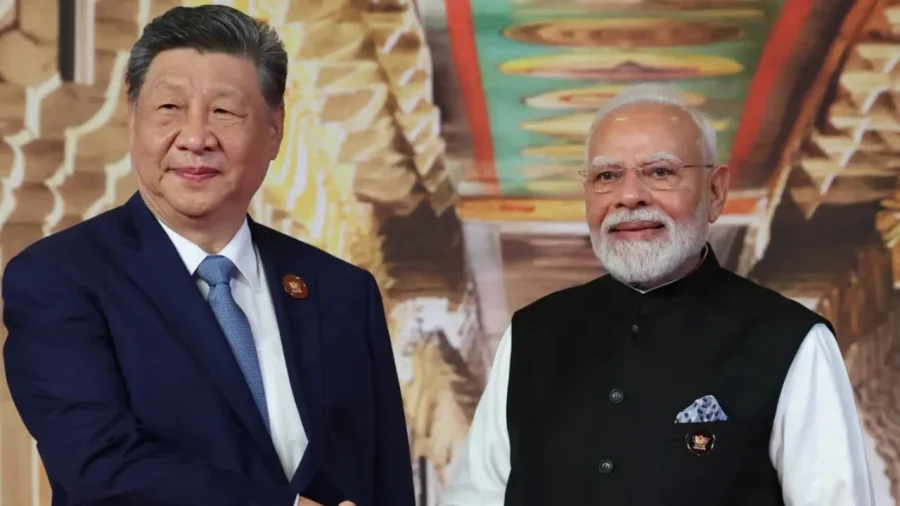
Only in October 2024 did the two sides announce the completion of disengagement at the last friction points, Depsang and Demchok. Weeks later, Prime Minister Narendra Modi and President Xi Jinping met on the sidelines of the Kazan BRICS summit — their first structured bilateral in five years.
In 2025, the thaw produced visible, practical items rather than grand declarations: direct flights between the two countries resumed after a five-year gap, tourist visas for Chinese nationals were restored, India hosted Chinese Foreign Minister Wang Yi for talks, and the Kailash Mansarovar pilgrimage route, suspended since 2020, was reopened.
Who Actually Feels the Difference When Delhi and Beijing Talk
Trade is the first answer. Electronics importers, pharmaceutical exporters, solar-panel suppliers and small manufacturers along both coasts absorb every shift in tariff policy, shipping rules and customs scrutiny. India runs a large trade deficit with China, so any movement in that balance is felt in Delhi's budget maths.
Then there are the people whose lives move with the paperwork: students waiting on visas, pilgrims, researchers, and border communities in Ladakh and Arunachal Pradesh whose access to grazing grounds and markets has always been shaped by the relationship next door.
For them, a diplomatic sentence at a summit is not abstract. It decides whether the next flight, visa or trade shipment actually happens.
What Officials Have Said — and What They Have Not
Both governments have publicly described the relationship as one they want to stabilise. India's Ministry of External Affairs has consistently linked normalisation to peace and tranquillity on the border. Beijing has spoken of improving ties on the basis of mutual respect.
What has not been reported in the material available for this story is any official reaction to the BRICS 2026 remark itself — from Delhi, from Beijing, or from the summit organisers. A journalist's assessment is an opinion, not a policy position, and the two should not be read as the same thing.
The Message Underneath the Message
Diplomatic language often does work that formal agreements cannot yet do. By describing better India-China ties as "strategically important for the Global South", the framing shifts the conversation away from a bilateral quarrel and towards a collective cost borne by dozens of other economies.
That reframing is notable because it quietly spreads responsibility across both capitals. Anyone listening closely hears an argument that neither Delhi nor Beijing can afford to let the relationship stall indefinitely — not if BRICS is going to mean anything at the next summit.
It is a reading, not a verdict. But it is a reading that has surfaced repeatedly in commentary from both sides of the border since 2024.
What Is Verified Today — and What Still Is Not
Verified or widely reported: the substance of the remark as carried in this story's headline; India's 2026 BRICS chairship; the October 2024 disengagement agreement; the Modi-Xi meeting at Kazan in 2024; the 2025 resumption of direct flights, tourist visas and the Kailash pilgrimage.
Not verified or not disclosed: the journalist's name and employer, whether the remarks were made on a panel, in a corridor or in an interview, the full text of what was said, whether any delegation endorsed the framing, and whether the summit was hosted in India or elsewhere.
Readers should treat the remark as a reported statement from a media professional at the event — not as a signal of official Chinese government policy.
Where the Optimism Could Still Break Down
The border remains the central risk. Disengagement in eastern Ladakh was a tactical step, not a settlement of the Line of Actual Control. A single new incident in the high Himalayas could undo years of careful signalling.
There are other pressure points: Delhi's tight screening of Chinese investment, restrictions on Chinese technology firms, disputes over transboundary rivers, and Beijing's long-standing claims over Arunachal Pradesh. Each has the potential to slow the thaw on short notice.
And the Global South is not a bloc that speaks with one voice. Many of its members hedge between Washington, Brussels, Beijing and Delhi. A single voice in a summit press centre does not speak for all of them.
BRICS Is Changing, and So Is the Language of the Global South
BRICS has grown well beyond its original five members. The 2024 Kazan summit extended invitations to several new countries, Indonesia became a full member in January 2025, and a new "partner country" tier was created to manage demand for entry.
As the group widens, its internal balance gets harder to manage. An expanded BRICS with a stalled India-China relationship is a slower BRICS. That is the quiet



