
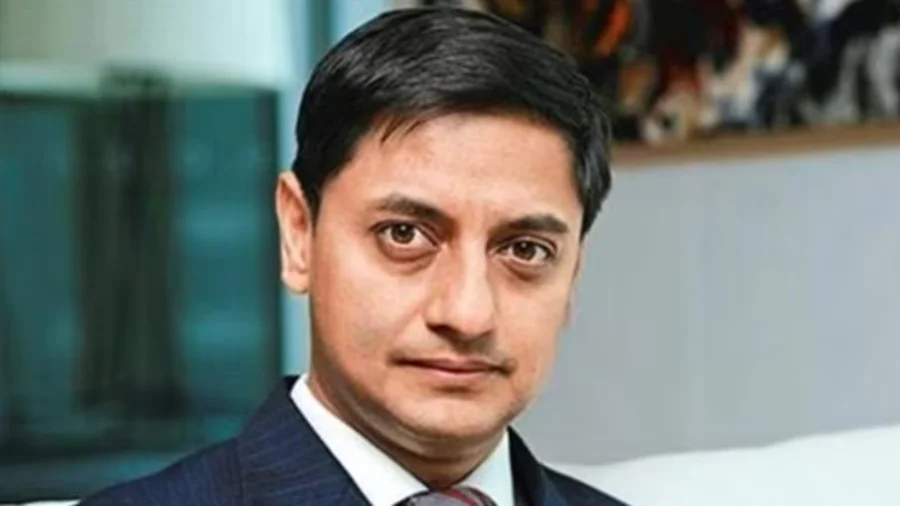
One number explains why India's China question is now a test of patience: 35. That, according to economist Sanjeev Sanyal, is how many years of sustained, compounding growth India needs to close the economic gap with its northern neighbour. The message is blunt — there is no shortcut to economic dominance.
Compounding is the real engine of dominance
Sanyal's central thesis, as stated in the headline, is that "economic dominance relies on compounding." Growth that builds on itself — through investment, productivity and capability — creates advantages that widen over time.
A single strong year means little. Decades of steady compounding decide who leads and who follows.
Why a 35-year window, and why it matters against China
A 35-year horizon spans a generation and a half — long enough for structural change, short enough to demand discipline. China's economy is still several times larger than India's, and even with faster growth, absolute catch-up cannot happen overnight.
The timeline forces a sober question: can India hold its growth trajectory steady enough for compounding to do its work?
The size of the gap India is chasing
The arithmetic is unforgiving. Because China's economy is vastly bigger, India's faster growth rate narrows the gap only gradually. Compounding is what makes the chase theoretically possible — but only if high growth is sustained without repeated interruptions.
What this means for ordinary Indians
This is not just an argument for economists. The 35-year strategy is ultimately about jobs, wages, per-capita incomes and living standards for a young population.
Whether India's demographic dividend becomes an advantage depends on exactly the kind of long, compounding growth Sanyal is describing.
The doubts that deserve airing
Long-range forecasts fail often. China's ageing demographics are frequently cited as India's opening, but India's own demographic profile, reform speed and global trade conditions will test the 35-year assumption.
Some economists caution against placing heavy weight on projections that stretch decades into the future — too many variables, from technology to geopolitics, can intervene.
What is clear, and what is not yet clear
What is clear: Sanyal's framing that compounding is the basis of economic dominance, and that India needs a 35-year strategy to catch up with China.
What is not yet clear: the specific policy pillars, investment targets or reform sequencing inside the roadmap. The source material does not provide those details, and they cannot be verified from the headline alone.
What to watch next
The key question is whether this 35-year vision enters official policy conversations. Responses from the finance ministry, Reserve Bank of India and independent economists will show whether the compounding argument shapes India's growth narrative in future budget debates.
Our Take
The compounding insight is economically sound — but a strategy on paper survives only if it survives elections, crises and policy drift. The 35-year clock starts only with the first honest reform step, and staying the course will be harder than drawing the roadmap.
Frequently Asked Questions
What did Sanjeev Sanyal say about India and China's economies?
According to the headline, Sanyal argued that economic dominance relies on compounding and mapped out a 35-year strategy for India to catch up with China.
Why does compounding matter for economic growth?
Compounding means growth builds on itself: this year's output becomes the base for next year's. Even modest growth rates, sustained over decades, produce far larger results than short bursts of rapid growth followed by slowdowns.
Can India catch up with China in 35 years?
It is possible under strong assumptions — consistently high growth, continued reforms and favourable global conditions. But economists disagree on long-range projections, and the full details of Sanyal's roadmap are not yet available for scrutiny.
Who is Sanjeev Sanyal?
Sanjeev Sanyal is an Indian economist and a member of the Economic Advisory Council to the Prime Minister (EAC-PM), known for his work on economic history, urbanisation and growth strategy.



