
Summary
The High Court has strongly criticized the Election Commission for its practice of assigning election duties to college professors. During a recent hearing, the court asked why academic professionals are singled out for administrative tasks while other high-ranking officials are not. The court even suggested that if professors must serve, then judges should also be put on election duty. This situation arose after the Election Commission failed to provide the official legal documents that explain how they choose poll officers.
Main Impact
This development could change how the government finds staff to run elections. For a long time, teachers and professors have complained that election work takes them away from their students and research. If the court decides that the Election Commission is overstepping its bounds, it might force the government to find new ways to staff polling stations. This would protect the time of educators and ensure that schools and colleges continue to run smoothly during election seasons.
Key Details
What Happened
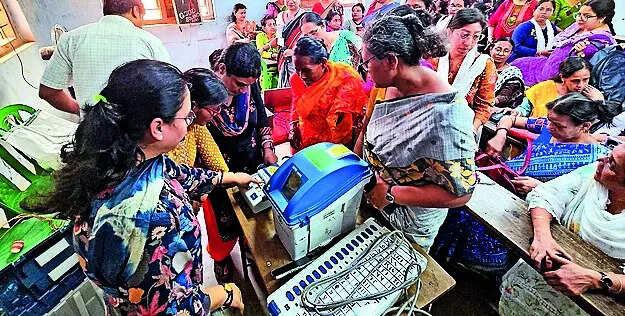
The High Court expressed its anger when the Election Commission could not produce the specific notification used to draft professors into service. The judges pointed out that teaching is a specialized profession that requires constant attention. By pulling professors away for weeks at a time, the education system suffers. The court’s sharp comment about putting judges on election duty was meant to show that every professional has a specific, important role that should not be easily interrupted by administrative needs.
Important Numbers and Facts
In every major election, hundreds of thousands of government employees are called to work at polling booths. A large percentage of these workers come from the education sector. Professors often have to travel long distances and stay away from their homes for several days. The court noted that the Election Commission must follow strict rules when choosing these workers, but in this case, the Commission could not show the legal basis for their current selection process.
Background and Context
Running an election in a large country is a massive task. The Election Commission needs a lot of people to manage voting booths, count ballots, and ensure security. Traditionally, they use government employees because these workers are already on the public payroll. Teachers and professors are often the first choice because they are seen as educated and capable of handling the paperwork involved in voting.
However, the academic community has fought against this for years. They argue that their primary job is to teach and that being forced into election work hurts the quality of education. They also argue that it is unfair to target one specific profession while others are left alone. The High Court is now looking into whether this practice is fair or if it violates the rights of the educators.
Public or Industry Reaction
Many professors and university staff have welcomed the court’s comments. They feel that their concerns are finally being heard by someone in power. Academic unions have often protested against these duties, saying that the timing of elections often clashes with exams or important lectures. On the other hand, the Election Commission is now under pressure to justify its actions. They must prove that they are not picking on professors simply because they are an easy group to organize.
What This Means Going Forward
The Election Commission will now have to present a clear plan and the legal documents the court requested. If they cannot prove that they have the right to take professors away from their jobs, the court might issue an order to stop the practice. This would force the Commission to look for staff in other government departments or perhaps hire temporary workers. It also sets a precedent that specialized professionals should be allowed to focus on their primary duties unless there is an absolute emergency.
Final Take
The court’s message is clear: every job is important, and one should not be sacrificed for the other without a very good reason. While elections are the backbone of a democracy, education is the foundation of the future. Finding a balance between these two needs is essential. The Election Commission must be more transparent and fair in how it shares the burden of administrative work across different sectors of the government.
Frequently Asked Questions
Why are professors usually picked for election duty?
Professors are government-funded employees who are considered highly educated and reliable. This makes them an easy choice for the Election Commission when they need people to handle complex voting procedures and paperwork.
Can a professor refuse to do election duty?
Currently, it is very difficult to refuse. Election duty is often treated as a mandatory legal order. Refusing can lead to disciplinary action or even legal trouble, which is why the High Court's intervention is so important for them.
What was the court's main complaint?
The court was unhappy that the Election Commission could not show the official rules or notifications that allow them to draft professors. The judges also felt it was unfair to take teachers away from their students while other professionals are not asked to do the same.



